

Start your junk journal adventure and unleash your creativity!
This guide will show you how to make a unique memory keeper from everyday items. It's perfect for both newbies and seasoned crafters. You'll learn how to create your own junk journal, DIY memory book, or upcycled scrapbooking masterpiece.
Junk journaling lets you turn old papers, fabrics, and objects into a stunning journal. In this guide, we'll cover the basics of junk journaling. You'll learn about the different types, their uses, and the art's history. Plus, you'll find out what supplies you need and how to make your journal pages, bind it, and design the cover.

Key Takeaways
- Discover the art of junk journaling and its creative potential
- Learn about the different types of junk journals and their uses
- Understand the historical background and benefits of junk journaling
- Explore the essential supplies and materials needed to start your first junk journal
- Dive into the basic techniques for creating visually stunning journal pages
- Discover binding methods and cover design options to make your journal unique
- Unleash your creativity and embark on a junk journaling journey
Understanding What a Junk Journal Is and Its Creative Purpose
Junk journals are a special kind of mixed media art. They let people show their creativity and keep their memories. These journals use things like old paper, fabric scraps, and found objects. This makes a perfect space for mixed media art, ephemera collage, and vintage journaling.
Different Types of Junk Journals
Junk journals come in many shapes and sizes. They can be traditional books or something more unique like accordion-style folios or small booklets. This variety means there's always something new to try, fitting many different tastes.
Common Uses and Benefits
- Stress relief and mindfulness through the process of creating
- Preserving personal memories and memory keeping
- Exploring vintage journaling and mixed media techniques
- Connecting with a vibrant artistic community
Historical Background of Junk Journaling
Junk journaling started with scrapbooking and the growth of mixed media art in the 1990s. Artists wanted new ways to express themselves. This led to the use of everyday items in ephemera collage and vintage journaling, which are key to junk journals today.
"Junk journaling is not just about creating a beautiful book; it's about the journey, the process, and the joy of self-expression."
Essential Supplies and Materials for Your First Junk Journal
Starting your junk journal journey means gathering the right supplies. This craft turns everyday items into beautiful pages. Whether you're new or experienced, knowing the basics is key to your creative path.
Vintage Paper Essentials
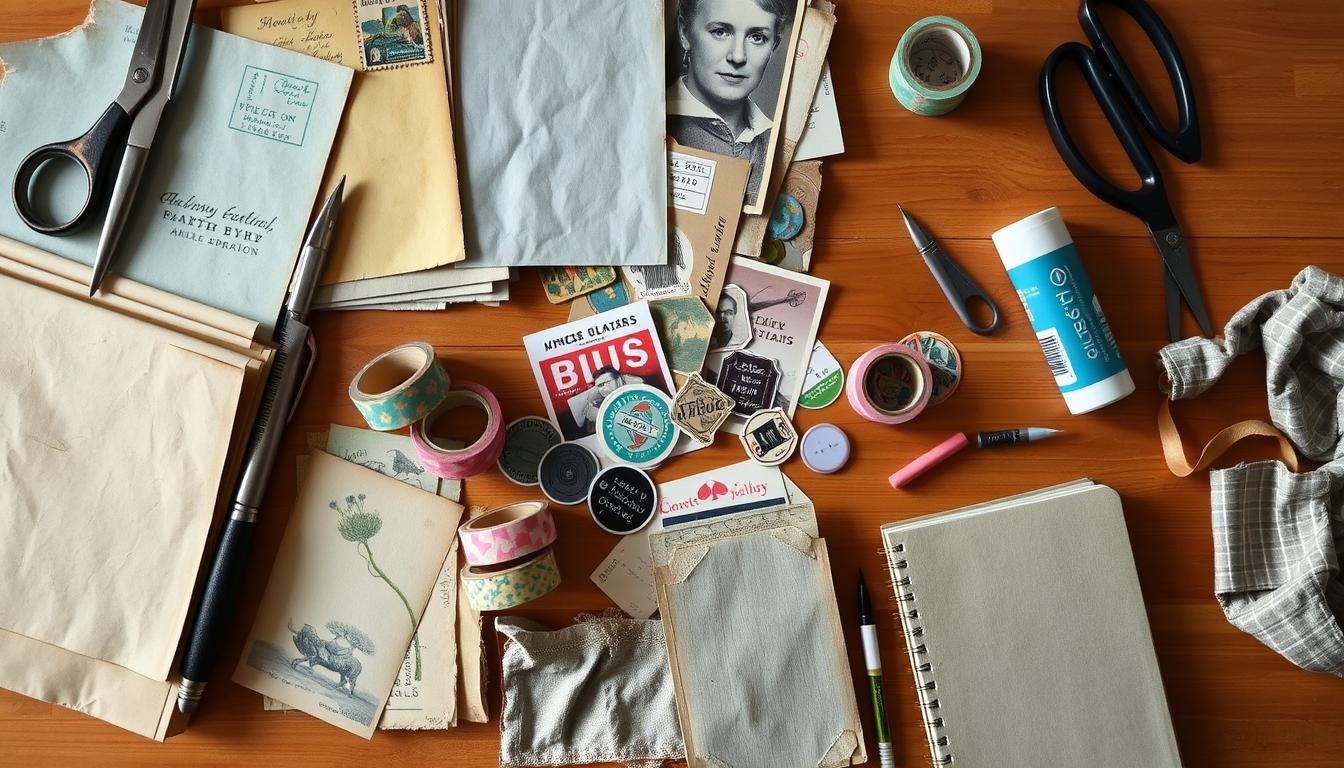
The heart of a junk journal is its paper. Vintage paper brings a unique, aged look to your pages. Look for old book pages, map pieces, and sheet music at flea markets, antique shops, and online.
Adhesives and Embellishments
To make your journal come alive, you'll need various adhesives. Use washi tape, glue sticks, and double-sided tape to layer and secure your ephemera collection. Add buttons, charms, and fabric scraps for texture and interest.
Tools of the Trade
Every junk journal needs the right tools. Get scissors, a bone folder, and pens and markers for writing and doodling. Also, have junk journal supplies like distress inks, stamps, and stencils ready to express your creativity.
Junk journaling is all about trying new things and embracing imperfections. Use found objects and let your imagination run wild. With the right materials and creativity, you'll make a unique journal that shows off your style.
Basic Techniques for Creating Your Journal Pages
Making junk journal pages is like art. It mixes distressing techniques, tea staining, and layering ephemera. Each method brings depth, texture, and a vintage look. Let's dive into these key skills.
Paper Aging Methods
A junk journal's look is aged and worn. To get this, try:
- Tea staining: Soaking papers in strong tea gives an antique look.
- Distressing techniques: Crumpling, tearing, and sanding adds weathered charm.
- Coffee staining: Brushing coffee on pages creates a rustic effect.
Layering and Composition Tips
Layering ephemera is crucial for stunning junk journal pages. Mix materials like vintage book pages and maps. Arrange them for balance, considering color, texture, and hierarchy.
Adding Pockets and Tuck Spots
Adding interactive journal elements like pockets and tuck spots is fun. They hide tags and cards. Use washi tape or vintage envelopes for unique pockets and spots.
Learning these basic techniques will help you make stunning and functional pages. With practice, you can turn simple materials into amazing junk journal pages.
Binding Methods and Cover Creation
Creating your first junk journal is exciting. The binding and cover design are key to making it look and feel special. You can choose from simple stapling to more complex bookbinding techniques.
Stapling is a quick and easy way to bind your journal. It uses a standard stapler to hold the pages together. For a nicer look, try pamphlet stitching with needle and thread. Or, go for coptic binding for a decorative, flexible spine.
Creating a junk journal cover is where you can really get creative. You can use recycled cardboard, fabric, or even found objects. Remember to add spine reinforcement for durability. Decorative closures like ribbons or buttons can make your journal stand out.
Have fun and let your creativity flow, no matter your choice. Try different techniques and materials to match your style. Your junk journal should reflect your personality.
Conclusion
Starting your junk journaling journey opens up endless creative possibilities. This guide has given you the basics to begin. But the real magic happens when you make it your own. Let your imagination run wild with different materials and techniques.
Joining the junk journaling community is a great way to find inspiration and support. You can meet other artists online or in person. Look for workshops, social media groups, and local meetups to share your work and learn from others.
Junk journaling is a personal and fulfilling craft. It lets you keep memories, explore creativity, and find peace. Don't worry about mistakes. Let your journal be a special part of your journey. The possibilities are endless, so dive in and let your imagination soar!
FAQ
What is a junk journal?
A junk journal is a handmade book made from recycled and vintage materials. It's a way to express yourself through mixed media art. It helps keep memories alive.
What are the different types of junk journals?
Junk journals come in many shapes, like traveler's notebooks and scrapbook albums. They can focus on hobbies, events, or personal stories.
What are the benefits of creating a junk journal?
Making a junk journal can reduce stress and let you express your creativity. It's a way to keep important memories safe. It's also a calming activity that makes you feel accomplished.
What materials are needed to start a junk journal?
You'll need different papers, adhesives, decorations, and tools. This includes book pages, vintage items, scrapbooking papers, washi tape, ribbons, and markers.
How do I age and distress paper for my junk journal?
To age paper, try tea or coffee staining, alcohol inks, or gesso. These methods give your paper a worn look that fits the junk journal style.
How do I bind my junk journal?
You can bind your journal with staples, rings, or stitching. The method you choose depends on your journal's size and design.
Where can I find inspiration for my junk journal?
Look for inspiration online, on Instagram and Pinterest, and in the junk journal community. Workshops and local crafting groups are also great places to find ideas and support.
Comments ()