


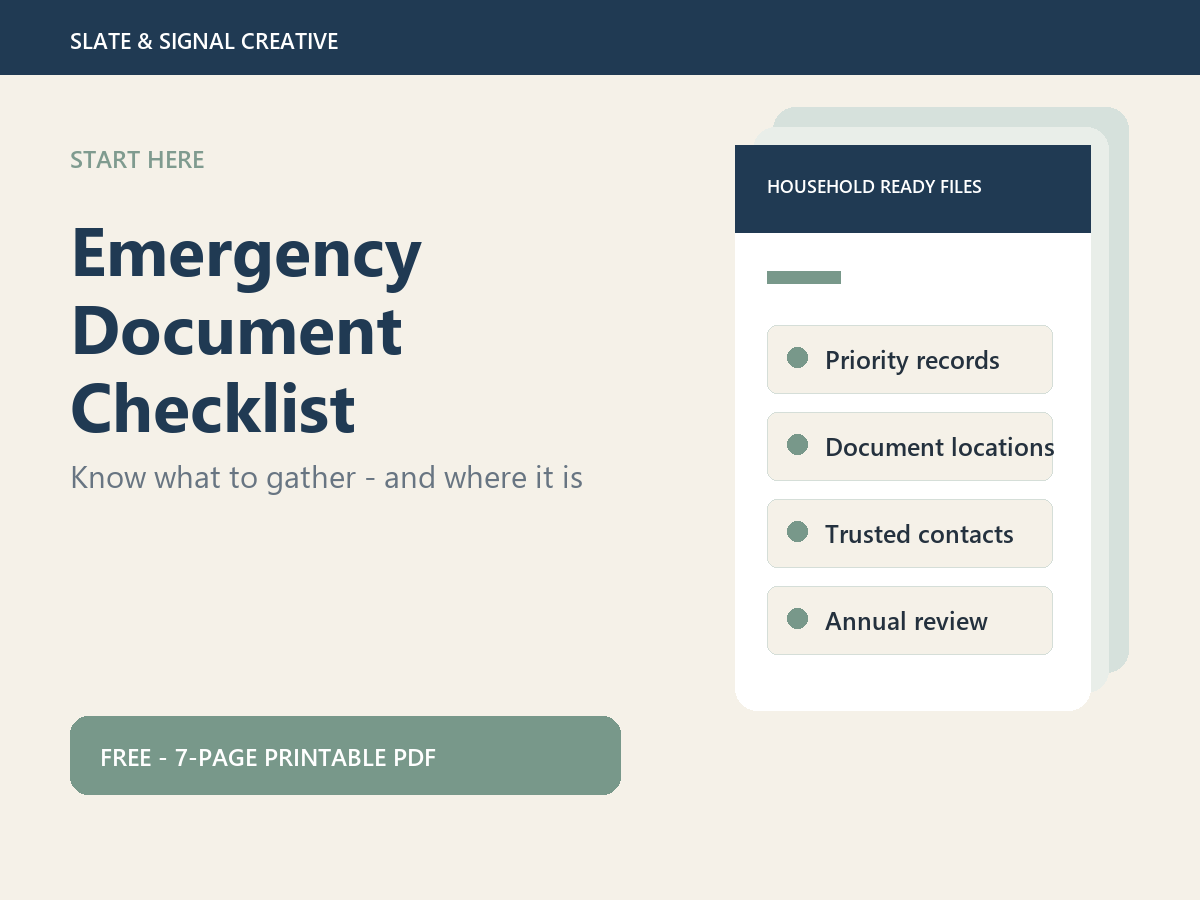
An emergency document file gives the right person a clear starting point when you are unavailable, traveling, hospitalized, or dealing with a household disruption. It does not need to contain every private detail. Its job is to show what exists, where it is kept, and who can help.
Start with identity and household records. List where birth certificates, marriage records, passports, military records, and other important documents are stored. Record expiration dates when they matter. Avoid placing full identification numbers in a file that other people may see.
Next, create a financial overview. Include the names of banks, retirement-plan providers, mortgage or rental contacts, insurance companies, and regular household services. A trusted person usually needs to know that an account or policy exists before they need the full account details. Keep passwords, PINs, security answers, and complete Social Security numbers in a separate secure system.
Add medical and insurance contacts. Record primary providers, pharmacies, insurers, important allergies, and the location of current medication information. This is an organizational record, not a substitute for medical advice or an official advance directive.
Include property and household information. Note utility providers, vehicle records, home or renters insurance, pet-care contacts, and the location of keys or access instructions. Write down the names of people who should be contacted, including family members, professional advisers, and anyone responsible for dependents or pets.
Finish with a simple review routine. Check the file every six to twelve months and after a move, marriage, separation, major purchase, insurance change, or new medical diagnosis. Date each review so another person can tell how current the information is.
A useful emergency file is clear, limited, and easy to maintain. Start small: identify the documents, record their locations, and choose one trusted person who knows where the organizer is kept.
Slate & Signal Creative's Free Emergency Document Checklist gives you a practical starting point. Use it to identify gaps before moving into a more detailed household organizer.