


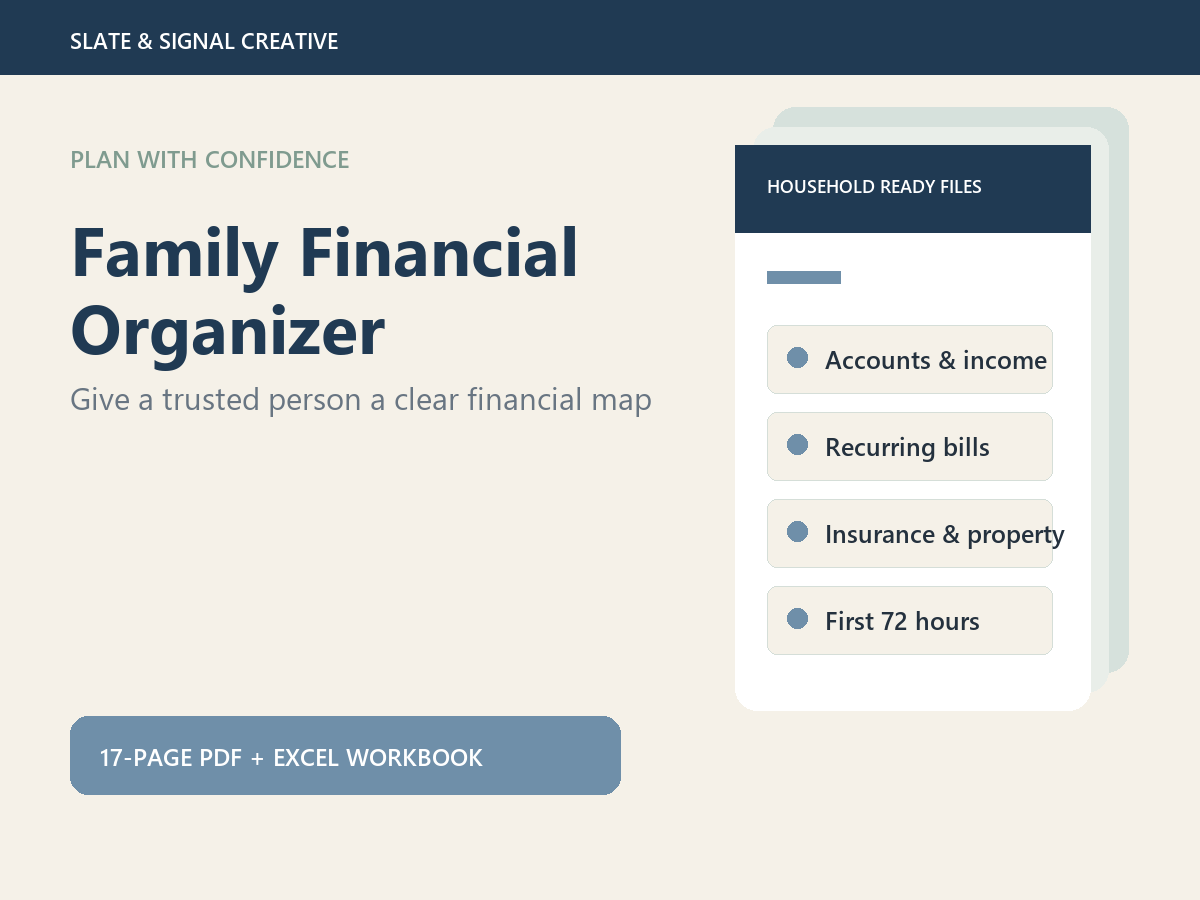
A family financial emergency file should make the household understandable without turning one document into a security risk. The safest approach is to separate the map from the keys: use the organizer to identify accounts, contacts, responsibilities, and document locations, while keeping passwords and other credentials in a secure password manager or locked system.
Begin with a household snapshot. Record the names of adults and dependents, major recurring responsibilities, and the people who may need to step in. Include trusted contacts such as a family member, accountant, financial professional, insurance agent, landlord, or attorney when applicable.
Create an account directory using institution names and account types. You might list a checking account, savings account, retirement plan, mortgage, vehicle loan, or investment provider. Usually there is no reason to place a full account number in the organizer. A short identifier, the last four digits, and the location of the official statement may be enough.
List recurring income and expenses. Include employers, pension or benefit sources, housing payments, utilities, insurance premiums, subscriptions, childcare, and other bills that would still need attention during an emergency. Record due dates, contact information, and whether each item is paid automatically. Do not record the bank-login password or card security code.
Add an insurance overview. Note the carrier, policy type, named insured, agent or service number, renewal month, and location of the policy. Include life, health, home or renters, vehicle, disability, and umbrella policies that apply to your household.
Document where important records are kept. Examples include tax returns, deeds, leases, titles, beneficiary information, business records, estate-planning documents, and safe-deposit information. The organizer can point to the secure location without reproducing the protected document.
Choose an update schedule. Review the file after a move, job change, new account, closed account, marriage, divorce, birth, death, or major insurance change. A brief quarterly check and a more complete annual review keep the information usable.
Finally, tell one trusted person that the file exists and how to locate it. Give access only to the level that person truly needs.
The Family Financial Emergency Organizer from Slate & Signal Creative provides a structured printable and editable system for building this household map while keeping high-risk credentials out of the document.