


Medical billing paperwork becomes difficult when provider statements, insurance explanations of benefits, payment receipts, and phone notes are kept in different places. A simple tracking system can show what happened to each claim, what you paid, and what still requires attention.
Start one record for each service or claim. Include the date of service, provider, patient, general service description, amount billed, claim number when available, and the date the claim was submitted. Keep the provider bill and the explanation of benefits together, but remember that an explanation of benefits is not itself a bill.
Compare the main amounts. Record the provider's charge, the insurer's allowed amount, the amount insurance paid, any adjustment, and the amount listed as the patient's responsibility. If the provider bill does not match what you expected, mark the record for follow-up instead of guessing which amount is correct.
Track every payment. Write down the payment date, amount, payment method, confirmation number, and the balance shown afterward. Save receipts or confirmation emails with the related claim. This helps prevent duplicate payments and gives you a clear record if an account is later questioned.
Use a call log for every conversation with a provider or insurer. Record the date, organization, representative's name or identification number, phone number, summary of the conversation, promised action, and next follow-up date. Ask for a reference number when one is available.
Watch deadlines. Appeals, requests for records, payment plans, and corrected claims may have different time limits. Record the deadline stated by the provider or insurer and confirm important requirements directly with that organization. A tracker organizes what you were told; it does not determine coverage or replace professional advice.
Keep supporting documents together. Useful items may include bills, explanations of benefits, claim letters, prior-authorization records, receipts, payment-plan terms, and copies of correspondence. Use a consistent file name that begins with the date of service so related items sort together.
Review open items once a week. Sort each record into a simple status such as waiting for insurance, waiting for provider, ready to pay, under review, appealed, payment plan, or complete. A short weekly review is easier than reconstructing months of activity after a problem appears.
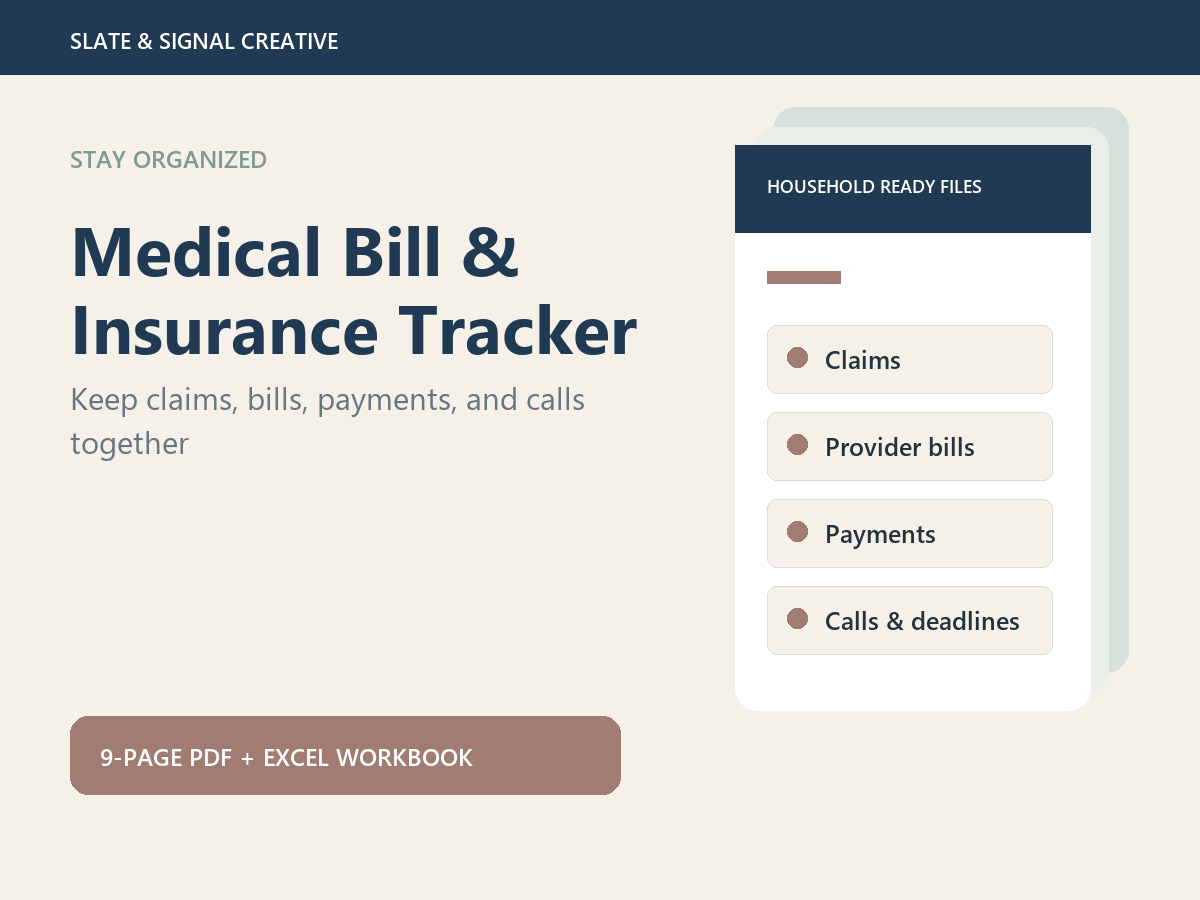
Slate & Signal Creative's Medical Bill and Insurance Tracker combines a printable reference with an editable workbook for claims, provider bills, payments, calls, deadlines, and supporting documents.