
A classroom full of young children is rarely quiet or perfectly organized. Conversations are happening all around, children are sharing toys, disagreements arise over whose turn it is, and sometimes tempers flare. These are all natural parts of growing up
For preschool and early elementary teachers, the challenge is not simply to stop unwanted behaviour. It is to help children understand how to make positive choices, respect others and become more confident members of the classroom community.
Play can make this learning more enjoyable. Instead of relying only on reminders and corrections, teachers can introduce simple activities that allow children to practise positive behaviour in meaningful ways.
These are six approaches that can be implemented
1. Turn Classroom Expectations into Fun Games
Young children often understand expectations better when they can see and practise them.
Create a simple game around classroom rules. For example, play "Walking Feet or Running Feet?" Show pictures of different situations and ask children which action is appropriate inside the classroom.
You can also introduce movement games that practise listening, taking turns and following directions.
The goal is to make expectations understandable rather than simply repeating rules throughout the day.
2. Use Storytelling to Teach Positive Behaviour
Stories provide opportunities to discuss kindness, sharing, patience and friendship without making individual children feel criticised.
Choose a short story featuring characters who experience familiar classroom situations. Pause occasionally and ask questions such as:
- How do you think the character feels?
- What could the character do differently?
- How would you help a friend in this situation?
Puppets can make these conversations even more engaging. Children can act out different solutions and explore how their choices affect others.
3. Give Children Classroom Helper Responsibilities
Children enjoy feeling that they have an important role in their classroom.
Introduce rotating responsibilities such as distributing materials, organising activity supplies, watering plants or helping prepare the reading corner.
These small responsibilities encourage cooperation, independence and a sense of belonging.
Remember to give every child an opportunity to participate. The purpose is not to identify the best-behaved student but to help everyone experience the value of contributing.
4. Encourage Teamwork Through Cooperative Activities
Some positive behaviours develop naturally when children work towards a shared goal.
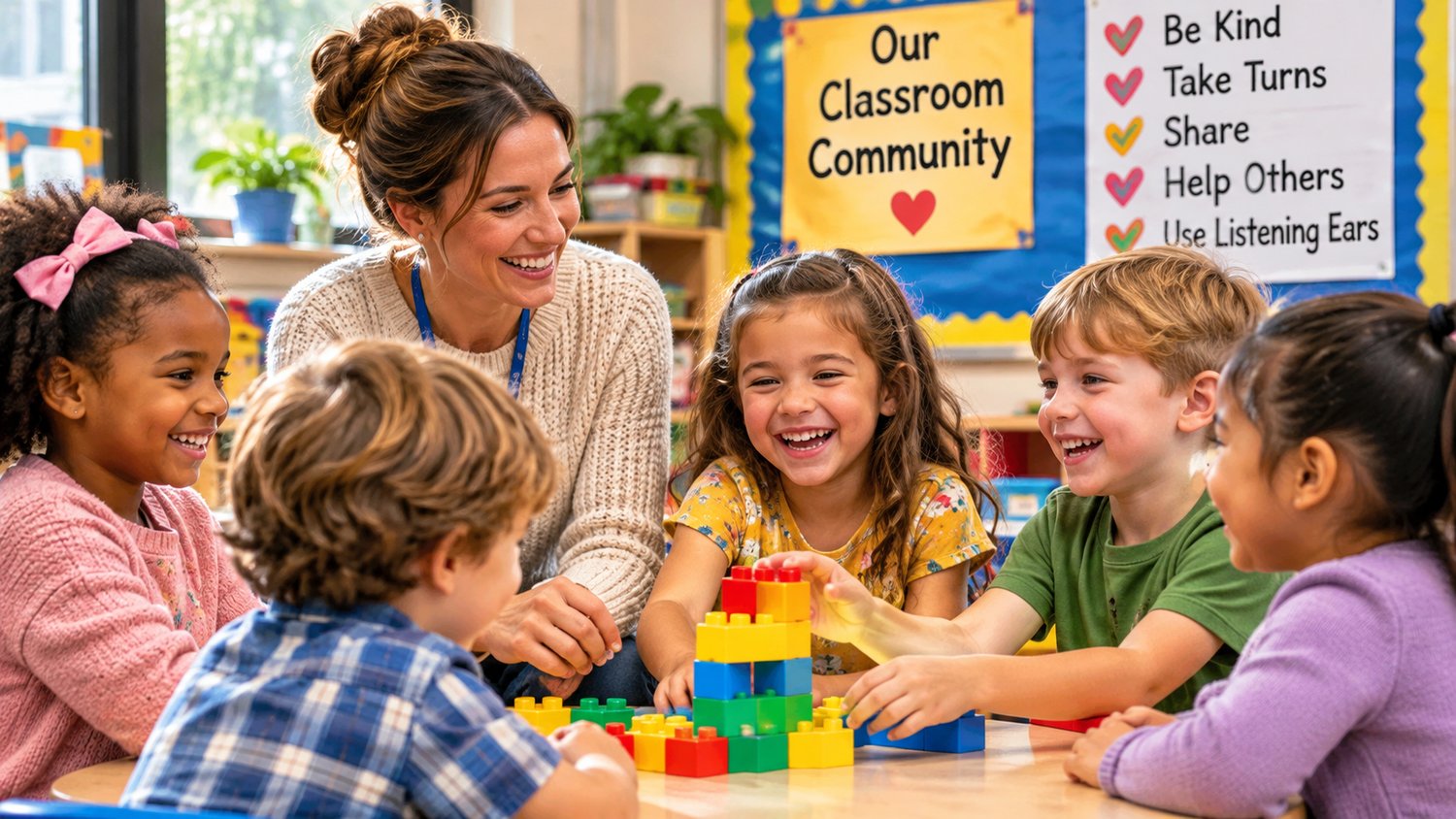
Try a group block-building challenge, a classroom puzzle or a collaborative art activity. Give children opportunities to share materials, listen to suggestions and solve small disagreements.
Notice how they interact during the activity. When one child helps another or patiently waits for a turn, acknowledge that behaviour.
These experiences help children understand that working together can be just as rewarding as completing something independently.
5. Make Positive Feedback Specific and Meaningful
A simple Good job! can encourage a child, but specific feedback helps children understand exactly what they did well.
Instead of saying, You are a good student,say
- I noticed you shared the crayons with your friend.
- Thank you for waiting patiently for your turn.
- You helped your classmate clean up. That was thoughtful.
Recognising effort and specific actions gives children clearer guidance about the behaviours teachers want to encourage.
Keep praise genuine and respectful. Some children may appreciate public recognition, while others feel more comfortable receiving encouragement privately.
6. Make Classroom Transitions Playful and Predictable
Moving from one activity to another can be difficult for young children, particularly when they are deeply involved in play.
Rather than suddenly announcing that an activity is over, provide a gentle warning. Introduce a familiar cleanup song, a countdown or a simple classroom rhythm to signal the transition.
For instance children might put away toys while singing a short cleanup song together.
Visual schedules can also help children understand what comes next. When routines are predictable, children have more opportunities to develop independence and manage transitions confidently.
Building Positive Behaviour One Day at a Time
Positive behaviour does not develop through one game, one reward or one classroom rule. It grows through consistent guidance, supportive relationships and repeated opportunities to practise appropriate behaviour.
Teachers should also remember that children develop at different rates. Some may need additional modelling, reminders or individual support. A playful approach does not mean ignoring challenging behaviour; it means responding with patience while teaching children what they can do differently.
A classroom where children feel respected, included and encouraged creates better opportunities for both social development and learning.
At Smart Teacher Toolkit, we believe practical classroom strategies can make everyday teaching more rewarding, one small positive change at a time.