

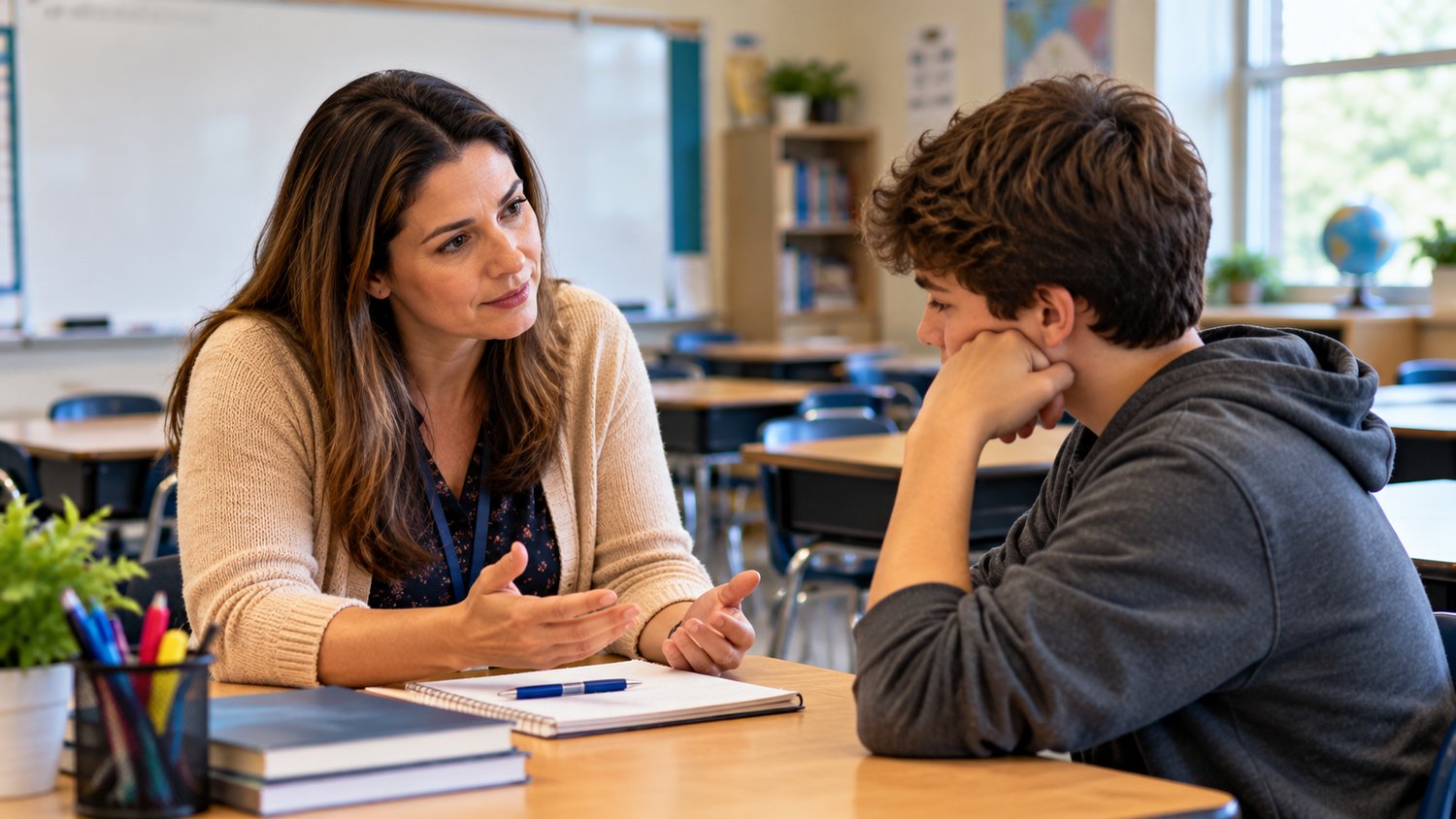
A student disrupts a lesson, argues with a teacher, or repeatedly ignores classroom expectations. The school responds with a disciplinary consequence, perhaps removing the student from class for a day or two.
The classroom becomes quieter. The teacher gets some temporary relief.
But when the student returns, the same behavior begins again.
For many educators, this cycle is frustratingly familiar. It raises an important question: If discipline is intended to improve behavior, why do some students keep repeating the same mistakes?
The problem may not be the absence of discipline. It may be that the disciplinary system focuses too heavily on punishment and too little on changing behavior.
1. The Problem With Punishment Alone
Traditional disciplinary approaches often assume that students will stop misbehaving if the consequences are unpleasant enough.
However, removing a student from the classroom does not automatically teach that student how to manage frustration, resolve disagreements, follow instructions, or handle conflict.
Research has associated exclusionary discipline, including suspension, with negative outcomes. Evidence also suggests that reducing exclusions does not automatically produce improvements in behavior.
This distinction matters. A school can reduce classroom disruption temporarily without addressing the reasons the behavior keeps occurring.
2. What Happens When Students Return?
Consider a student who repeatedly interrupts lessons.
The student receives a consequence but returns without practicing appropriate ways to participate, receiving support with self-regulation, or discussing how to repair the disruption.
The original problem remains.
This does not mean consequences are unnecessary. It means consequences alone may be insufficient.
Students need clear expectations, consistent boundaries, and opportunities to learn more appropriate behaviors.
Without these elements, schools risk repeating the same disciplinary cycle.
3. Five Practical Ways to Improve School Discipline
1. Identify the Pattern Behind the Behavior
Instead of asking only, "What rule did the student break?" ask, "What happened before the behavior, and what followed it?"
Look for recurring situations, such as difficult assignments, peer conflict, transitions, or unclear instructions.
Understanding patterns can help teachers choose more effective responses.
2. Teach the Behavior You Want to See
Do not assume students automatically know how to manage anger, disagree respectfully, or ask for help.
Demonstrate these skills, practice them with students, and reinforce improvement.
Behavior expectations become more useful when students understand what they should do instead.
3. Make Consequences Consistent and Meaningful
Students need to understand that classroom expectations matter.
Consequences should be proportionate, predictable, and connected to the behavior whenever appropriate.
They should also preserve dignity and avoid unnecessary humiliation.
The objective is accountability—not simply making students suffer.
4. Plan for a Successful Return
When a student returns after removal from class, do not treat the return as the end of the disciplinary process.
Have a brief, constructive conversation:
- What happened?
- Who was affected?
- What could you do differently next time?
- What support would help you succeed?
Agree on a practical next step and follow up.
5. Work as a Team
Repeated behavioral difficulties rarely improve through isolated efforts alone.
Teachers, school leaders, counselors, and families can work together to identify patterns, establish consistent expectations, and determine whether additional support is needed.
Serious or persistent behavioral concerns may require individualized assessment and professional support.
4. Does This Mean Schools Should Stop Suspending Students?
No.
When a student poses a serious or immediate safety risk, removal may be necessary to protect students and staff.
The concern is not that schools use consequences. It is that consequences can become the entire response rather than one part of a broader plan.
Effective discipline must balance safety, accountability, learning, and the needs of everyone affected.
Final Thoughts: Discipline Should Lead to Change
A well-functioning discipline system should do more than record violations and assign penalties.
It should help students understand expectations, take responsibility, develop better behavioral skills, and return to learning successfully.
For educators, the challenge is to move beyond repeatedly asking, "What consequence should this student receive?" and also ask, "What needs to change so this behavior is less likely to happen again?"
The real measure of discipline is not simply whether a student was punished. It is whether the school has taken meaningful steps toward safer classrooms and better behavior.
Let's Talk, Educators!
What happens in your school when a student returns after suspension or temporary removal?
Do you see meaningful behavioral improvement, or does the same cycle begin again?
Please share your problem with us. We'll help you find a practical, professional solution.
Explore our resources