

A lesson can be carefully planned, engaging and full of meaningful activities, yet still lose valuable learning time between tasks. Students take too long to put materials away, move into groups, settle after recess or prepare for the next subject. Before long, these small delays begin to affect the rhythm of the classroom.
Smooth transitions are not about making students move faster through constant instructions. They are about establishing clear expectations and routines that help everyone understand what to do next.
These are seven practical ways teachers can adapt to make classroom transitions more effective.
1. Establish a Clear Routine for Everyday Activities
Students should not have to guess what happens when one activity ends. Create consistent routines for collecting materials, changing subjects, moving into groups and preparing for independent work.
When expectations remain consistent, students gradually become more familiar with the process and need fewer reminders.
2. Give Students Advance Notice
Suddenly interrupting an activity can create confusion and resistance. Give students a brief warning before a transition begins.
For example, say, You have two minutes to finish your writing. After that, we will move into our reading groups.
This gives students time to complete their immediate task and prepare mentally for the next one.
3. Use Simple Visual Instructions
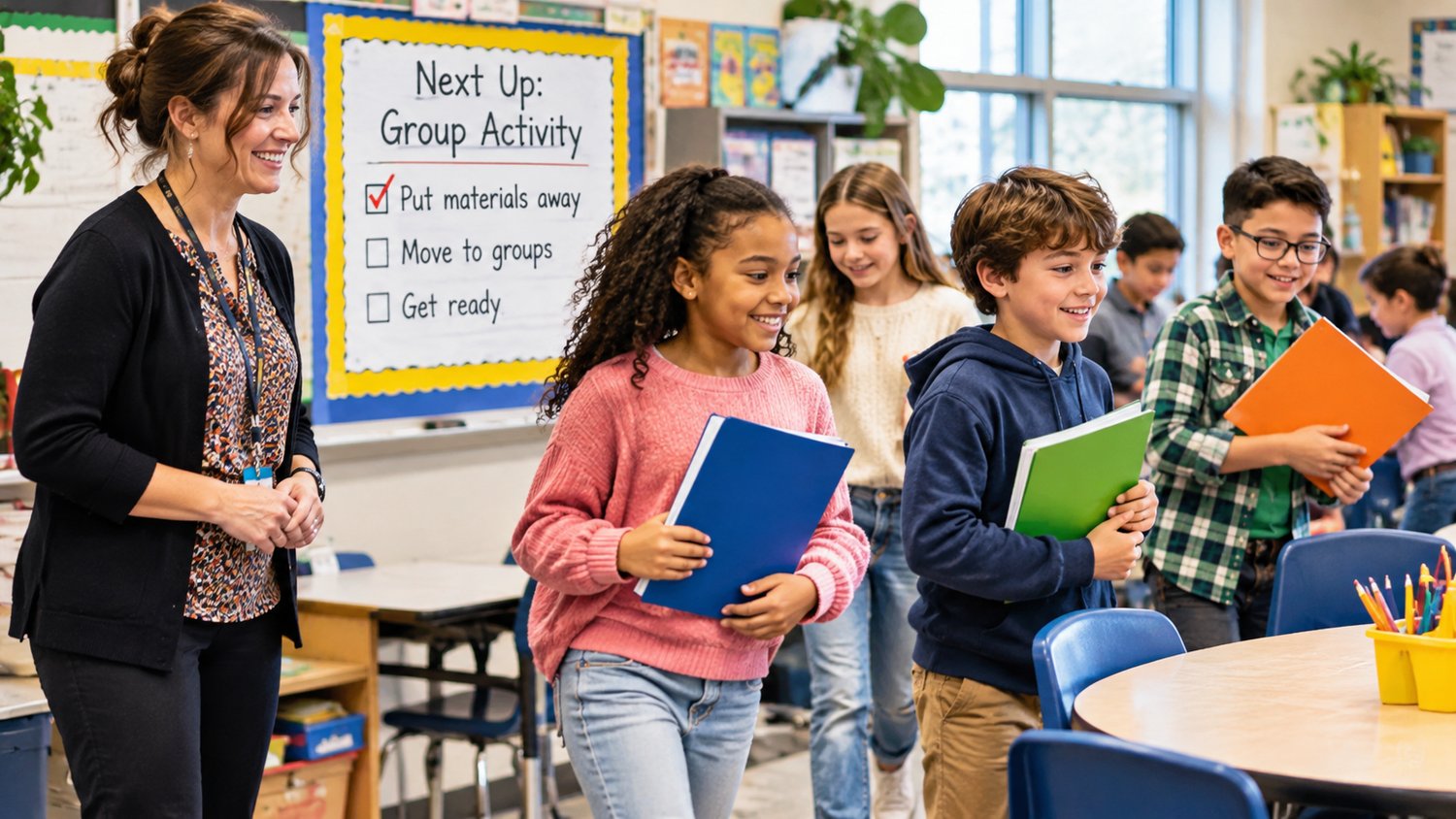
Repeated verbal directions can consume valuable classroom time. Display a short transition checklist on the board.
For instance:
* Put away your notebook.
* Collect your reading materials.
* Move to your assigned group.
* Begin the first activity.
Visual reminders allow students to follow instructions without waiting for the teacher to repeat every step.
4. Prepare Materials Before the Lesson Begins
Searching for worksheets, arranging supplies or distributing materials during a transition can interrupt the flow of instruction.
Prepare frequently used materials in labelled trays, folders or designated classroom spaces. For group activities, organise supplies before students move.
A little preparation can prevent unnecessary interruptions later.
5. Introduce a Consistent Attention Signal
Students may continue talking when the teacher needs to give new instructions. Establish a simple attention signal, such as a hand raised, a short verbal cue or a classroom chime.
Practise the routine with students so they understand that the signal means to pause, listen and focus.
The important part is consistency. Avoid changing the signal frequently.
6. Give Students Specific Responsibilities
Classroom transitions become easier when students share responsibility.
Assign simple roles such as materials manager, group leader, board assistant or classroom organiser. Rotate these responsibilities so different students have opportunities to participate.
This reduces the need for the teacher to manage every small task and encourages students to take ownership of their classroom environment.
7. Review and Improve Transitions That Are Not Working
Not every routine will work perfectly from the beginning. Observe which transitions regularly create delays.
Is the movement between subjects too complicated? Are students unsure where to collect their materials? Does group formation take longer than expected?
Identify the specific difficulty and adjust the routine. Sometimes one small change, such as clearer seating arrangements or better-organised supplies, can make a noticeable difference.
A More Organised Classroom Creates More Room for Learning
Effective transitions are built through preparation, consistency and shared responsibility. Teachers do not need complicated systems to improve classroom routines. Clear instructions, predictable expectations and a little student participation can make everyday activities easier to manage.
The goal is not simply to save a few minutes. It is to create a classroom where students know what to do, teachers can focus on instruction and learning continues with fewer unnecessary interruptions.