

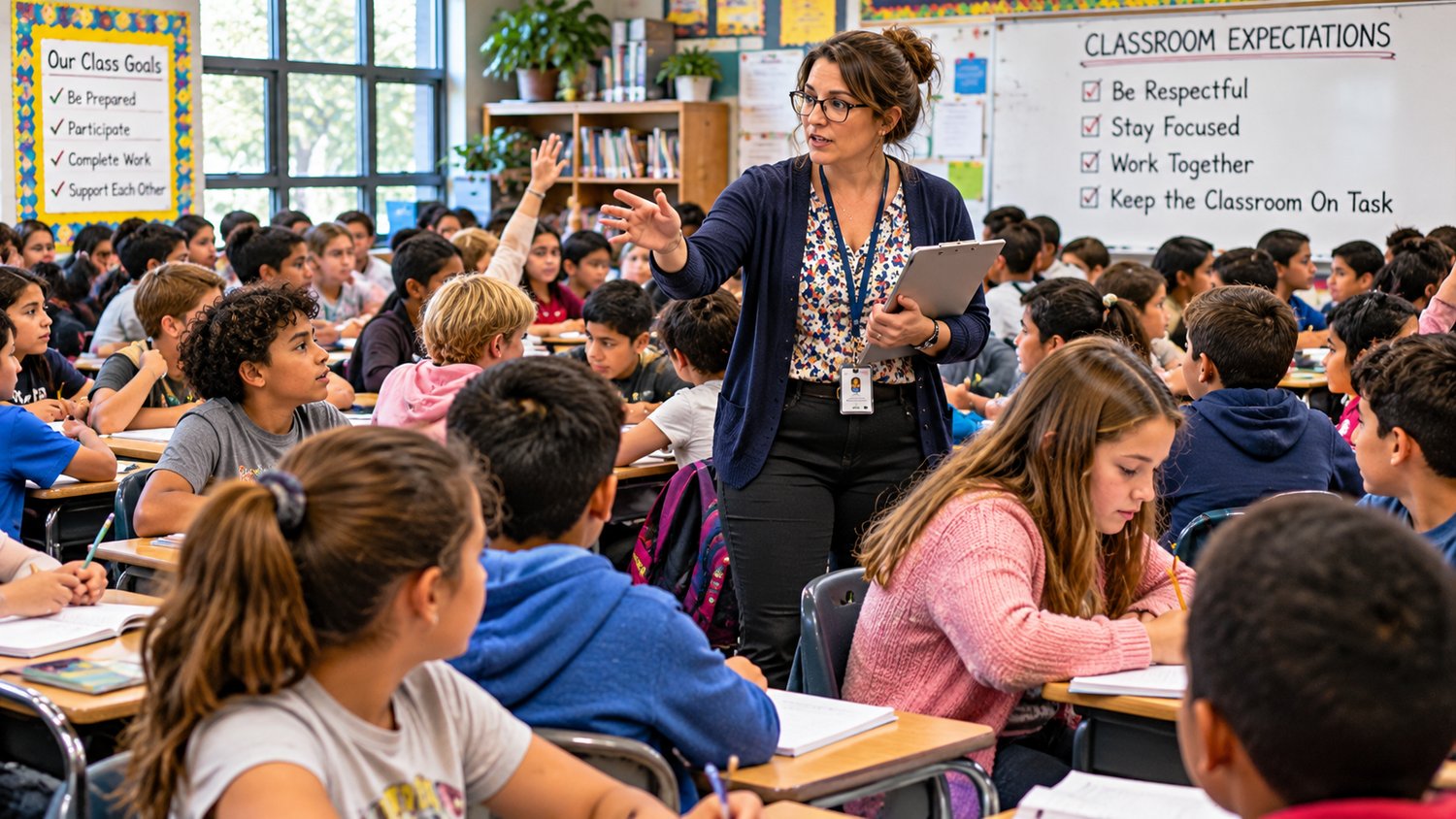
A classroom can be quiet without being productive. Students may follow instructions, remain in their seats and avoid disturbing others, yet still struggle to engage with their lessons. This is why effective classroom management should never be measured by silence alone.
Good classroom management creates an environment where students feel secure, understand expectations and have enough opportunities to participate in learning. Its success becomes visible through everyday changes in student behaviour, classroom routines and academic engagement.
These are seven outcomes teachers should look for.
1. More Time for Actual Teaching
Frequent interruptions, repeated instructions and unnecessary delays consume valuable instructional time.
When classroom routines become familiar, teachers spend less time correcting small problems and more time explaining lessons, answering questions and supporting students.
A smooth beginning to the school day or a well-organised transition between subjects can make a noticeable difference.
2. Greater Student Engagement
Students are more likely to participate when lessons are organised, expectations are clear and activities encourage involvement.
Instead of simply listening throughout a lesson, students get opportunities to discuss ideas, answer questions, solve problems and demonstrate understanding. An engaged classroom is not necessarily silent; meaningful participation can involve plenty of discussion.
3. Fewer Repeated Behaviour Interruptions
Effective management does not mean that challenging behaviour disappears completely. Every classroom has difficult moments.
However, consistent expectations, clear reminders and calm responses can help prevent minor problems from repeatedly interrupting instruction. Students gradually learn which behaviours support a productive learning environment.
4. Smoother Classroom Transitions
Moving from one activity to another can become surprisingly time-consuming. Students may take too long to collect materials, change seats or prepare for the next lesson.
Clear transition routines help students understand what to do without waiting for repeated directions.
Teachers can use simple signals, visual reminders and predictable procedures to make these moments more efficient.
5. Greater Student Independence
An effectively managed classroom does not depend on the teacher giving instructions every minute.
When students understand classroom procedures, they become better prepared to organise materials, begin assignments, follow directions and seek appropriate help. This independence gives teachers more opportunities to work with individuals who need additional support.
6. A More Respectful Learning Environment
Students learn better when they feel that their voices matter and their mistakes will be treated fairly.
Teachers can encourage this environment by listening carefully, addressing disagreements calmly, applying expectations consistently and recognising positive behaviour. Respect should be demonstrated through everyday interactions, not just displayed as a classroom rule.
7. Better Opportunities for Academic Progress
Classroom management cannot guarantee higher grades, but it can create conditions that support learning.
When students have more opportunities to participate, fewer unnecessary interruptions and a predictable environment, they have better opportunities to concentrate on academic tasks.
Teachers should look beyond test scores and also observe participation, task completion, confidence and progress over time.
How Can Teachers Know Their Classroom Management Is Working?
Look at everyday evidence rather than relying on whether the classroom appears quiet.
Are students beginning activities without repeated reminders? Are transitions becoming quicker? Are more students participating? Is instructional time being used effectively? Are students treating one another respectfully?
These observations can help teachers identify what is working and where adjustments are needed.
Where to begin
You don't need to track all seven at once. Choose the one that frustrates you most, measure it for a week, and make one small change. Then measure again. The point of management was never control for its own sake. It exists to clear the path so that students can think, struggle, and succeed. When the numbers start moving, you'll know your effort is paying off where it matters most: in what your students learn.
Final Thought
Effective classroom management is not about controlling every movement or demanding constant silence.
It is about building a classroom where teaching becomes more productive and students have the confidence, structure and opportunity to learn.
At Smart Teacher Toolkit, we continue exploring practical ideas that help teachers create more effective, supportive and engaging classrooms.