
Have you ever started a lesson only to find students talking over you, interrupting classmates, or refusing to follow instructions?
Disruptive behavior can interrupt learning, drain teachers' energy, and make classroom management feel overwhelming. The good news is that you don't need to turn every incident into a confrontation.
A calm, consistent approach can help you address disruptions while protecting a positive learning environment.
1. Look Beyond the Behavior
Before reacting, consider what might be causing the disruption.
A student may be struggling with the assignment, seeking attention, feeling frustrated, or having difficulty managing emotions. Sometimes, unclear instructions or long periods of inactivity contribute to the problem.
Try this: Observe when the behavior occurs. Does it happen during independent work, transitions, or challenging assignments? Identifying patterns can help you choose a more effective response.
Understanding possible causes doesn't mean ignoring inappropriate behavior. It helps you respond more thoughtfully.
2. Stay Calm and Respond Briefly
Raising your voice or arguing in front of classmates can turn a small disruption into a bigger conflict.
Instead, maintain a calm tone, use brief directions, and avoid lengthy public lectures.
For example, if a student repeatedly interrupts, you might say:
"Please let your classmate finish. I'll give you a turn next."
Then continue the lesson.
Remember: Address the behavior without attacking the student's character. Correcting an action is more constructive than labeling a child as difficult.
3. Make Expectations Clear
Students need to know what appropriate classroom behavior looks like.
Establish a few clear expectations, such as listening when others speak, following directions, and respecting classmates.
Explain these expectations, model them, and revisit them when necessary.
Try this: Before group work, say, "Work with your group, take turns speaking, and ask for help if you get stuck."
Clear directions reduce confusion and help students understand what success looks like.
4. Redirect Without Embarrassing the Student
Not every disruption requires stopping the entire lesson.
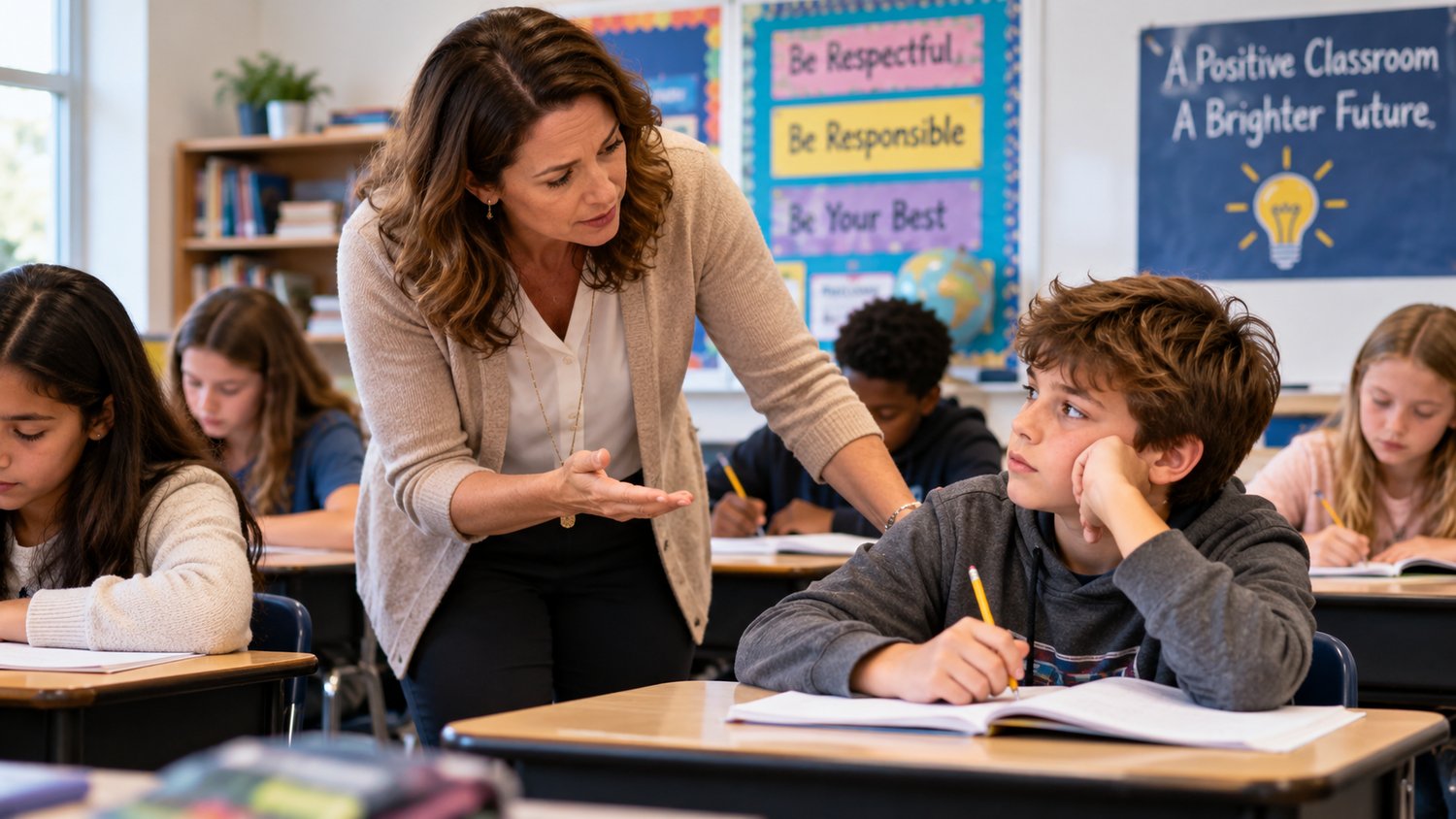
You can often redirect behavior through a quiet reminder, moving closer to the student, pointing to classroom expectations, or offering a clear choice.
For example:
"You can begin the first question independently or work through it with my help. Which would you prefer?"
Give the student a reasonable opportunity to make a better choice while maintaining appropriate boundaries.
5. Notice and Reinforce Positive Behavior
Teachers often need to correct disruptions, but students also benefit from knowing when they are meeting expectations.
Be specific when acknowledging positive actions.
Instead of saying only "Good job," try:
"Thank you for waiting until your classmate finished speaking."
This helps students understand which behaviors support learning and respectful relationships.
6. Recognize When Additional Support Is Needed
If disruptive behavior continues despite consistent classroom strategies, document patterns and consider what additional support may help.
Depending on the situation, collaborate with school support staff, administrators, or the student's family according to school policies.
If behavior creates an immediate safety concern, follow your school's established safety procedures.
Remember that one strategy will not work for every student. Effective classroom management combines clear expectations, consistent boundaries, and attention to individual needs.
One Small Step to Try Tomorrow
Choose one recurring classroom disruption. Observe when it happens, respond calmly, and record what seems to help.
Small, consistent improvements can make classroom management more manageable over time.
Let's learn from one another!
What is the most challenging disruptive behavior you encounter in your classroom?
Please share your problem with us. We'll help you find a practical, professional solution.
Smart Teacher Toolkit
Practical support for everyday teaching challenges.
Need More Practical Classroom Solutions?
Explore practical resources designed to help you manage everyday teaching challenges with confidence.
Visit Smart Teacher Toolkit to discover tools and resources created for teachers.
Explore More: https://payhip.com/SmartTeacherToolkit