
A successful school day rarely depends on one extraordinary lesson. More often, it comes from small, consistent habits that help teachers stay organised, keep students engaged, and create a classroom where learning can happen smoothly.
Teachers manage many responsibilities simultaneously. From preparing lessons to monitoring student progress, even a few overlooked details can make the day more challenging.
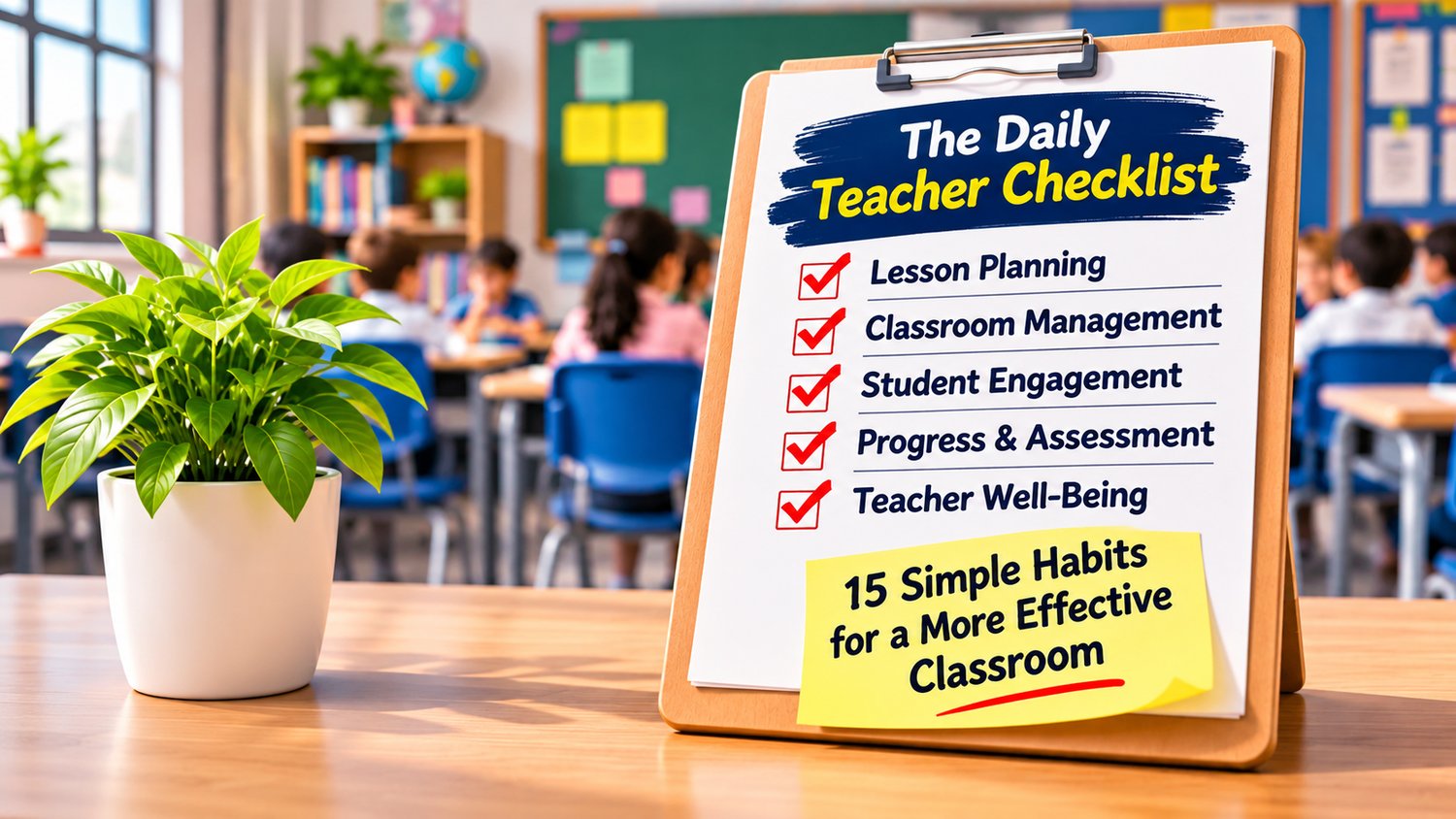
A simple daily checklist can make these responsibilities easier to manage. Rather than adding another burden, it provides a practical reminder of the things that matter most.
Before Students Arrive: Prepare for the Day
A little preparation in the morning can prevent unnecessary interruptions later.
- Review the lesson plan: Know what you intend to teach and the learning objectives students should achieve.
- Prepare teaching materials: Arrange worksheets, classroom resources, presentations, and other necessary materials in advance.
- Organise the classroom: Check seating arrangements, board space, and classroom supplies.
- Identify students who need additional support: Consider learners who may require extra explanation, encouragement, or modified activities.
During Lessons: Keep Learning on Track
Effective teaching involves more than delivering information. Teachers also need to observe, respond, and adjust their approach.
- Begin with a clear learning objective: Explain what students should understand or accomplish during the lesson.
- Check understanding regularly: Ask questions and use short activities to discover whether students are following the lesson.
- Encourage participation: Give every student opportunities to contribute, including those who are usually reluctant to speak.
- Maintain positive classroom expectations: Address disruptive behaviour calmly and consistently.
- Adapt when necessary: If students struggle with a concept, try another explanation, example, or teaching method.
After Lessons: Monitor Progress
Learning becomes more meaningful when teachers understand what students have actually gained.
- Review students' work: Look for common mistakes, misunderstandings, and areas requiring further practice.
- Provide constructive feedback: Recognise progress and explain how students can improve.
- Support different learning needs: Identify students who need additional assistance and those ready for more challenging activities.
Before Leaving School: Prepare for Tomorrow
A few minutes of reflection can make the following school day more manageable.
- Update essential records: Complete necessary attendance, assessment, and classroom documentation.
- Reflect on the day's teaching: Identify what worked well and what could be improved.
- Prepare the next day's priorities: Note important tasks, arrange resources, and organise upcoming lessons.
Printable Daily Teacher Checklist
Use this quick checklist as a daily reminder.
- Review lesson objectives.
- Prepare teaching materials.
- Organise the classroom.
- Identify students needing additional support.
- Explain learning objectives clearly.
- Check student understanding.
- Encourage classroom participation.
- Maintain positive classroom expectations.
- Adapt teaching when necessary.
- Review students' work.
- Provide constructive feedback.
- Address different learning needs.
- Update essential records.
- Reflect on the day's teaching.
- Prepare tomorrow's priorities.
A Better Classroom Begins with Consistent Habits
Teachers do not need to accomplish everything perfectly every day. Some days will be demanding, unexpected situations will arise, and certain tasks may need to wait.
The purpose of this checklist is not to create additional pressure. It is to help teachers maintain focus, build consistency, and give greater attention to student learning.
Small improvements, repeated every day, can make a meaningful difference over time.
Smart Teacher Toolkit continues to explore practical ideas and resources that help teachers work smarter, teach more effectively, and create better classroom experiences.