

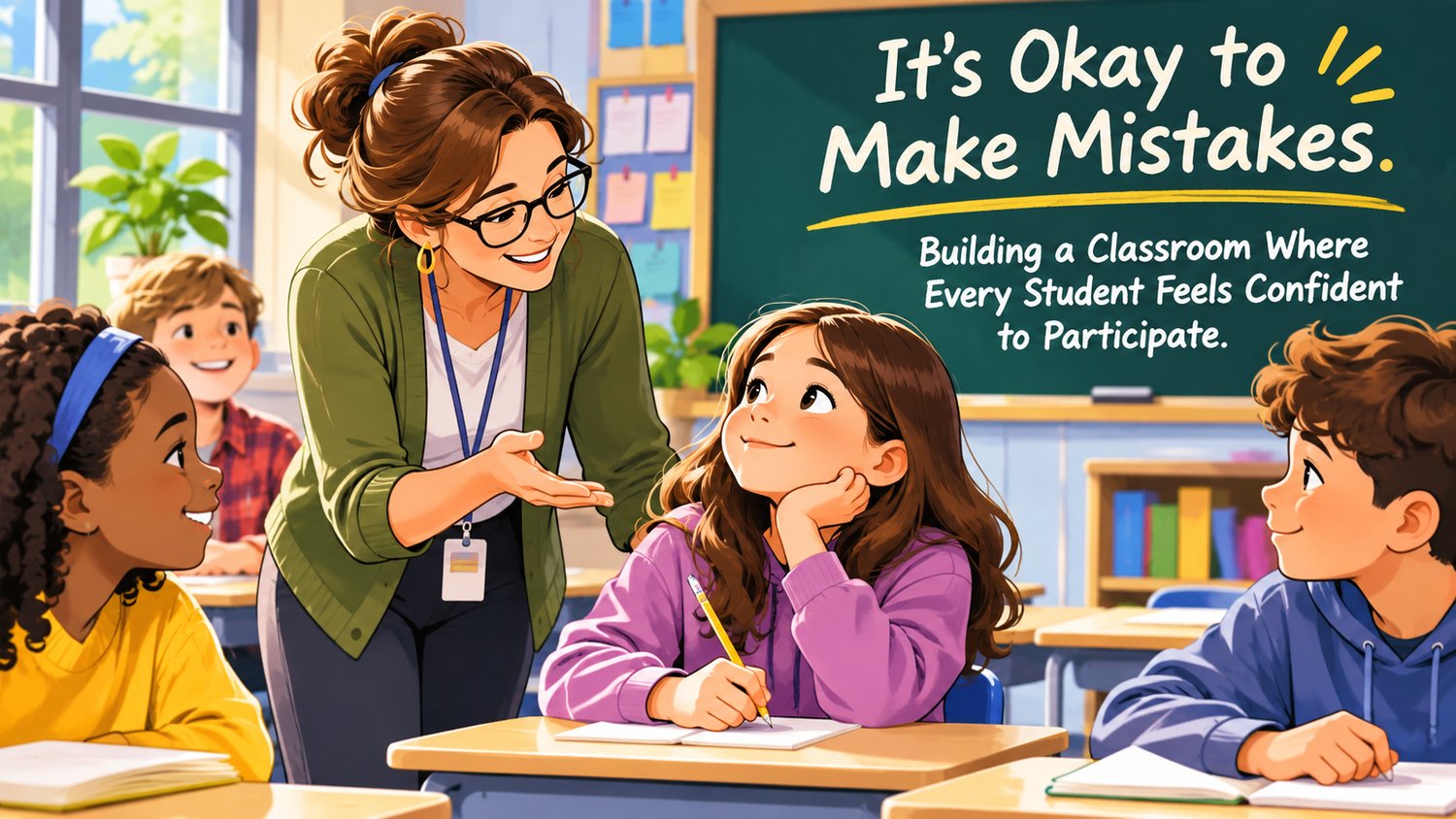
A student knows the answer but keeps looking down when the teacher asks a question. Another starts writing, erases everything, and waits for someone else to respond. Some students would rather remain silent than risk giving an incorrect answer in front of their classmates.
These moments are familiar to many teachers. Often, the problem is not a lack of knowledge. It is the fear of being wrong.
When students associate mistakes with embarrassment, criticism, or failure, they gradually become less willing to participate. Teachers can change that experience by creating a classroom where trying matters as much as getting the answer right.
The difference often lies in the small things teachers do every day. A few thoughtful changes in the classroom can help students feel more comfortable taking part, even when they are unsure of an answer.
1. Respond to Wrong Answers with Respect
The way a teacher reacts to an incorrect answer can influence whether a student volunteers again.
Avoid expressions or comments that make a child feel foolish. Instead, acknowledge the attempt and guide the student towards the correct understanding.
Try saying, "That's an interesting start. Let's examine this together."
A respectful response keeps the discussion moving without discouraging participation.
2. Share Your Own Learning Experiences
Students sometimes imagine that teachers have always known everything they teach. Sharing a genuine experience of struggling with a difficult subject, learning a new skill, or correcting an earlier misunderstanding can make a difference.
Explain what helped you improve. This shows students that learning involves effort, questions, and occasional setbacks.
3. Make Classroom Discussions Less Intimidating
Not every student feels comfortable answering questions in front of an entire class.
Give learners a moment to think before asking for responses. Let them discuss an idea with a partner first, then invite volunteers to share.
This simple adjustment gives quieter students time to organise their thoughts and participate with greater confidence.
4. Praise Effort, Progress, and Good Thinking
Recognition should go beyond correct answers.
Notice when a student attempts a difficult question, explains their reasoning, or improves after receiving feedback. Be specific rather than offering empty praise.
For example, "You tried a different approach this time, and your explanation is much clearer."
Such feedback helps students recognise their own progress.
5. Treat Mistakes as Part of the Learning Process
When a student makes an error, use it as an opportunity to explore the underlying misunderstanding.
Ask questions such as:
+ What made you choose this answer?
+ Which part of the problem was difficult?
+ What could we try differently?
Students begin to understand that an incorrect answer can reveal what needs further attention.
6. Avoid Comparisons Between Students
Comparing one student's performance with another's can create unnecessary pressure.
Comments such as "Why can't you answer like your classmate?" may damage confidence and make students reluctant to participate.
Instead, compare a learner's current progress with their own earlier work. Every child develops at a different pace, and improvement deserves recognition.
7. Build a Classroom Culture Where Questions Are Welcome
Students should feel comfortable asking for clarification without worrying about being judged.
Set clear expectations: listen when someone speaks, respect different answers, and never laugh at another student's mistake.
Teachers can also invite students to submit questions anonymously when they feel uncomfortable speaking aloud.
Over time, these everyday practices can make the classroom a more welcoming place for learning.
Confidence Grows When Students Feel Safe
A confident classroom is not one where every student always gives the right answer. It is one where children are willing to think aloud, ask questions, attempt difficult work, and learn from what did not go as expected.
Teachers cannot remove every fear or frustration from the learning process. They can, however, make sure that a student's mistake never becomes a reason to feel ashamed.
Sometimes, the most important lesson a teacher gives is not found in a textbook. It is the reassurance that getting something wrong does not mean giving up.
Smart Teacher Toolkit supports educators with practical ideas and resources to make everyday teaching more effective and meaningful.