
Protective styles have become one of the most popular ways to care for natural hair. Box braids, twists, wigs, sew-ins, and faux locs offer convenience, versatility, and a break from daily styling. But despite their name, protective styles aren't automatically protective.
The truth is, a protective style only protects your hair when it's installed, maintained, and removed properly.
After more than 25 years of caring for natural hair, I've seen beautiful transformations—and I've also helped many clients recover from damage caused by styles that were left in too long or installed with too much tension.
Let's talk about how to make protective style.
What Makes a Style "Protective"?
A protective style is designed to reduce daily manipulation of your natural hair. By keeping your ends tucked away and limiting constant brushing, combing, and heat styling, your hair has an opportunity to retain length and moisture.
Protective styles can also:
- Reduce breakage
- Help retain moisture
- Minimize tangles
- Give your hair time to recover from daily styling
However, the style itself isn't magic. Healthy hair still requires proper care underneath.
Common Protective Styles
Some of the most popular options include:
- Box Braids
- Knotless Braids
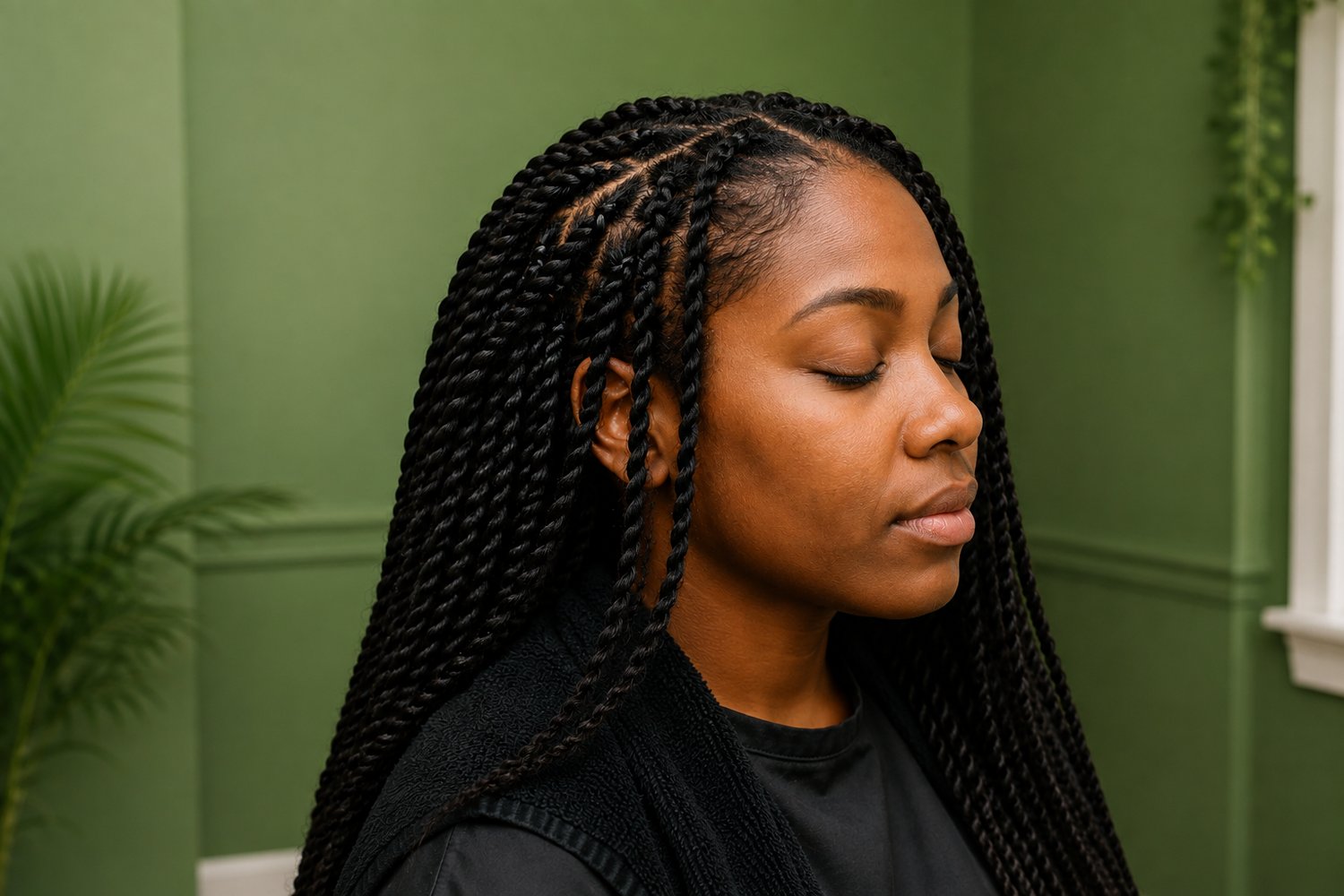
- Two-Strand Twists
- Flat Twists
- Cornrows
- Sew-In Extensions
- Wigs
- Faux Locs
- Crochet Styles
Each style has its advantages, but the healthiest choice depends on your hair's condition, lifestyle, and maintenance routine.
Signs Your Style Is Too Tight
One of the biggest mistakes people make is believing that tighter means longer lasting.
In reality, excessive tension can damage your hair follicles and contribute to hair loss around the hairline.
Watch for these warning signs:
- Headaches after installation
- Small bumps along the hairline
- Redness or irritation
- Difficulty sleeping because of scalp pain
- Excessive pulling around the edges
If your style hurts, it's too tight.
Don't Forget Your Scalp
Your hair is growing from your scalp, so scalp care should never stop while wearing a protective style.
Keep your scalp healthy by:
- Cleansing regularly with a gentle shampoo or scalp cleanser
- Removing product buildup
- Massaging your scalp to encourage circulation
- Using lightweight oils only when needed
- Avoiding heavy grease that can trap dirt and buildup
A clean scalp creates the best environment for healthy hair growth.
Moisture Still Matters
Many people assume they don't need to moisturize while wearing braids or twists.
Actually, your natural hair still needs hydration.
Depending on your hair type, lightly misting with water or a water-based leave-in conditioner can help maintain softness. Seal in moisture with a lightweight oil if needed.
Remember:
Water hydrates.
Oils help reduce moisture loss.
Both have their place in a healthy routine.
Know When It's Time to Take the Style Down
Leaving a protective style in for too long often leads to matting, tangles, excessive shedding, and breakage.
While every style is different, most should be removed within six to eight weeks.
If you notice:
- Heavy buildup
- Excessive itching
- Significant new growth
- Tangling at the roots
It's probably time for a fresh start.
Give Your Hair a Break
Your hair also benefits from rest between protective styles.
Take time to:
- Deep condition
- Trim damaged ends if needed
- Clarify your scalp
- Wear your natural hair for a short period before reinstalling another style
Healthy hair thrives with balance.
Healthy Hair Is the Goal
Protective styles are wonderful tools, but they should never replace healthy hair practices. Beautiful braids or twists begin with healthy hair underneath.
Invest in your scalp. Moisturize consistently. Avoid unnecessary tension. Listen to your hair when it tells you something isn't right.
At Sophia Sunflower Salon, our goal isn't simply beautiful styles—it's helping you build healthy, thriving hair that you can be proud of every day.
Healthy hair isn't about perfection. It's about consistency, care, and choosing habits that allow your hair to flourish.
Because when your hair is truly healthy, every style becomes even more beautiful.
Comments ()