
We spend a lot of time talking about our hair.
Is it moisturized?
Is it growing?
Are my ends breaking?
Why won't my curls cooperate today?
But underneath every curl, coil, twist, braid, and loc is something we don't talk about nearly enough:
Your scalp.
We moisturize our faces. We exfoliate our bodies. We pay attention when our skin feels dry or irritated.
Then we cover our scalps with hair and sometimes forget that the scalp is skin too.
And healthy hair care should include caring for it.
A Healthy Hair Routine Starts at the Scalp
Your scalp is where your hair follicles are located, so keeping it clean and comfortable should be part of your regular hair-care routine.
Sweat, natural oils, dead skin, styling products, gels, creams, and hair grease can all accumulate over time.
That doesn't mean oils or grease are automatically bad.
It means cleansing matters too.
Continuing to layer products onto a scalp that needs cleansing may leave it feeling coated, itchy, or uncomfortable.
Sometimes your scalp isn't asking for another product.
It's asking to be washed.
Does an Itchy Scalp Always Mean It's Dry?
Not necessarily.
When your scalp starts itching, it can be tempting to immediately reach for an oil.
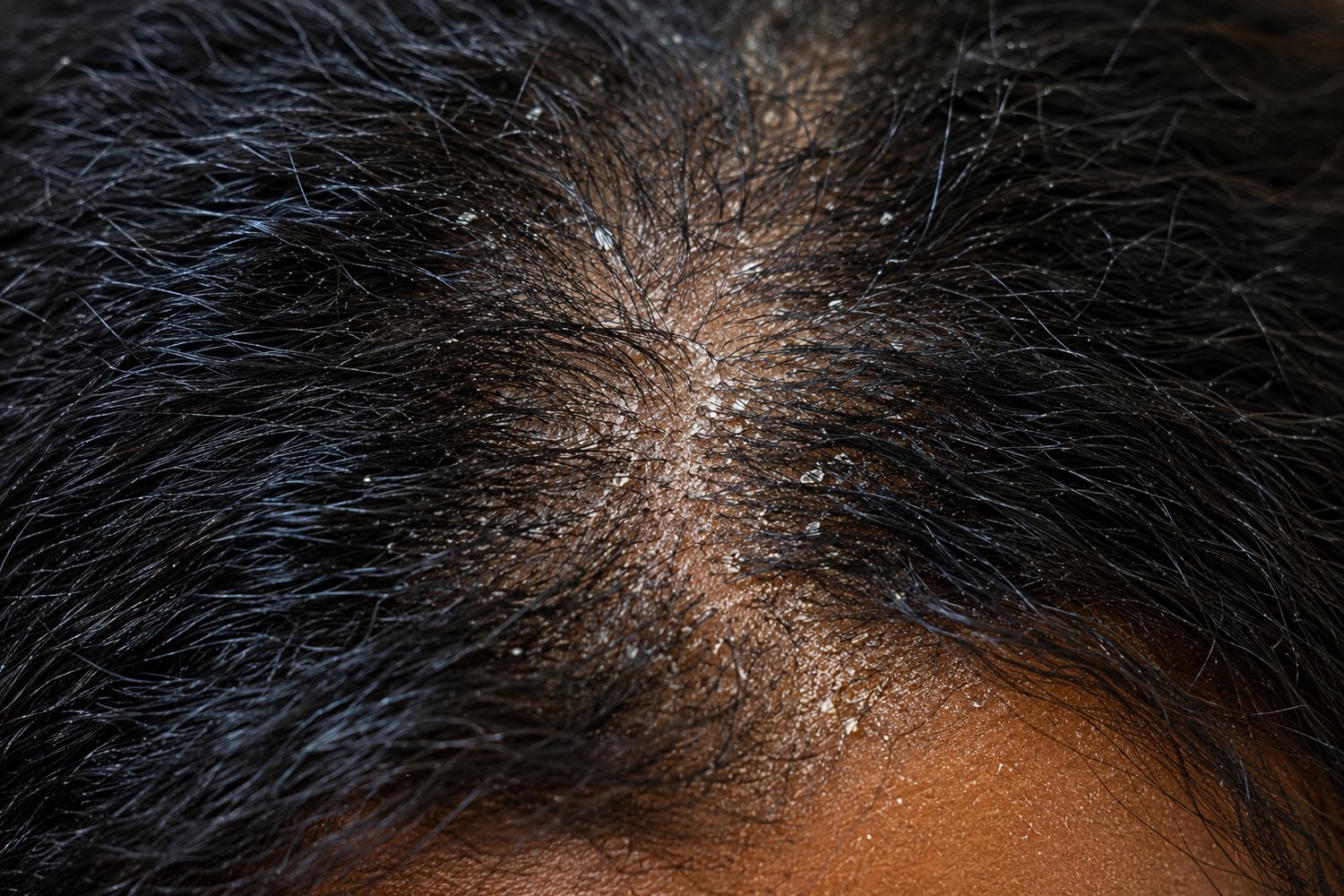
But itching can have many possible causes, including product buildup, sweat, irritation, dandruff, sensitivity to a product, or certain scalp conditions.
That's why paying attention to your scalp is important.
If something suddenly changes, think about what has changed in your routine.
Did you start using a new product?
Have you gone longer than usual between wash days?
Have you been sweating more?
Are you wearing a protective style?
Your scalp may be giving you information.
More Oil Isn't Always the Answer
There was a time when "greasing the scalp" was simply part of hair day in many households.
You sat between somebody's knees, the comb made those perfect little parts, and the grease went straight down each one.
For many of us, it's a memory that feels like home.
But scalp care doesn't necessarily mean applying more and more product.
If you enjoy using scalp oils or hair grease, pay attention to how much you're using and how your scalp responds.
A little may be all you need.
Your scalp shouldn't have to disappear underneath layers of product.
Protective Styles Still Require Scalp Care
Braids, twists, wigs, sew-ins, and other protective styles may reduce daily manipulation, but your scalp doesn't stop needing attention just because your hair is styled.
Sweat and buildup can still happen.
Your scalp can still become irritated.
And tight styles can place unnecessary tension on the hairline and scalp.
A beautiful style shouldn't require you to spend the first three days taking pain medicine or tapping your head because it's too sore to touch.
If a hairstyle hurts, pay attention.
Pain is not proof that your hairstyle will last longer.
Give Your Scalp Some Breathing Room
Sometimes the best thing you can do is keep your routine simple.
Cleanse regularly based on your individual needs.
Avoid scratching aggressively with fingernails or sharp objects.
Be mindful of heavy product buildup.
Pay attention to how your scalp responds to new ingredients.
And don't underestimate the value of simply leaving your scalp alone between necessary care.
You don't have to constantly manipulate your hair for it to be cared for.
What About Scalp Massages?
A gentle scalp massage can feel wonderful.
Using the pads of your fingertips—not your nails—you can gently massage different areas of the scalp without aggressively rubbing or scratching.
It's a simple way to slow down during your routine and give your scalp some attention.
And sometimes that's what hair care should be.
Not another complicated 12-step routine.
Just a few intentional minutes caring for yourself.
Know When It's More Than Hair Care
Products can't solve every scalp problem.
Persistent itching, sores, unusual flaking, inflammation, significant tenderness, sudden thinning, bald patches, or other concerning changes deserve professional attention.
A dermatologist can help determine whether something more than ordinary dryness or buildup is happening.
There is no shame in asking for help.
In fact, knowing when a problem is outside the beauty-product aisle is part of taking good care of your hair and scalp.
Don't Forget What's Under Your Crown
At MYHONEYCHILD, we love beautiful natural hair.
The curls.
The coils.
The fullness.
The versatility.
But caring for your crown isn't only about what everyone else can see.
It's also about caring for what's underneath it.
So the next time you're standing in the mirror thinking about what your hair needs, don't forget to ask:
How does my scalp feel?
Sometimes that one question can tell you more about your routine than the latest hair trend ever could.
Listen to your scalp.
Learn your hair.
And care for both.
Your crown deserves a strong foundation.
MYHONEYCHILD — Rooted in care. Made for your crown.
Comments ()