
A well-organized accounting process is the backbone of every successful business. Whether you run a startup or an established company, having a clear financial workflow helps you monitor cash flow, reduce errors, and make informed business decisions. An efficient accounting system also saves time, ensures tax compliance, and provides accurate financial reports that support growth.
Step 1: Organize Financial Documents
The first step is collecting and organizing all financial records. Keep invoices, receipts, payroll records, bank statements, and expense reports in one secure location. Digital storage solutions make it easier to retrieve documents while reducing paperwork and minimizing the risk of lost records.
Step 2: Track Every Transaction
Record every income and expense promptly. Delayed bookkeeping often leads to inaccurate reports and overlooked transactions. Using accounting software can automate data entry and improve accuracy while giving you a real-time view of your financial health.
Step 3: Categorize Income and Expenses
Create consistent categories for revenue, operating expenses, payroll, utilities, marketing, and other business costs. Proper categorization makes budgeting easier and simplifies tax preparation. It also provides valuable insights into where your money is being spent.
Step 4: Reconcile Bank Accounts Regularly
Compare your accounting records with your bank statements every month. Bank reconciliation helps identify duplicate entries, missing transactions, or unauthorized charges before they become major issues. Regular reconciliation keeps your financial records accurate and reliable.
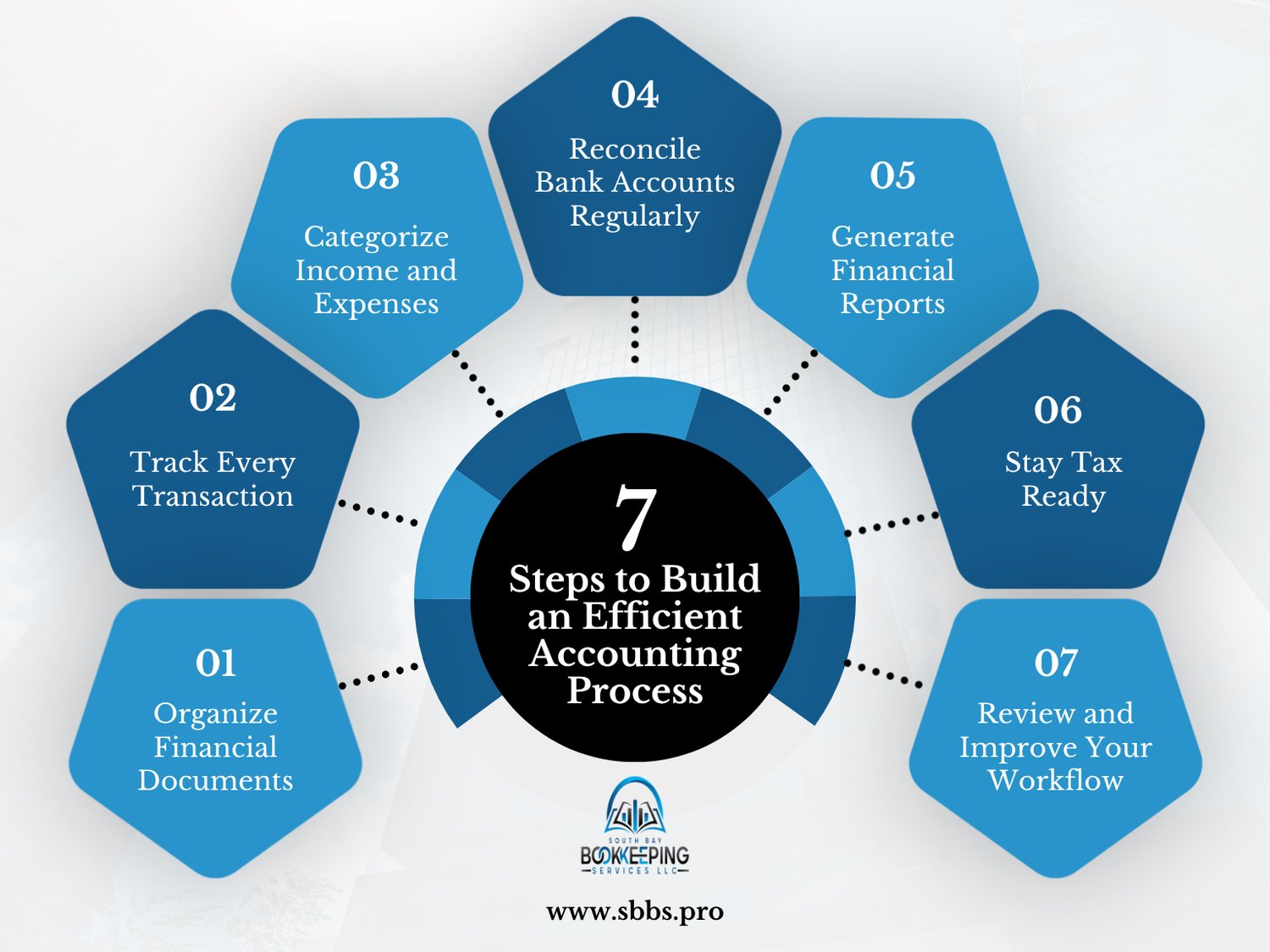
Step 5: Generate Financial Reports
Review key financial statements such as the profit and loss statement, balance sheet, and cash flow statement. These reports help business owners understand profitability, monitor expenses, and identify trends that support smarter financial planning.
Step 6: Stay Tax Ready
Maintain organized records throughout the year instead of waiting until tax season. Accurate bookkeeping helps ensure timely tax filing, reduces stress, and minimizes the risk of penalties due to missing or incorrect information.
Step 7: Review and Improve Your Workflow
Business needs evolve over time, so your accounting system should too. Regularly evaluate your processes, eliminate repetitive manual tasks, and adopt automation where possible. Continuous improvement increases efficiency and reduces operational costs.
Partner with Professionals
Managing your accounting process becomes much easier with experienced bookkeeping support. SBBS - South Bay Bookkeeping Services, provides reliable bookkeeping, financial reporting, bank reconciliation, payroll support, and customized accounting solutions that help businesses stay organized and financially confident. Their experienced team allows business owners to focus on growth while ensuring accurate and compliant financial records.
FAQs
1. Why is an accounting process important?
An efficient accounting process helps businesses maintain accurate financial records, improve decision-making, manage cash flow, and stay compliant with tax regulations.
2. How often should financial records be updated?
Financial transactions should ideally be recorded daily or weekly, with bank reconciliations completed monthly for maximum accuracy.
3. Can outsourcing bookkeeping improve accounting efficiency?
Yes. Outsourcing bookkeeping to professionals like SBBS - South Bay Bookkeeping Services reduces errors, saves time, and provides expert financial support without the cost of hiring an in-house accounting team.