
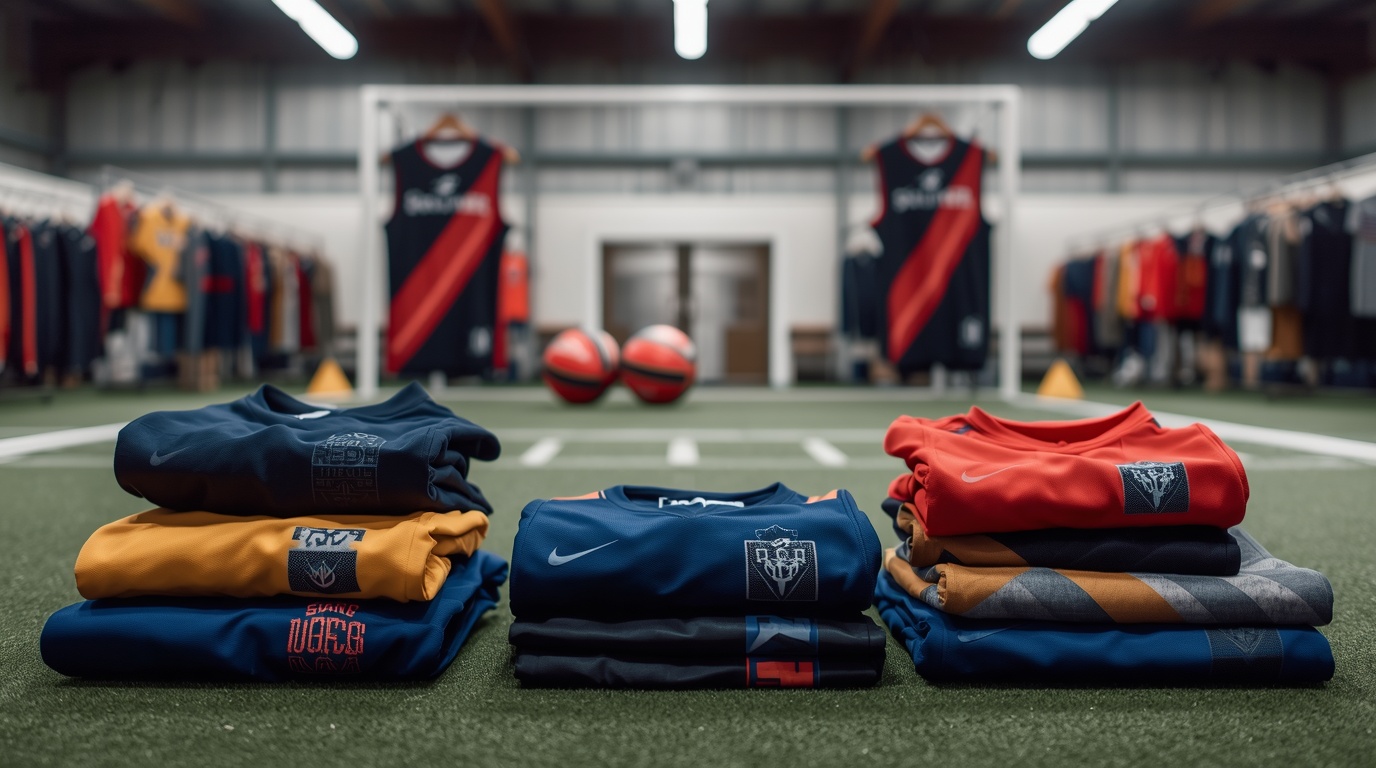
You can usually spot a quality sports uniform the moment someone puts it on. It sits properly, moves naturally and still looks the part after months of training and competition. What you can't see straight away is the amount of planning that went into making it.
Many sporting clubs looking for custom sportswear in Adelaide begin by choosing colours, logos and sizing. Those decisions matter, but it's the fabric, construction and stitching that ultimately determine how well a uniform stands up to regular training and competition.
It's Designed Before It's Made
A sports uniform isn't simply sewn together from a roll of fabric. Every panel has a purpose.
Designers consider how players move during a match, where garments experience the most strain and which areas require extra flexibility. A netball player reaching for an intercept doesn't move the same way as an AFL player contesting a mark, so their uniforms shouldn't be built the same way either.
The aim isn't to create a garment that looks impressive on a hanger. It's to create one that keeps working every time it's worn.
Every Stitch Has a Job
Stitching is easy to overlook until it starts coming apart.
Quality sportswear uses construction techniques that help garments cope with repeated movement. Areas around the shoulders, underarms and side panels experience constant stretching during training and competition. If these sections aren't reinforced properly, small issues can quickly become noticeable.
It's the same with hems, necklines and joins. Well-finished edges help garments maintain their shape instead of curling or becoming uneven after repeated washing.
These aren't details most people notice on day one, but they're often the reason one uniform lasts far longer than another.
Different Sports Need Different Solutions
Sportswear isn't one size fits all, even when the colours match.
For example, netball dresses across Australia are designed to support quick changes of direction, jumping and unrestricted movement. The cut of the garment is carefully planned so players can move naturally without constantly adjusting their uniform during play.
By comparison, AFL jumpers for Australian teams need to handle regular physical contact while remaining lightweight enough for players covering significant distances across the ground. The fabric, construction and fit all need to balance strength with flexibility.
Building sportswear around the demands of each sport produces garments that work with athletes rather than against them.
The Testing Doesn't End After Production
A well-made uniform should perform just as well after months of use as it did on the day it arrived.
That's why quality sportswear is designed with repeated washing, regular training sessions and changing weather conditions in mind. Colours should remain consistent, printed graphics should stay sharp, and fabrics should continue holding their shape throughout the season.
These are the kinds of things people rarely think about when placing an order, yet they're often what separates a reliable uniform from one that needs replacing sooner than expected.
Looking Beyond the Surface
It's easy to judge sportswear by its appearance, but looks only tell part of the story.
The real difference is found in the decisions made before production even begins. Fabric selection, garment construction, stitching methods and thoughtful design all work together to create apparel that continues performing long after the excitement of receiving new uniforms has passed.
Conclusion
Quality sportswear is the result of hundreds of small decisions rather than one standout feature. From the way each panel is shaped to the placement of every stitch, every detail contributes to a garment that's built for the demands of sport. When those details are carefully considered, the result is apparel that delivers value season after season, proving that every thread really does matter.