
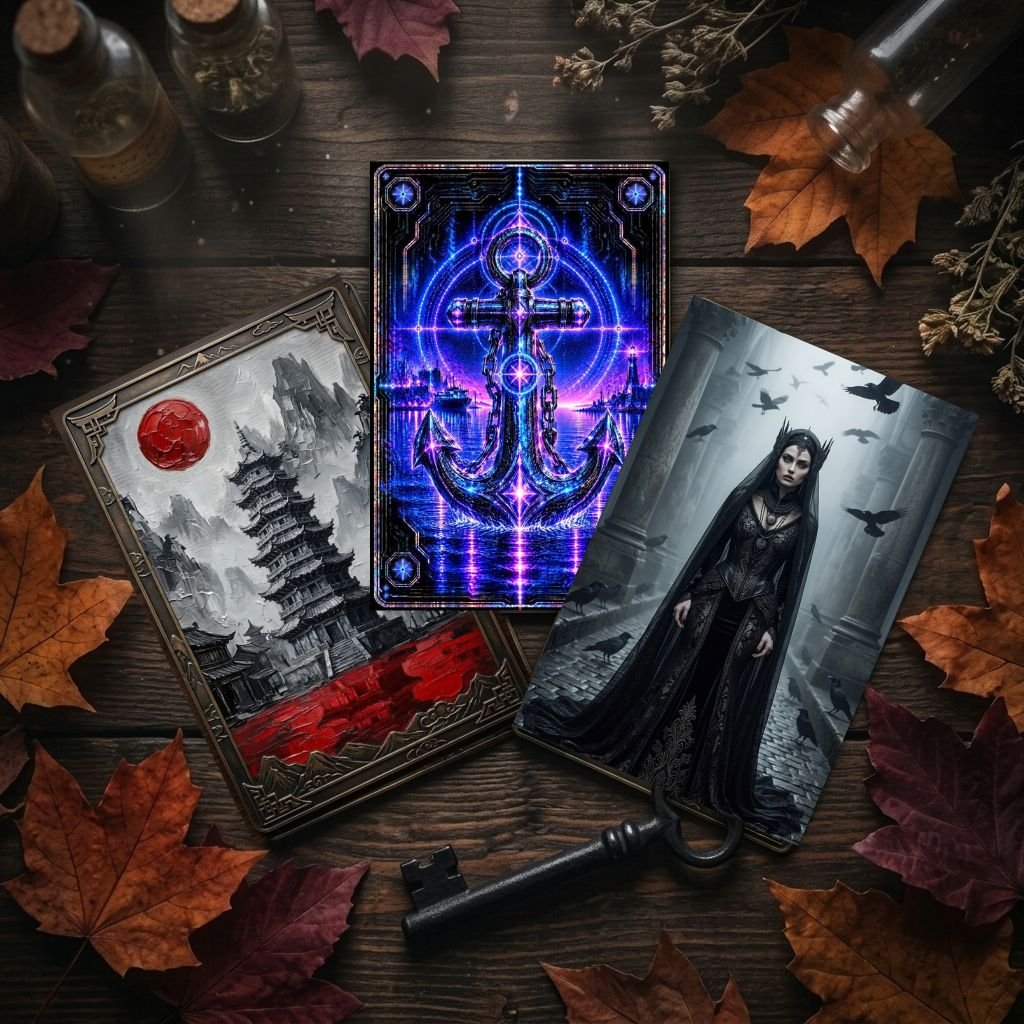
When we sit down to color, journal, or reflect during difficult emotional periods, we rarely pick our markers or pencils at random.
Have you ever noticed how on some days you are instinctively drawn to heavy charcoals, deep indigos, and bruised purples, while on others you avoid dark shades entirely, seeking the safety of muted pastels or stark contrasts?
In traditional art therapy and shadow work, color is not merely a visual decoration—it is a direct language of the unconscious. When life feels overwhelming, grief lingers, or internal resistance flares up, the hues we reach for become mirrors of our hidden emotional states.
Let’s explore the psychology behind the shades we choose on our hardest days, and how you can use them as a ritualistic tool for inner healing.
1. The Call of the Void: Deep Blacks, Charcoal, and Ink
The Psychological Mirror: Protection, boundary-setting, and the sacred womb of transformation.
When everything feels too loud or chaotic, we often gravitate toward absolute dark tones. Society frequently labels black as "depressing" or "scary," but in shadow work, it represents the protective void. It is the soil in which seeds germinate in complete silence before they break the surface.
- The Shadow Message: You are exhausted, and your psyche is demanding absolute boundaries. You are withdrawing your energy from the external world to protect your inner resources.
- The Ritual: Instead of fearing the darkness in your palette, lean into it. Use deep charcoals to ground your anxiety. Acknowledge that periods of heavy, quiet introspection are necessary for ego-death and rebirth.
2. The Weight of Sorrow: Indigo, Slate Blue, and Moody Grays
The Psychological Mirror: Melancholy, deep processing, emotional fog, and intuition.
Blues and grays dominate our pages when we are wading through emotional confusion or quiet grief. Slate tones reflect a mind weighed down by overthinking, yet they also connect us directly to the element of water—the realm of our deepest subconscious truths.
- The Shadow Message: You are holding onto unexpressed words or unprocessed sorrow. There is a fog of uncertainty that your logical mind is trying too hard to pierce through.
- The Ritual: Let these cooler, muted shades flow without forcing strict lines. Allow the pen or marker to move slowly, matching the rhythm of a deep sigh. Let the blue wash away the need for immediate answers.
3. The Fire of Resistance: Rust, Burgundy, and Muted Earth Tones
The Psychological Mirror: Suppressed anger, survival instincts, physical tension, and passion.
When we experience stress, burnout, or frustration, bright cheerful colors feel fake and grating. Instead, we reach for earthy, scorched tones like rust, burnt sienna, and deep burgundy—colors that echo autumn leaves falling, decay, and raw earth.
- The Shadow Message: There is an inner friction, an unmet boundary, or a suppressed frustration that wants to speak. Your body is holding onto tension.
- The Ritual: Channel this intense energy into rhythmic, textured coloring or cross-hatching. Use these grounding earth tones to anchor your fierce emotions onto the paper, transforming raw frustration into creative fuel.
Creating Your Sanctuary: The Color Ritual
In Studio DVA, we believe that art is a ritual of integration. You don't need to "fix" your mood by forcing yourself to color with bright, happy yellows when your soul feels stormy.
Honor whatever shade calls to you on a hard day. Sit with it. Let it speak for you when words fail. By embracing the full spectrum of your inner landscape—even the darkest and muddiest tones—you bring your hidden shadows out into the light of self-compassion.
🖤 How does your palette change on difficult days? Explore our mindful coloring tools, atmospheric art therapy guides, and dark aesthetic printables designed for your inner journey at the Studio DVA Etsy Shop.
#shadowwork #arttherapy #colorpsychology #innerhealing #darkaesthetics #mindfulcoloring #emotionalwellbeing #studioDVA #shadowintegration #spiritualritual
Comments ()