
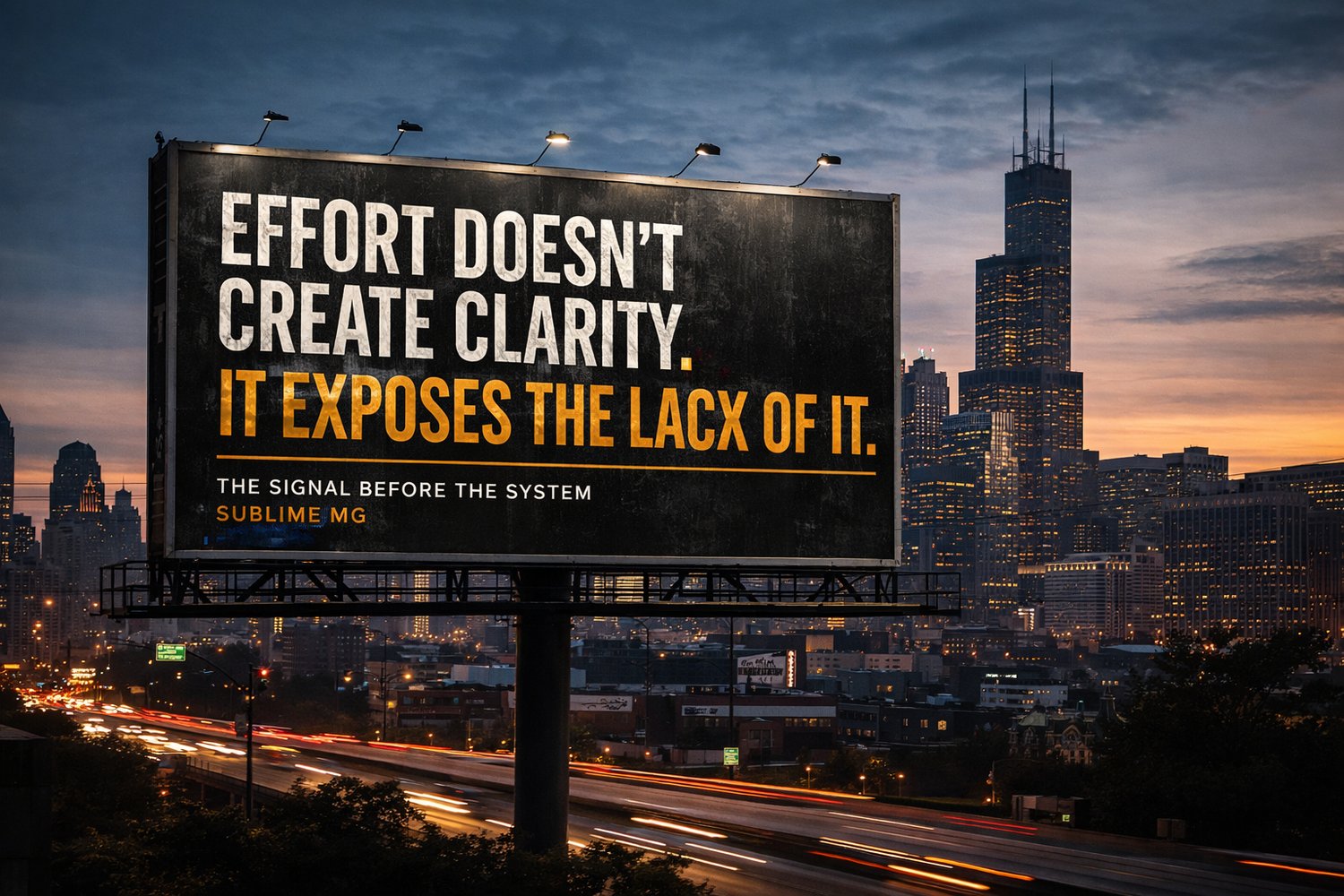
The system doesn’t fail; it drifts.
You see it in how decisions get made—not by what moves the business forward, but by what removes the pressure in the moment.
Lower the price so the room fills faster.
Add more staff so no one feels stretched.
Change direction so the tension goes away.
It works—for a second.
But you aren’t solving for performance; you’re training the system to solve for comfort. And that compounds. Every time pressure shows up, the response becomes predictable: adjust, soften, compensate. Not because it’s the right move, but because it feels better.
That’s how businesses drift.
Not from one big mistake, but from a series of small decisions made to relieve tension instead of hold direction. Over time, the standard gets rewritten without anyone saying it out loud.
You don’t have a performance problem.
You have a tolerance problem.
The system will only produce what it’s allowed to hold. If it’s built to avoid pressure, it will never sustain growth—because growth increases load; it doesn’t reduce it.
The question isn’t “what’s the next move?”
It’s “what does this system actually tolerate?”
Whatever that answer is, that’s your ceiling.
#Leadership #Operations #Systems #Scaling #DecisionMaking
Comments ()