


Introduction.
Most Christians, and even some who aren’t Believers, want to be able to read, study and understand the Bible. The Word says, 14 But how can they call on him to save them unless they believe in him? And how can they believe in him if they have never heard about him? And how can they hear about him unless someone tells them? 15 And how will anyone go and tell them without being sent? That is why the Scriptures say, “How beautiful are the feet of messengers who bring good news!” Romans 10:14, 15 NLT. Those Bible verses denote our we need to have someone, who is anointed with a command of the Bible, show us the way around the Scriptures.
In this Blog we’ll cover the following 4 hacks and the 5th is a set of questions to ask:
1. Pray before you Start to Read.
2. Have an idea where to Begin.
3. Tools for Bible Study.
4. Instead of trying to create your own, use a study method that exists already.
5. Questions to ask when you start reading a Scripture.
Hack 1
Pray Before You Start to Read: Steps to follow before and during Bible Study:
Pray and keep your spiritual ear open for God’s voice or the leading and prompting of the Holy Spirit. This is the Number 1 Hack because including God causes Him to direct your path. See Proverbs 3:6. Also, remember to write notes if you receive any revelation or special thoughts.
Hack 2
Have an idea where to begin. What book and chapter will you start with? For example, will you start with the book of Matthew or the book of John?
Hack 3
Tools for Bible Study. The tools noted below are a basic list of items to gather before you begin studying.
• Bible.
• Pen, pencil, thin marker, etc. Be careful not to use markers that bleed.
• Bible Concordance.
• Bible Dictionary.
Hack 4
Instead of trying to create your own, use a study method that already exists. I’m aware of 20 Bible Study Methods, but there could be dozens used by Christians all over the world. Noted below is a list of 10 popular study methods.
1. Devotional Method: Select a short passage of Scripture and meditate on it. Visualize the scene or the story line. Put yourself into the situation as if you were an active participant during that time period.
2. Chapter Analysis and Summary Method: Bible study structured approach. It includes these 3 categories: Chapter Summary, Verse-by-Verse Analysis and Chapter Conclusion.
3. Character Study Method: Focuses on a particular Bible figure. Includes 3 mechanisms: Focus on One Individual, Scripture Analysis and Personal Application.
4. Theme Bible Study Method (Thematic Method): Focuses on specific themes in the Bible. This approach involves selecting a distinct topic and formulating relatable questions.
5. Biographical Study Method: This is like the Character Study Method. It investigates biblical characters' lives to get knowledge about their experiences and spiritual development. Choose a biblical figure and study his, her life, examining triumphs, setbacks, and relationships with God and other people. The intention is to apply lessons these individuals teach us.
6. Topical Bible Study: Used to find out what the Bible teaches on a particular topic.
a. Select a topic for your topical study.
b. Write out a definition on the topic you have chosen.
c. Do a cross-reference search for relevant Bible verses on your topic.
d. Find related words and synonyms for your topic.
e. Write out notes, paragraphs to summarize your findings. Example: write paragraphs that answer the questions: Who, What, Where, When and How?
7. The Word Study Method: Study the important words of the Bible. Find out the number of times a word appears in Scripture and its function for use. What was the original meaning of the word? Compare and analyze translations and find the root meaning. Write out how this can be applied to your life.
8. Study by Verse Method also referred to as the Verse by Verse Method: Study each verse in Bible sequence, analyzing specific words, framework and meaning before you proceed to the next verse.
9. The SOAP Method: It stands for: Scripture, Observation, Application and Prayer. A quick synopsis: Scripture ~ focus on a Bible verse. Write that verse out in your notebook. Observation ~ What’s the lesson in this verse? Application ~ What can you pull from the verse and apply to your life? Prayer ~ Write out a prayer asking God how you can live this out.
10. The Inductive Method: “Observe something that happens repeatedly and conclude that it will happen again in the same way is an example of inductive reasoning. What else? Inductive can also be used as a synonym for Introductory.” (Dictionary.com, 2024). Focus on these 3 elements: Observation: you’ll need to obtain background information on the segment of Scripture in which you’re focused. Interpretation: What does this passage mean? Application: What is your response to God’s message and how can you apply it to your life?
Hack 5
Questions to ask as You Begin Reading: As you’re reading, keep these questions in mind:
a. Who is speaking?
b. To whom is he speaking?
c. The purpose for which he is speaking.
d. Time or dispensation?
e. Location. Where is this scene, conversation taking place?
Summary.
We all need people to take us by the hand and show us the way when it comes to studying the Bible. It doesn’t matter if a person just got saved or a person who has been saved for 60 years. The Bible has 66 books that were written from the time of Moses as he wrote the first 5 books of the Bible, all the way to the time of John on the Isle of Patmos as he wrote the book of Revelation. That spans over 4,228 years. (BibleResources.info, 2014). Think about the historical and future events value. Just those 2 things alone mean we’ll need someone to guide us through the amazing journey the Bible provides. Hopefully these hacks will assist you along the way.
Happy studying and blessings!
Attribution:
Blog Cover Photo Image: By Sean Osanyinbi. Open Bible on Flat Surface; 24301982-11937373 at Pexels.com
Tanda's Upcoming Book...
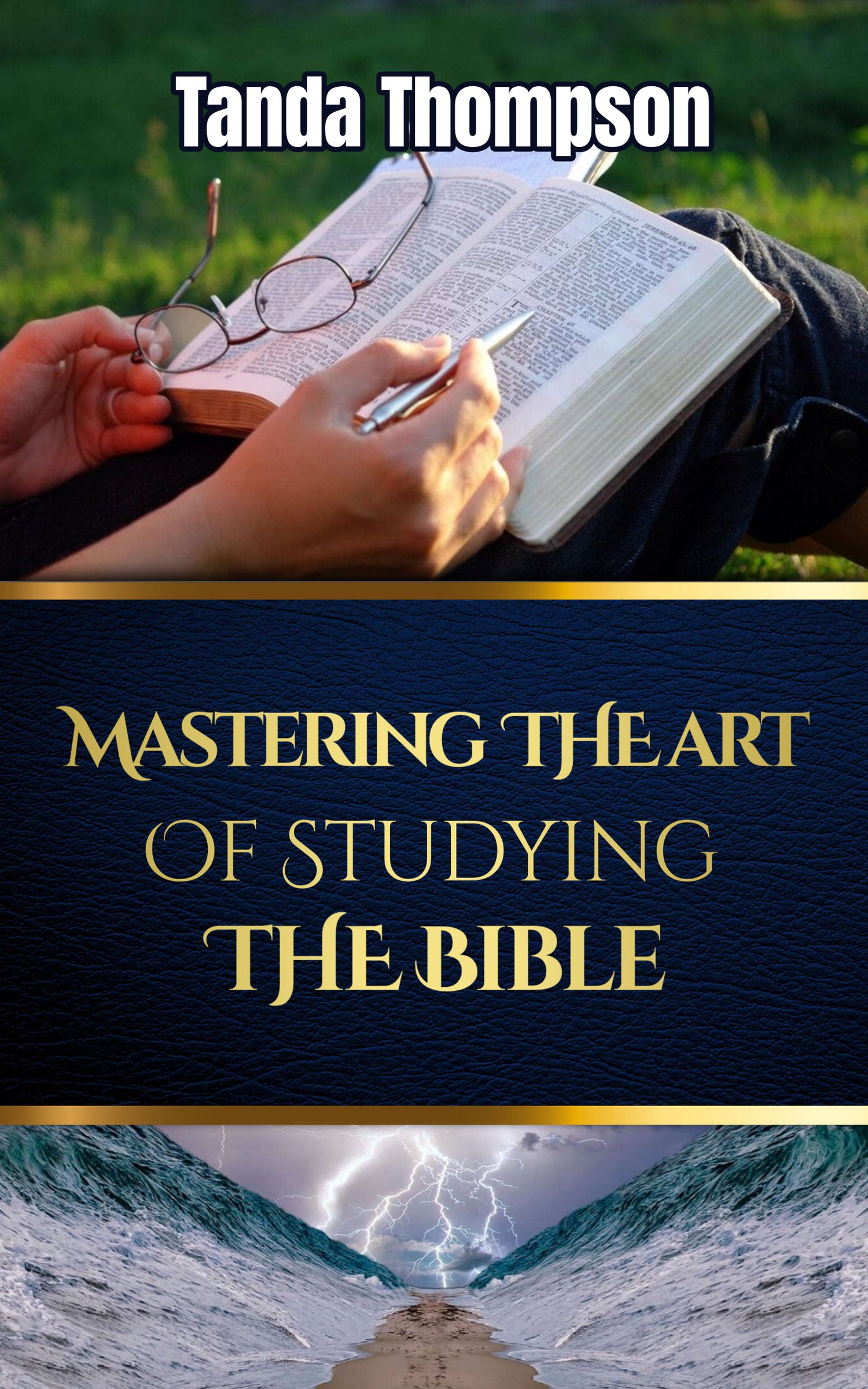
This blog contains excerpts from my new book, Mastering the Art of Studying the Bible. It will be available online and in stores around December 31, 2026. However, you can get a preliminary copy with the first 4 Chapters before it hits the stores. If you hurry to place your Pre-Order for this book, you’ll be the first to receive your preliminary eBook by September 30, 2026.
Note: in addition to instructions on how to study the Bible, this book comes with commentaries, Bible Dictionary, Bible Maps, and more! As a Bonus, Tanda has links to her YouTube Channel explaining how to use the guidelines in the book so you can put these instructions into practice.
This website is now available for taking Pre-Orders!
Link to eBook: https://payhip.com/b/dClNJ
Comments ()