

How to Make Addition Practice Easier for Kids
Learning addition is a big step for young children, but it does not need to feel stressful.
Many kids need repeated practice before addition facts become familiar. The key is to keep practice short, simple, and consistent. A few minutes a day can be more helpful than a long worksheet session that feels overwhelming.
Whether you are a parent, homeschooler, or teacher, simple addition practice can help children build confidence with early math skills.
Start with Small Addition Facts
When children are first learning addition, it helps to begin with small numbers.
Instead of giving too many problems at once, start with simple facts and gradually increase the difficulty. For example, children can practice addition within 5, then within 10, and later move on to sums up to 15.
This step-by-step approach helps children feel more successful and less frustrated.
Use Hands-On Objects First
Before moving to written math problems, children often benefit from seeing addition in a concrete way.
You can use blocks, crayons, buttons, beads, counters, or small toys. For example, place 3 crayons on the table, then add 2 more. Ask your child to count how many there are altogether.
This helps children understand that addition means putting groups together.
Once they understand the idea, written practice becomes much easier.
Keep Practice Short and Consistent
Young learners usually do better with short practice sessions.
Instead of practicing for a long time once a week, try adding a few minutes of math practice into your daily routine. This could be during morning work, homework time, homeschool lessons, or a quiet afternoon activity.
Simple addition practice works well for:
- daily math warm-ups
- homework review
- homeschool lessons
- classroom math centers
- early finishers
- extra practice at home
The goal is not to rush. The goal is to help children become more comfortable with addition over time.
Mix Worksheets with Simple Games
Printable worksheets are useful, but they work best when combined with other types of practice.
You can roll two dice and add the numbers together, draw objects to solve a problem, use a number line, or count small items. These simple activities make addition more visual and easier to understand.
After hands-on practice, a short worksheet can help children review what they have learned.
Need a ready-to-print option?
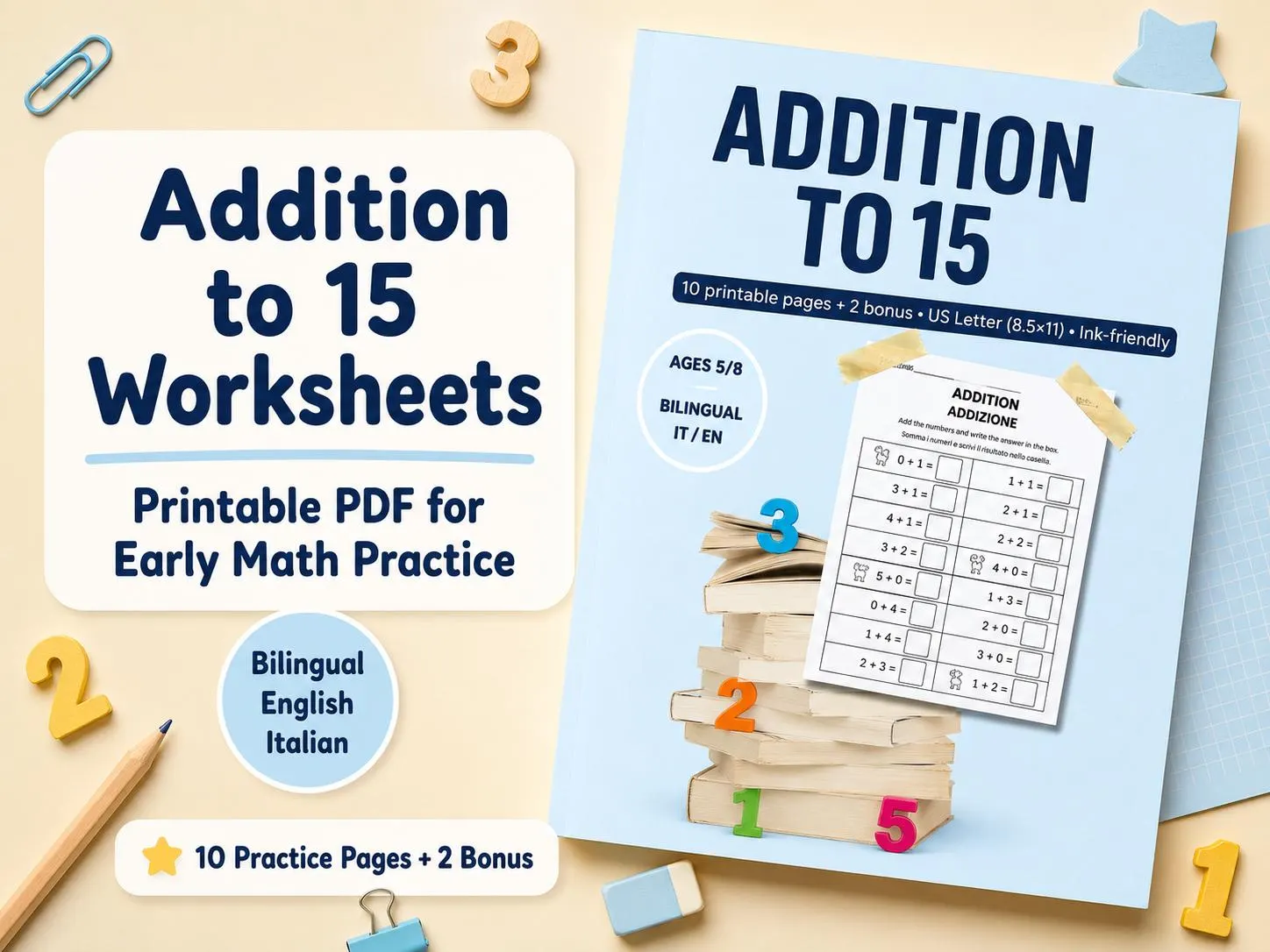
You can use these printable addition worksheets for quick daily practice at home, in homeschool, or in the classroom.
Focus on Confidence, Not Speed
Addition fluency takes time.
Some children enjoy fast math challenges, but others feel stressed when they are timed. Before focusing on speed, it is better to help children understand the problems and feel confident solving them.
You can say:
“Take your time.”
“Show me how you solved it.”
“You can use your fingers if you need to.”
“Let’s check the answer together.”
A calm approach helps children feel safe while practicing new skills.
Review the Same Facts Often
Children may need to see the same addition facts many times before they remember them easily.
That is normal.
Review helps children build familiarity. You can repeat a few problems each day, mix old facts with new ones, or use short worksheets to revisit addition facts during the week.
Small, repeated practice can make a big difference.
Try Bilingual Math Practice
For bilingual families or classrooms, addition practice can also support language exposure.
Using simple math instructions in more than one language can help children connect familiar math tasks with new vocabulary. This can be especially helpful for bilingual homes, dual-language classrooms, homeschool families, or children learning English and Italian.
The most important thing is to keep the activity clear and simple.
Final Thoughts
Addition practice does not need to be complicated.
Children build confidence through small steps, repeated review, hands-on activities, and calm encouragement. A few minutes of simple practice each day can help young learners become more comfortable with addition facts.
For an easy printable activity, download the Addition Facts to 15 Worksheets and use them for home practice, homeschool lessons, homework, or classroom math centers.
Comments ()