

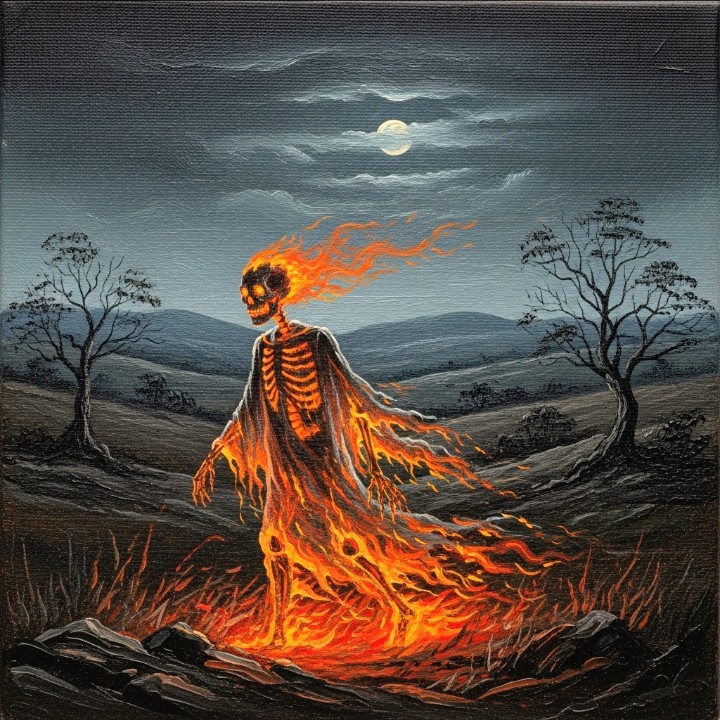
Feiermann or Feuermann (there's different spelling varying by region) are a type of fire elemental skeletal spirits that roam the countrysides of Germany and Pennsylvania. They are nocturnal and known to come out at night. They appear as fiery skeletons, with some stories mentioning them taking the shape of a fire ball and hovering in the air above the tree tops. Old stories of them ranged from friendly travelers that helped lost humans and protected them from disaster, to darker spirits that sometimes caused chaos and sought vengeance against humans that wronged them. Many were known to help guide humans along their path at night and spiritually protect them from disaster and negative spirits and entities. They illuminated the dark countryside with their flames, allowing them to see and find their way out of the dark wilderness. Tokens of appreciation, such as coins, gold, or jewelry, were often given to them for their help. Flan, bacon flan, onion, and onion pies were given as offerings to them. Feuermann that haunted a location were said to leave burned handprints on walls or objects. Many unusual charred patterns on walls or objects were attributed to them. Many Feiermann acted as friendly guides to people and helped to spiritually protect the countrysides. They have spiritual abilities of cleansing and purifying land, creating fiery walls of protection as spiritual boundaries, and use of their fire magic for a variety of spiritual purposes.
Passages referring to Fire men spirits in an old 1915 Pennsylvania Dutch book.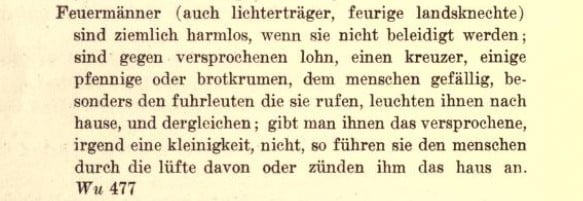
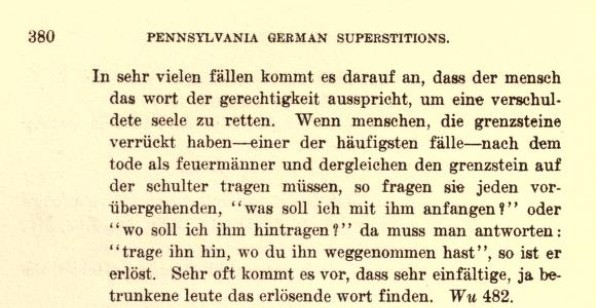
Reference to Feiermann in an old 1915 Pennsylvania Dutch book. “In sehr vielen fällen kommt es darauf an, dass der mensch das wort der gerechtigkeit ausspricht, um eine verschul-dete seele zu retten. Wenn menschen, die grenzsteine verrückt haben einer der häufigsten fälle-nach dem tode als feuermänner und dergleichen den grenzstein auf der schulter tragen müssen, so fragen sie jeden vor-übergehenden, "was soll ich mit ihm anfangen?" oder "wo soll ich ihm hintragen?" da muss man antworten: "trage ihn hin, wo du ihn weggenommen hast", so ist er erlöst. Sehr oft kommt es vor, dass sehr einfältige, ja be-trunkene leute das erlösende wort finden."
Translated to English: "In very many cases it depends on a person’s speaking the word of justice in order to save a guilty soul. When people who have moved boundary stones—one of the most common cases—after death must carry the boundary stone on their shoulder as Firemen and the like, they ask every passerby, “What shall I do with it?” or “Where shall I carry it?” One must then answer, “Carry it to where you took it from”; then he is redeemed. Very often it happens that very simple, even drunken people find the redeeming word."
"Feuermänner (auch lichterträger, feurige landsknechte) sind ziemlich harmlos, wenn sie nicht beleidigt werden; sind gegen versprochenen lohn, einen kreuzer, einige pfennige oder brotkrumen, dem menschen gefällig, be-sonders den fuhrleuten die sie rufen, leuchten ihnen nach hause, und dergleichen; gibt man ihnen das versprochene, irgend eine kleinigkeit, nicht, so führen sie den menschen durch die lüfte davon oder zünden ihm das haus an."
Translated to English: "Fire Spirits (also called light-bearers, fiery mercenaries) are quite harmless as long as they are not offended; for a promised reward—a penny, a few coins, or breadcrumbs—they are helpful to people, especially to carters who call upon them, lighting their way home, and so on. If they are not given the promised reward, however small, they will carry the person away through the air or set their house on fire."
Comments ()