
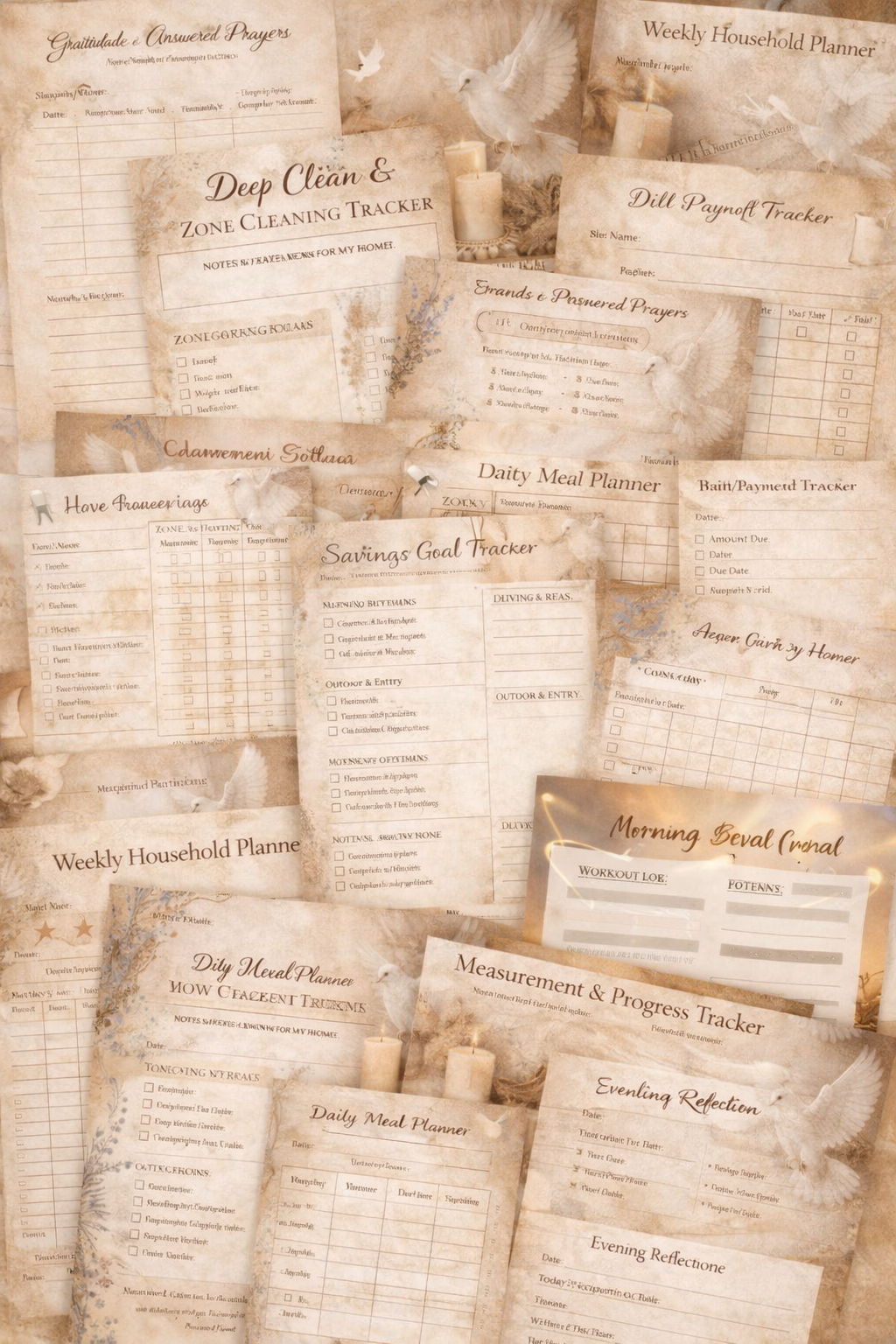
Let me tell you something they don't put on the wellness shelf at Target:
The planner sitting on your desk? It's not a productivity accessory. It's a behavioral health intervention. And the research backs it up.
According to the National Institutes of Health, regular journaling and intentional planning are evidence-based tools — clinically studied, low-cost, and proven to reduce both emotional distress and physical symptoms of stress. We're not talking about "good vibes only" journaling. We're talking about a practice that can reduce anxiety and depression symptoms by 20–45% and cut cortisol — your primary stress hormone — by up to 23%.
Dr. Elephant didn't design planners for aesthetics alone. I designed them because your nervous system deserves a place to land.
What Writing Actually Does to Your Body
When you write about what's stressing you, you stop carrying it internally. That's not poetry — that's physiology. Externalizing worry onto paper breaks the rumination cycle your brain gets locked in. Naming an emotion reduces its intensity. Tracking your thought patterns over time reveals the triggers you couldn't see in the moment.
That's Cognitive Behavioral Therapy. In your journal. At your desk. On your terms.
The physical benefits go further than most people expect: stronger immune function, lower blood pressure, faster healing — especially for people managing chronic conditions or navigating trauma recovery. The mind-body connection isn't a wellness buzzword. It's documented in peer-reviewed research.
Can't sleep? A worry dump or written to-do list before bed reduces anxiety-related insomnia. Your brain needs permission to stop running the loop. Give it somewhere to put the list.
What Planning Does to Your Brain
Planning is the clinical companion to journaling. Writing down a goal increases your likelihood of achieving it — not because of magic, but because of how intention interacts with memory and motivation.
More importantly: planning reduces overwhelm by breaking large, stress-producing problems into smaller, navigable tasks. When your brain stops seeing one giant threat and starts seeing manageable steps, your nervous system shifts out of survival mode. Executive function returns. Clarity returns. You get things done — not because you're more disciplined, but because your brain is no longer in fight-or-flight over your to-do list.
Planning also reduces mental clutter — the background cognitive load of unorganized, unwritten responsibilities. A structured planner frees up working memory. That's not wellness language. That's neuroscience.
The Four Techniques Worth Knowing
Expressive Writing (Pennebaker Method): 15–20 minutes. Deep emotional experiences. 3–4 consecutive days. One of the most replicated behavioral interventions in psychological research. It processes trauma and major stress at the root level.
Gratitude Journaling: Three minutes of listing what you're grateful for actively rewires your brain's attentional bias away from threat. Neuroplasticity. In your handwriting.
Thought Recording / CBT Journaling: Write the negative thought. Challenge it. Replace it with something balanced. This is cognitive restructuring — the core mechanism of CBT — made accessible without a waiting list.
Bullet Journaling: Structured hybrid of task management, mood tracking, and goal-setting. Ideal when your emotional health and your operational life are impossible to separate — which, honestly, describes most of us.
The Prescription
Studies are clear: 15–20 minutes, 3–4 times per week. Consistency outperforms duration every time. Privacy and honesty amplify the results. The practice works best when no one is watching and you're not performing wellness — you're doing it.
And the environment you do it in? Not neutral. Your nervous system reads your space before you write a single word. A sanctuary signals safety. Safety enables honesty. Honesty is where the healing happens.
That's why the desk matters. That's why the planner matters. That's why the whole sanctuary matters.
Prescribed by Dr. Elephant. Approved by your nervous system. Your vibe. Your office. Your sanctuary.