

Did You Know? — The Eastern Chipmunk
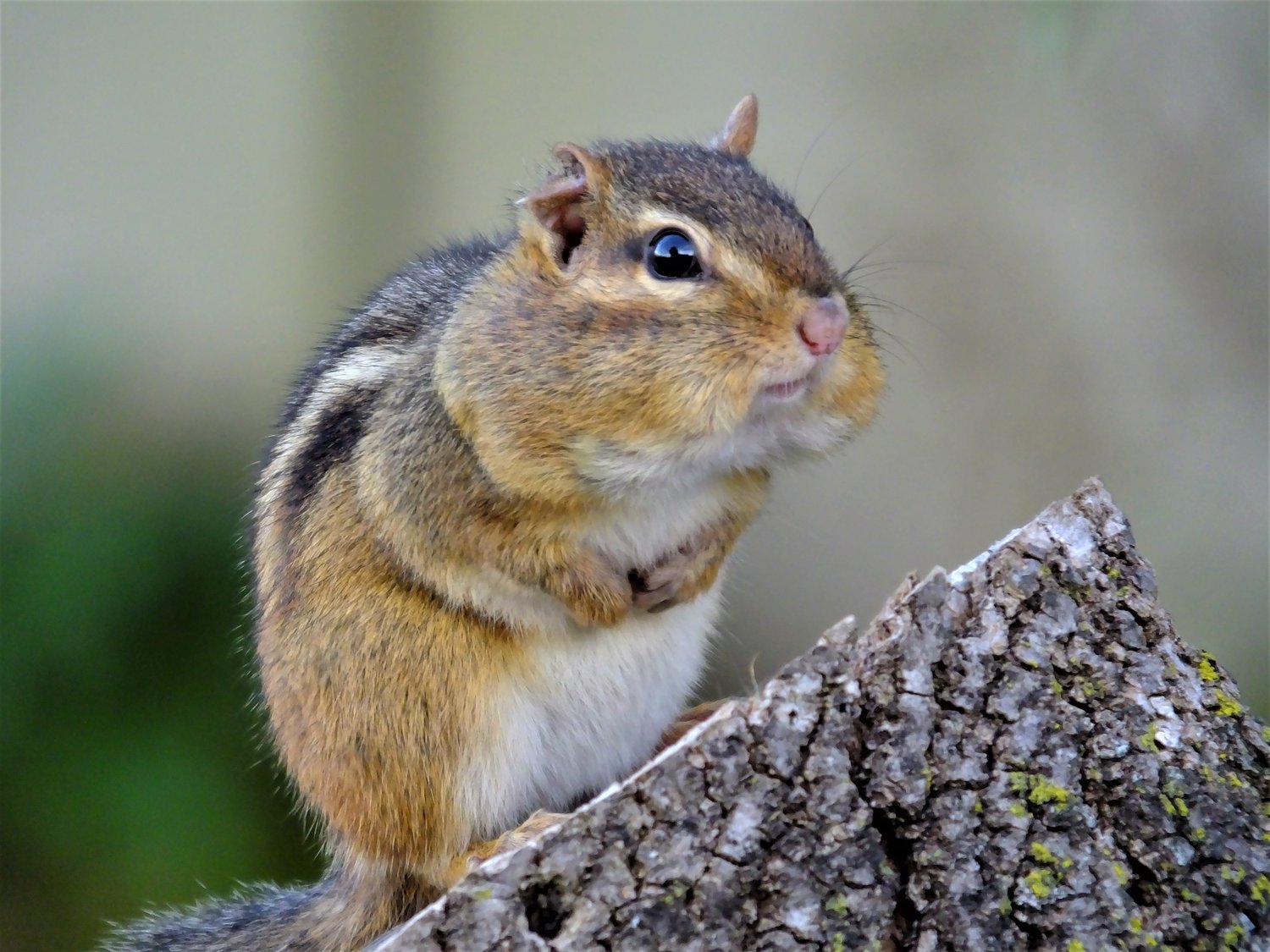
If you spend even a little time sitting quietly in a Wisconsin woodlot, you rapidly realize that the loudest personalities aren’t always the biggest creatures. The Eastern Chipmunk, (much like the Blue Jay) is another perfect example. These tiny woodland powerhouses scurry around like they’re running around the forest floor hopped up on sugar and energy drinks. They are expert hoarders, meticulous engineers, and surprisingly complex neighbors who bring more life to the woods and suburban backyards than most people will ever notice. Chipmunks are true omnivores, happily nibbling on nuts, seeds, fruits, berries, mushrooms, insects, worms, and even the occasional bird egg if they stumble upon one.
But it’s in the fall when they really jump into high gear. Their foraging becomes a full‑blown operation. One chipmunk can gather an entire bushel of nuts in just three days. They don’t do it for fun, either. Those carefully collected food stores are what keep them alive through winter, when they wake periodically from their light torpor to snack in the safety of their burrows. And speaking of snacks, their cheek pouches are nothing short of miraculous. Each pouch can swell to nearly the size of the chipmunk’s entire head, holding several acorns per cheek, (Up to about a dozen in total when they’re really loaded.) Watching a chipmunk sprint across the forest floor with cheeks so full they look like they’re smuggling golf balls is one of the great joys of woodland life. It’s also incredibly efficient. Those expandable pouches let them haul food quickly and safely back to their burrows with far fewer risky trips. Honestly, if we could train them, they’d have our weekly grocery haul inside before we even shut the car door.
But the real magic of chipmunks lies underground. What begins at the surface as a tiny discrete entrance about the size of a silver dollar, often camouflaged with leaves or loose soil, leads to a surprisingly elaborate compound below. Their burrows can stretch up to 30 feet, with separate chambers for nesting, food storage, and even waste. Over time, they keep expanding these tunnels, creating a sprawling underground network that would impress any engineer. Many burrows even include hidden “bolt holes,” perfectly placed escape routes for when life in the woods gets a little too hectic.
For all their antics, chipmunks play a serious role in Wisconsin’s forests. Their constant gathering and caching of seeds helps regenerate oak, beech, and maple stands. Their tunneling aerates the soil, improving forest health from the ground up. And unfortunately for them, they’re also an essential link in the woodland food web, a reliable meal for hawks, foxes, coyotes, and just about every other predator roaming the woods.
So, the next time you’re sitting quietly in a Wisconsin woodlot, keep an eye on the forest floor. They may be small but watching them go about their business can make for some of the finest, most action‑packed etertainment a person could ask for while taking in the beauty and vitality of the natural world.
Did You Know? — The Blue Jay
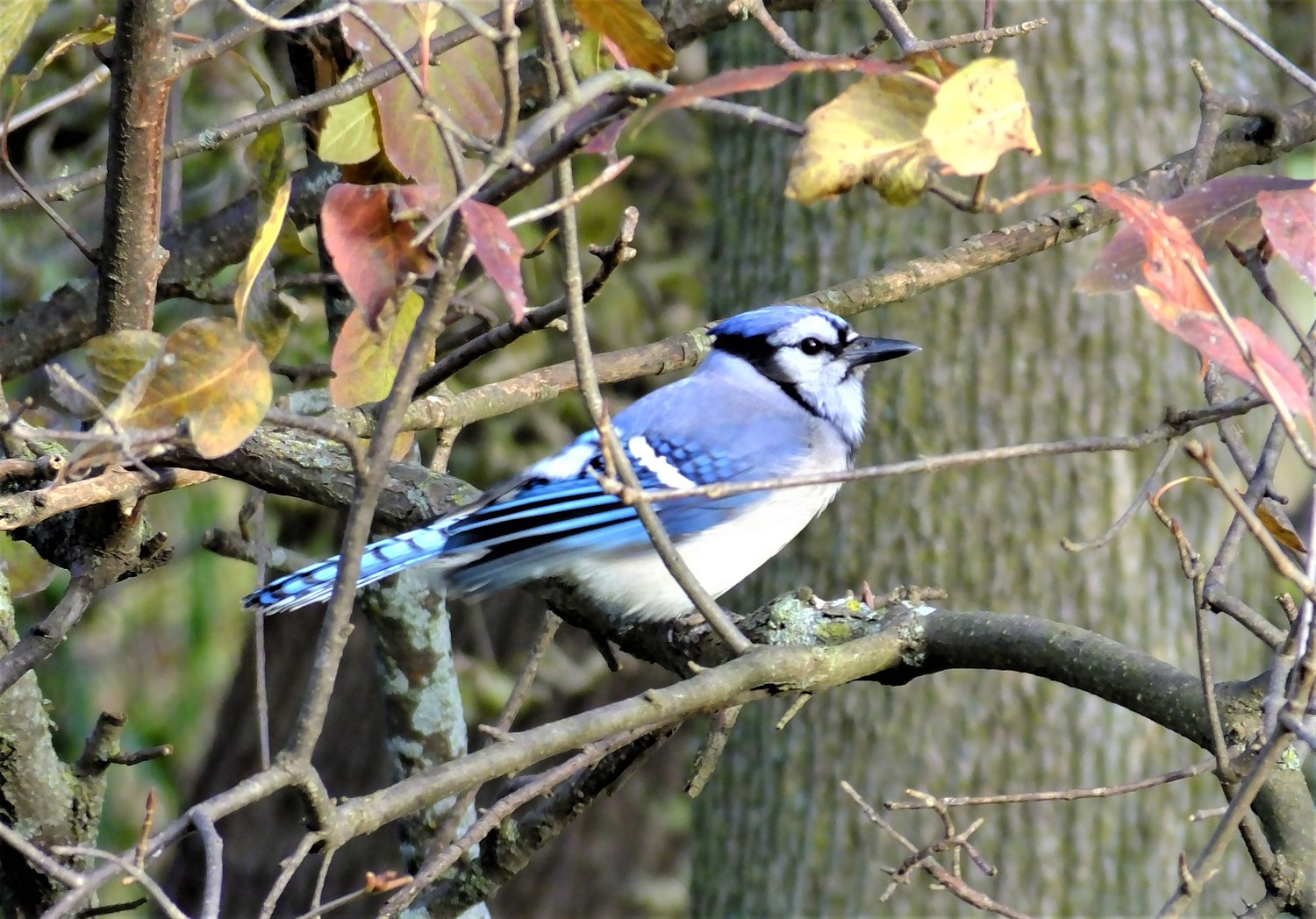
If you spend enough time around Blue Jays — and I certainly have — you start to realize they’re the loudest combination of intellect, troublemaker, and devoted family member. Blue Jays are intelligent, bold, and highly vocal birds, but they also have this surprising streak of gentleness and mischief that makes them endlessly entertaining to watch. One of the first things you notice is their eating habits. Blue Jays are true omnivores,
and they treat backyards and woodlots like an all‑you‑can‑eat buffet. They’ll happily shovel down sunflower seeds, peanuts, suet, berries, insects, grains — and yes, the occasional small vertebrate if the opportunity presents itself.
But their real obsession is acorns. They don’t just eat them; they collect them like tiny blue hoarders, caching hundreds for later. Half the oak trees throughout the Midwest probably owe their existence to a jay that forgot some of its abundant stash.
Despite their reputation for being noisy and aggressive, Blue Jays are surprisingly devoted when it comes to family life. They build their nests 10–25 feet up in the forks of trees, weaving together twigs, grass, and mud with the kind of teamwork that would make a marriage counselor proud. Both the male and female take part in construction, incubation, and raising the young.
One of the biggest myths about Blue Jays is that they are destructive cold-hearted nest-raiders, but in reality, they are not the nest‑raiding evil villains people make them out to be. They get blamed for a lot they don’t do, (probably because they’re loud enough to be noticed when other birds are sneaking around quietly.)
Speaking of loud, Blue Jays are some of the most vocal songbirds in North America. They have a call for every mood: whistles, rattles, clicks, screams, soft murmurs, and of course the classic “jay! jay!” that sounds like they are yelling their own name. They’re also master impressionists. If you hear a Red‑tailed Hawk in your backyard, don’t assume danger — it might just be a Blue Jay practicing its hawk impression to warn other jays or to trick the competition. (I told you they were clever.)
Their communication isn’t just vocal, either. Their crest is basically a mood meter. When it’s raised, they’re excited or alarmed. When it’s flattened, they’re elaxed and content. If you watch them at backyard feeders for any length of time, you’ll see this little cest‑language play out constantly. They may look assertive, but they’re often pushed aside by bigger, more aggressive birds like grackles and woodpeckers.
And here’s something that always impresses people: captive Blue Jays have been observed using tools — things like strips of newspaper to rake in food. That puts them right up there with crows in the problem‑solving department.
And finally, one of my favorite facts about these beautiful birds is their brilliant blue color isn’t actually pigment at all. It’s structural coloration — a light‑scattering trick built into the feather structure. If you crushed a Blue Jay feather (please don’t), it would turn brown. The blue is simply an illusion created by the way light hits it.
So, the next time you see one of these blue‑feathered firecrackers shouting from the treetops or stuffing peanuts into the bark of your maple tree, you’ll know you’re looking at a bird with brains, personality, family values, and a flair for drama. They’re loud, they’re clever, they’re misunderstood, and they’re
easily among the most entertaining creatures to keep me company as I sit in a Wisconsin woodlot, taking in the quiet rhythm of the day.
Did You Know? - The Eastern Box Turtle
Have you ever walked through a quiet Wisconsin woodland and wondered if one of the rocks might suddenly… blink?
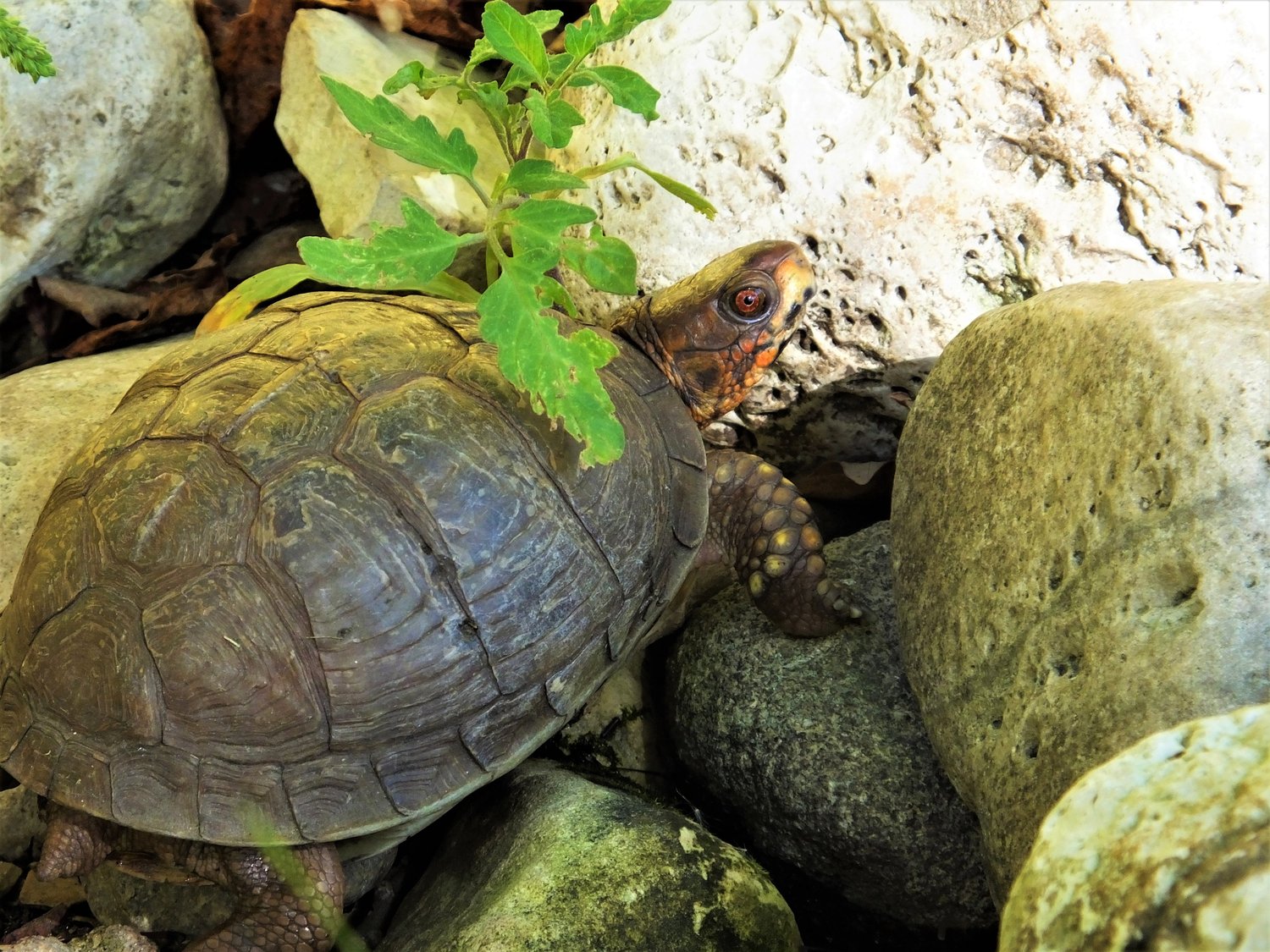
The Eastern box turtle is one of the Midwest’s most quietly remarkable residents, a true land-dwelling turtle that carries both its shelter and its story on its back. With its high, domed shell patterned in earthy browns and soft golds, it blends so perfectly into leaf litter and forest floor that it’s often mistaken for just another stone along the trail.
Unlike most turtles, the Eastern box turtle spends very little time in water. Instead, it wanders woodlands, meadows, and forest edges, moving slowly but with purpose in search of berries, mushrooms, insects, and tender plants. Each individual maintains a surprisingly small home range and may spend its entire life—often several decades—within the same familiar patch of land.
One of its most fascinating features is hidden in plain sight. Thanks to a hinged lower shell, this turtle can close itself up completely when threatened, sealing tight like a living box. It’s a simple but remarkably effective defense in a world full of predators.
If you look closely at the face (no worries—we’re not talking about the alligator snapping turtle here), you might notice a touch of quiet brilliance: subtle orange or reddish markings along the head and neck, and, in many males, striking reddish eyes that seem to catch the light. It’s a reminder that even the most understated creatures carry unexpected beauty.
Encounters with an Eastern box turtle feel less like spotting wildlife and more like discovering someone’s pet out for a casual stroll. They don’t rush, they don’t startle easily, and they don’t ask for attention. They simply exist—steady, patient, and enduring—moving contentedly through the same woods long before we arrived and, with a bit of luck, long after we’ve passed through.
So, the next time something along the trail looks just a little too beautiful to be a rock, take a second look.
It might be a small, ancient traveler… quietly watching you back.
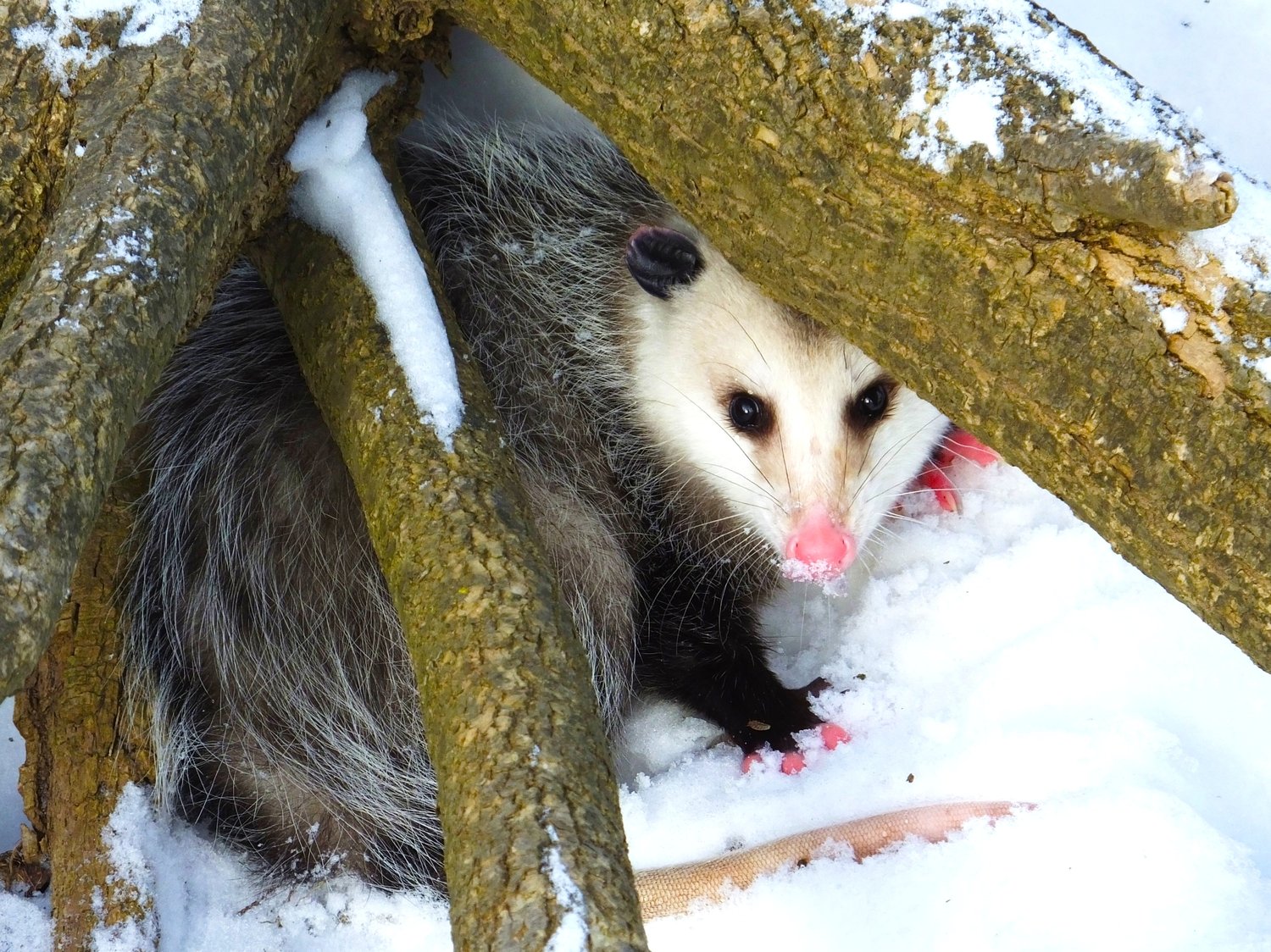
Did You Know? - The Virginia Opossum.
The Virginia opossum moves through a Wisconsin woodlot like a misplaced traveler who took a wrong turn somewhere south of the Ohio River and just kept going. North America’s only marsupial, she is akin to kangaroos more than to any creature that truly belongs in this frozen place, a quiet outsider woven into the wrong landscape. Everything about her whispers stranger in a foreign land. Her thin, naked ear tips, pink as frostbitten rose petals, quiver in the predawn chill, vulnerable in a way that makes it no surprise that winters like this often claim them. Her tail, long and bare like a forgotten wet rope, stiffens in the freezing air. Even her delicate toes and grasping fingers, built for climbing and carrying, seem ill-matched to the merciless, snow-covered ground she now crosses.
And yet she is here, moving with a slow, deliberate persistence. Somewhere not long ago, she may have carried young no bigger than honeybees, blind and fragile, each one forced to crawl its way into the safety of her pouch by instinct alone. There is something quietly miraculous in that kind of beginning, and in the fact that any of them survive at all.
To those unknowing of her true nature, she looks like trouble—an awkward creature armed with a mouthful of fifty needle-sharp teeth that seem designed for harm. But they are mostly for show, a bluff in a world that demands one. When danger presses too close, she is far more likely to surrender to it completely, slipping into an involuntary stillness so deep she appears dead, her body slowing, even giving off the scent of decay, as if becoming something the world has already lost.
But the truth is, her spirit is gentle, almost tender. Beneath that fierce façade beats the heart of a quiet wanderer, one that spends its nights not in conflict but in quiet service—grooming itself with near constant care, and in doing so, consuming thousands of ticks that would otherwise spread illness through the woods. Even her blood carries a subtle defiance, her naturally low body temperature making her an unlikely host to diseases that haunt other creatures.
And still, she endures. Every icy day she survives is a bold act of defiance, made more remarkable by the brevity of her life. Two, maybe three years is all she is given, and winter takes its share without hesitation. The cold gnaws at her unprotected edges, but she keeps moving—slow, deliberate, determined. There’s a ruggedness in that you can’t help but respect. A quiet kind of courage that doesn’t announce itself, but reveals its presence in the simple, stubborn fact that she is still here at all. The tender wild one, persisting in a land that seems determined to remind her she does not quite fit in.
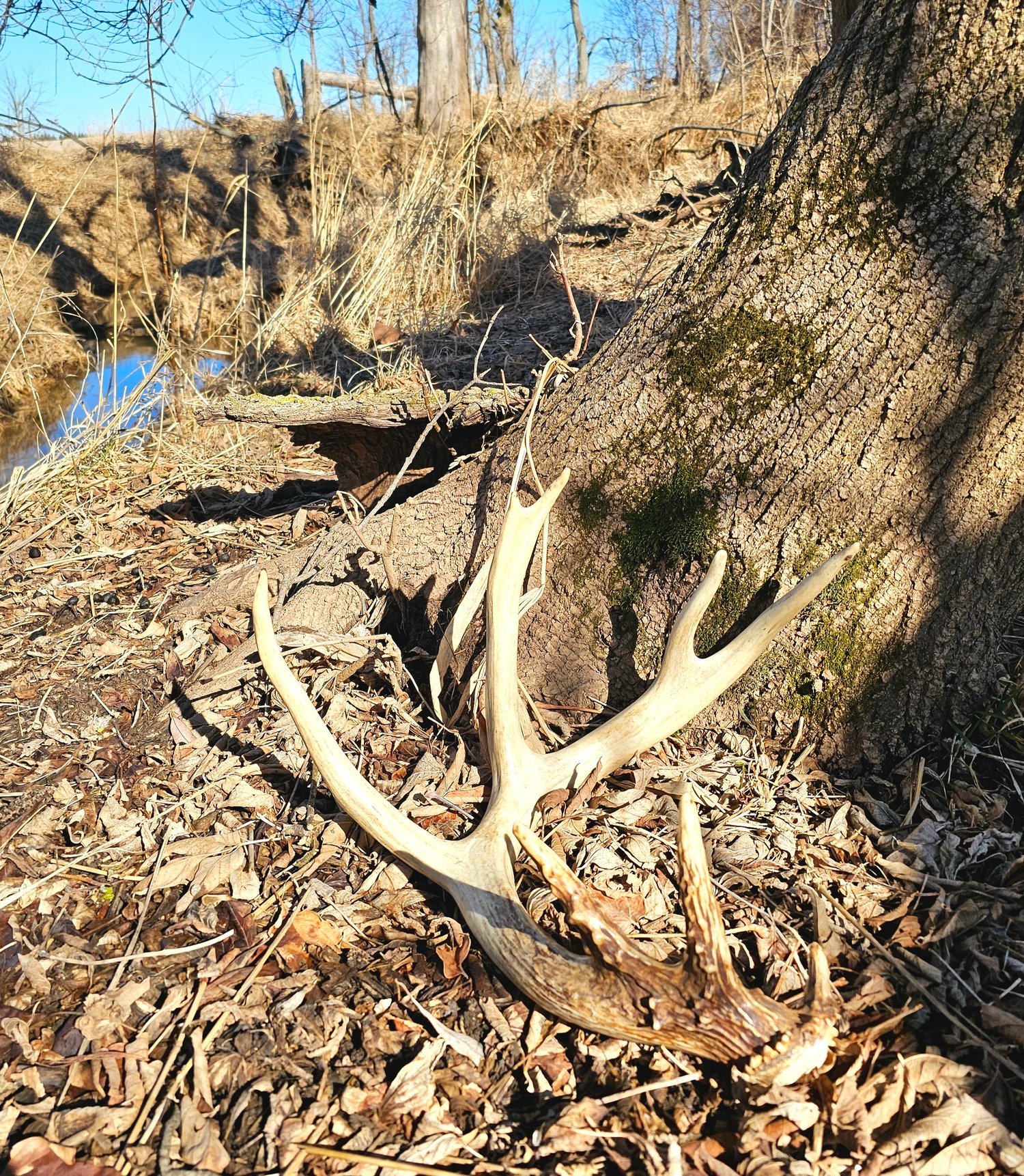
Did You Know? - The Biology and Mystery of a Shed Antler
A freshly shed antler, cast aside in the deep, quiet remoteness of a whitetail’s sacred sanctuary, is like a discarded sword left to rust away in the grass when the war is done. Each winter, a buck casts aside these weapons, because deer shed and regrow a completely new set of antlers every single year. Deer antlers are the fastest‑growing bone structure known to exist. In summer, when those antlers are still forming, they’re wrapped in a soft velvet skin, rich with blood vessels, warm to the touch, pulsing with the energy needed to build bone at a pace unmatched in the natural world. A dropped antler, now resting on the forest floor or in thick marsh grass, was once a formidable blade, forged in that furnace of summer growth, hardened by instinct, and scarred by countless battles. It championed sweet victories of clashes won and endured the humbling defeats of those lost. As a buck ages, the size and mass of his antlers typically increase with each passing year, rising toward a peak around seven years old before slowly declining as he eases out of his prime. Sometimes, the story etched into an antler carries the memory of injury. If a buck suffers a wound (say, on the left side of his body), the following year’s antler on the right side may twist, fork, or grow strangely, because injury‑related antler deformities always appear on the opposite side of where the injury occurred. Even these imperfections are part of the narrative, like a scar in steel that tells of a battle survived. Now surrendered to the forest floor, the antler begins its quiet return to the earth, where weather will soften its edges and wild creatures will conspire to gnaw it back into the soil. What was once carried high as a proud banner of strength is now a relic of a season already slipping into memory. And yet, even in its fallen state, it holds a quiet dignity. You can almost feel the echoes of the life it lived, the purpose it fulfilled, a silent reminder of the glory it once possessed. For all the myths whispered around campfires, the number of points on a buck’s antlers has nothing to do with his age; it’s shaped far more by his genetics, nutrition, and the unique stresses of each growing season. The truth of a buck’s age is hidden much deeper, far more complex than anything the number of points can tell. Now, resting still on a twisted bed of marsh grass, this fallen antler becomes a treasure to the outdoorsman, one who understands the story etched into every curve and tine, the wanderings, the clashes, the triumphs and exploits it represents. A
privilege to hold, and a tribute to the white‑tailed buck who wore it proudly and survived yet another unforgiving season of raw brutality.
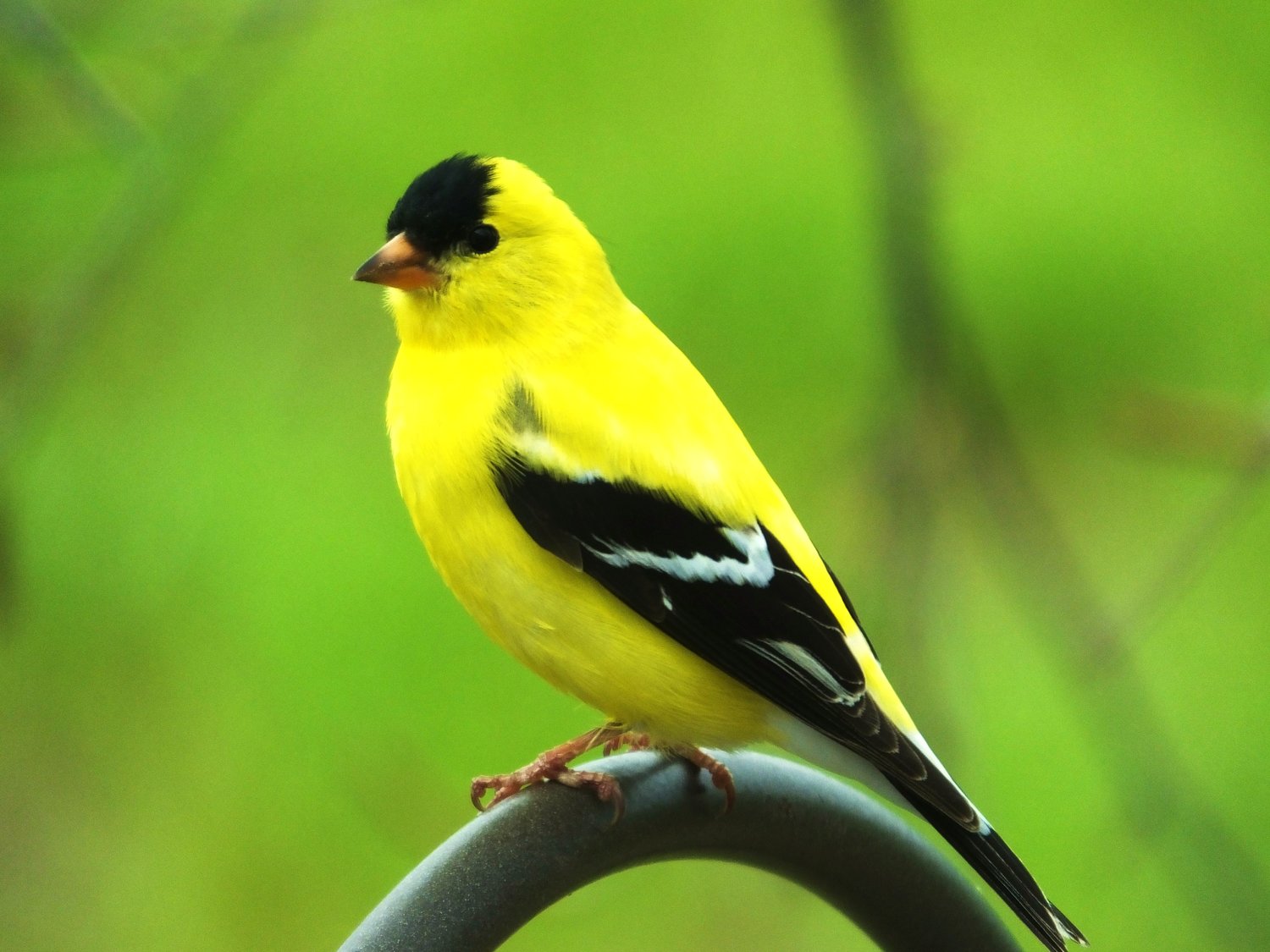
Did You Know? — The American Goldfinch
There’s a little bird that drifts through the yard each spring as that dips and rises like little bouncing flashes of sunlight. The American Goldfinch is easy to overlook in winter when it wears the same dull browns as many of the other feathered inhabitants. But give it a few warm days in April and you’ll see the change begin. Bit by bit, the drab fades away and that bright, flamboyant yellow starts to shine through. It’s one of the few birds that completely changes its plumage twice a year, and it does it right out in the open where anyone paying attention can watch the transformation unfold.
Another unique thing about goldfinches is they’re strict vegetarians. While most birds are busy chasing insects to feed their young, they’re strict seed eaters, all year long, without exception… and my birdseed budget can definitely vouch for that. Thistle, coneflower, dandelion, ragweed… if it grows in a sunny field, backyard, or roadside ditch, chances are the goldfinch has made a meal of it. Even their nestlings are raised on seeds, which is almost unheard of among songbirds. It’s one of the reasons they wait until midsummer to nest, when the plants they depend on are at their most bountiful.
Their nests are really unique too if you’re lucky enough to find one. They weave them from plant fibers and spider silk, then line them with thistle down like a soft puff of cotton resting in a shallow bowl. The craftsmanship is so tight and careful that the finished nest can actually hold water. It’s a marvel of avian construction, though not always ideal during a heavy rain.
For all their bold colors, goldfinches carry themselves with a gentle sort of courtesy. At the feeder they are polite and well mannered, choosing to wait their turn or shuffle over to make room for others. There’s no bluster or bravado in them, just a calm, steady presence that settles easily into the peacefulness of the yard.
The American Goldfinch may be small, but it carries more wonder in its tiny body than most people realize. If you take time to slow your pace, you can watch that change unfold day by day, and every quiet moment you spend with it draws you a little deeper into the vibrant season that is summer in Wisconsin.