
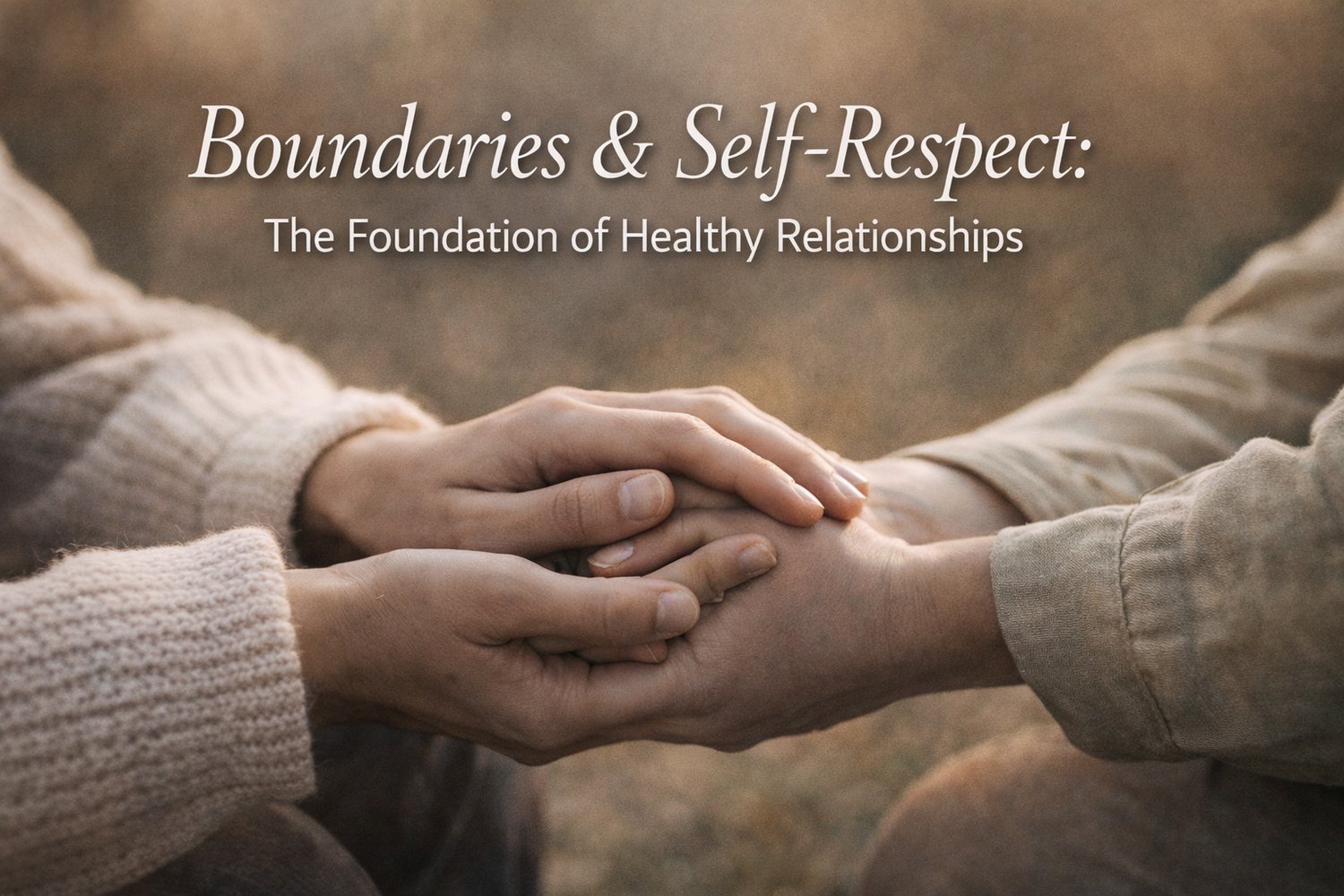
There’s a quiet moment that happens when you finally say “no” to something that doesn’t serve you. Your heart might race. You might feel guilty. But underneath all that discomfort, something else stirs—a small, steady recognition of your own worth. This is where boundaries and self-respect meet.
What Are Boundaries, Really?
Boundaries aren’t walls we build to keep people out. They’re the guidelines we establish for how we want to be treated, what we’re willing to accept, and what behaviors we won’t tolerate. Think of them less as barriers and more as a property line—a clear definition of where you end and someone else begins.
These lines can be physical, emotional, mental, or even digital. They might look like leaving work at work instead of answering emails at midnight, or telling a friend you need space to process before having a difficult conversation, or simply saying “I’m not comfortable with that” when someone crosses a line.
The Connection to Self-Respect
Here’s the truth: you can’t have genuine self-respect without boundaries, and you can’t maintain boundaries without self-respect. They’re two sides of the same coin.
Self-respect is the deep, internal knowing that you matter. That your feelings are valid. That your needs deserve consideration. When you respect yourself, you naturally begin to protect your energy, your time, and your emotional wellbeing. And that protection? That’s what boundaries look like in practice.
Without self-respect, boundaries become negotiable. You set them and then immediately apologize for them. You establish limits and then let people guilt you into crossing your own lines. You know what you need but convince yourself that everyone else’s needs matter more.
Why Boundaries Feel So Hard
If boundaries are so important, why do they feel impossible to maintain? Several reasons:
We confuse boundaries with selfishness. From childhood, many of us learned that being “good” meant being accommodating, agreeable, and self-sacrificing. Saying no felt mean. Prioritizing ourselves felt wrong. But there’s a vast difference between selfishness and self-care. Selfishness takes from others. Boundaries protect everyone involved by creating clarity and honesty in relationships.
We fear conflict. Setting a boundary often means disappointing someone, and that’s uncomfortable. We imagine worst-case scenarios where people get angry, leave us, or label us as difficult. Sometimes those fears are justified—some people in our lives may resist our boundaries precisely because they benefited from us not having any. But their resistance is information, not a reason to abandon our needs.
We don’t believe we deserve them. This is the self-respect piece. If you fundamentally believe you’re not worthy of consideration, rest, or basic respect, then boundaries will always feel like too much to ask for. You’ll accept treatment you know isn’t right because some part of you believes it’s all you deserve.
Building Both Together
Strengthening self-respect and establishing boundaries is a practice, not a one-time decision. Here’s how they grow together:
Start noticing your resentment. Resentment is often a sign that a boundary has been crossed. When you find yourself feeling bitter, taken advantage of, or exhausted by someone’s demands, pay attention. That feeling is information. It’s telling you where a line needs to be drawn.
Practice in low-stakes situations first. You don’t need to start by confronting your most difficult relationship. Begin with small boundaries in everyday interactions. Tell the chatty checkout clerk you’re in a rush. Decline a social invitation you genuinely don’t want to attend. Each small act of self-advocacy builds your confidence.
Notice how you talk to yourself. Self-respect lives in your internal dialogue. Do you criticize yourself constantly? Minimize your accomplishments? Ignore your own feelings? The way you treat yourself sets the standard for how others will treat you. When you catch yourself being cruel internally, pause and ask: would I say this to someone I love and respect?
Expect discomfort and do it anyway. The first times you set boundaries will feel awkward and wrong. Your nervous system might interpret it as danger because it’s unfamiliar. People might be surprised or even upset. Sit with that discomfort. It doesn’t mean you’ve done something wrong—it means you’re doing something new.
Surround yourself with people who respect boundaries. The right people in your life won’t punish you for having needs. They’ll appreciate the clarity. They’ll respect your limits. And they’ll have healthy boundaries of their own. If someone consistently violates your boundaries after you’ve clearly stated them, that tells you something important about whether they belong in your inner circle.
What Changes When You Get This Right
When you cultivate genuine self-respect and maintain clear boundaries, everything shifts. Your relationships become more authentic because they’re based on honesty rather than performance. Your energy increases because you’re not constantly depleting yourself. Your anxiety often decreases because you’re living in alignment with your values rather than constantly betraying yourself to keep others comfortable.
You stop feeling like you’re at the mercy of everyone else’s moods, demands, and expectations. You reclaim agency over your own life. And paradoxically, as you become clearer about what you won’t accept, you also become more present and generous in the relationships that matter, because you’re giving from a place of choice rather than obligation.
The Practice Continues
There’s no finish line with boundaries and self-respect. They require ongoing attention and adjustment. What worked in one season of life might need to shift in another. Some boundaries will be tested repeatedly. Others will evolve as you grow.
But every time you honor a boundary, even when it’s hard, you’re telling yourself: I matter. My needs are legitimate. I deserve respect. And slowly, steadily, you start to believe it—not just in theory, but in the lived reality of your daily choices.
That’s where real freedom lives. Not in never needing anything from anyone, but in knowing clearly what you need and having the courage to protect it.