
You promised yourself you would never handle things that way. Then one day, in the middle of an argument, you heard the same words come out of your own mouth.
The same insult. The same threat to stop speaking. The same habit of pretending nothing happened once everybody calmed down.
That moment can hurt. It can also become a moment of honesty. You recognized something you do not want to keep repeating. Now the question is what you will do with what you noticed.
We can shout, “The cycle stops with me!” and mean every word. But let’s talk about what happens after the music stops and the familiar situation shows up again.
Name the pattern clearly
“My family has problems” is a beginning. It is not specific enough to guide your next decision. What actually happens? Do people shout until somebody gives in? Is money borrowed with no conversation about repayment? Are children expected to keep adult secrets? Does everybody avoid the person whose behavior needs to be addressed?
Write down one pattern you can describe without guessing anyone’s motives. “When I feel criticized, I stop answering messages for days” gives you something to examine. “Everybody is toxic” may express frustration, but it leaves your own next step unclear.
Remember that noticing a pattern does not require you to condemn your whole family. Some people gave you real love while also passing down habits that need to change. You can acknowledge both.
What happened to you was not your fault
If you experienced abuse, you did not cause it by being young, trusting, quiet, frightened, or unable to get away. Responsibility belongs to the person who chose to harm you.
Do not turn “It stops with me” into another demand that you heal everybody or carry blame that never belonged to you. Sometimes your next step is finding support for your own safety. Sometimes it is deciding who no longer gets access to you.
You do not have to confront someone who harmed you, share details publicly, or restore contact to prove that you are serious about your faith.
A new response needs a plan
Consider a fictional parent named Andre. He grew up around shouting. Now, when his children make a mistake, his volume rises before he notices. Afterward he feels terrible, promises to change, and waits for the next incident.
Andre needs more than regret. He begins noticing the situations that precede the shouting: rushing, exhaustion, and feeling ignored. He plans a sentence he can use before the conversation escalates: “I need a moment to settle down, and then we will talk about this.” He makes sure the children remain safely supervised and returns to the conversation.
He also seeks support to work on the pattern. If he slips, he apologizes without making the child responsible for his reaction. Over time, his family needs to see changed behavior, not only hear a stronger promise.
Let your faith reach into your habits
Romans 12:2 speaks of “the renewing of your mind.” Read the whole verse, then keep reading the chapter. Bring your prayer into the decisions that shape your day.
What will you do when the group chat starts pulling you into the same conflict? What will you say when somebody asks you to hide something harmful? Who will you call when you feel yourself drifting toward an old behavior?
If substance use is part of the cycle, involve qualified recovery or medical support. Spiritual encouragement can accompany treatment. Do not put yourself at risk by attempting dangerous changes without appropriate care.
Forgiveness and access require different conversations
Somebody may say, “We are family,” as though that sentence settles every concern. Family relationships still need safety, honesty, and respect.
When trust has been damaged, an apology does not automatically establish that contact is safe or wise. Look for accountability and consistent change. You can take time. You can seek counsel. You can set limits without holding a public trial about everything you experienced.
And when you are the person who caused harm, respect those limits. Repair cannot be forced on your timetable.
Give this declaration something practical to stand on
Complete four sentences: “The pattern I want to change is…” “The moment I need to watch for is…” “My next response will be…” “The support I will seek is…”
Choose a review date. Ask what helped and what needs adjusting. If you fall back into the pattern, address the impact and return to the work. Shame does not have to decide the rest of your week.
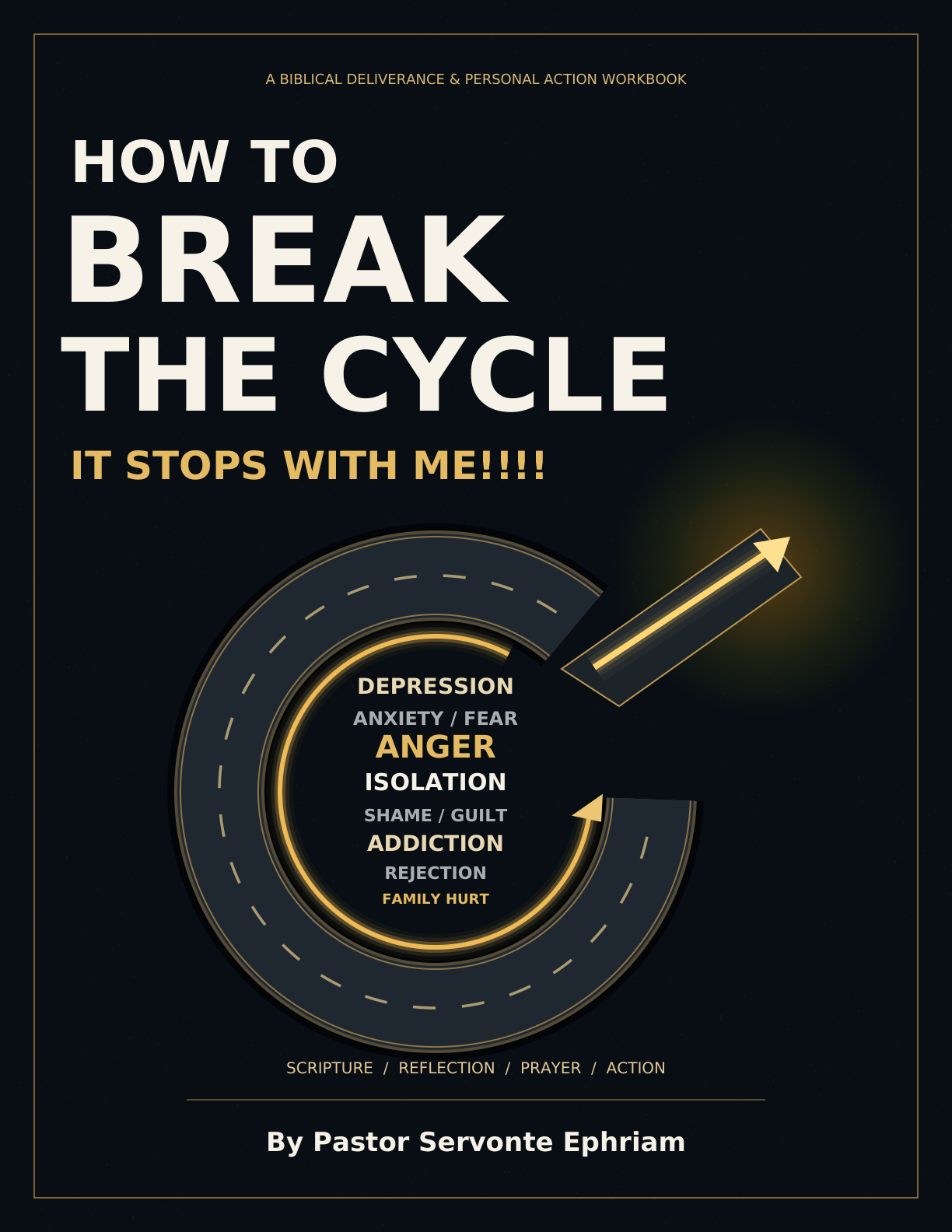
My How to Break the Cycle: It Stops With Me (https://payhip.com/b/7ONAW) workbook offers 30 pages of KJV references, prayer, guided reflection, and a 30-day action plan. It provides pastoral education, not a replacement for counseling, medical care, or addiction treatment.
Let the next generation see more than our determination. Let them see us seeking help, taking responsibility, and practicing a different way.
By Pastor Servonte Ephriam
#ItStopsWithMe #BreakTheCycle #GenerationalHealing #BlackFamilies #FaithInAction #TheRealSLE #PastorServonteEphriam