
You keep posting the product, but people still do not understand why they need it. The flyer has the price. The photo looks good. You have told everybody you are open for business. Before you assume nobody supports you, ask a useful question: have I explained what this does for the customer?
A feature needs a connection to real life
“Thirty pages” describes a workbook. “A place to organize your next seven days” explains one possible use. “Video editing” names a service. “Turn your recorded conversation into short clips you can share” makes the work easier to picture. The goal is to connect what you provide with something the customer actually wants to accomplish.
Be accurate about the connection. Do not promise an outcome you cannot deliver. A useful offer becomes easier to evaluate when people understand who it serves, what they receive, and what happens next.
Ask before you perform the whole sales pitch
A customer who needs a quick lunch is making a different decision from someone ordering food for an event. A business owner who needs one flyer has a different problem from someone who needs a month of content. The same opening pitch will not fit every situation.
Try asking, “What are you trying to get done?” Then listen long enough to understand the answer. Follow with a question about timing, priorities, or the difficulty they have encountered. You do not have to turn every conversation into an interrogation. Give the person room to tell you what matters.
Practice the S.A.L.T. framework
Study the customer. Ask and listen. Link the value. Take the next step together. Those four actions give you a structure for a conversation that respects both your work and the buyer’s choice. If the offer is not a good fit, honesty protects your reputation.
Write two versions of your offer today. First, list what the customer receives. Then explain how those items can be used. Remove vague words such as “amazing” and replace them with concrete details. Ask a person unfamiliar with your business to tell you what they think you sell. Their answer will show you what still needs clarification.
Build your own sales language
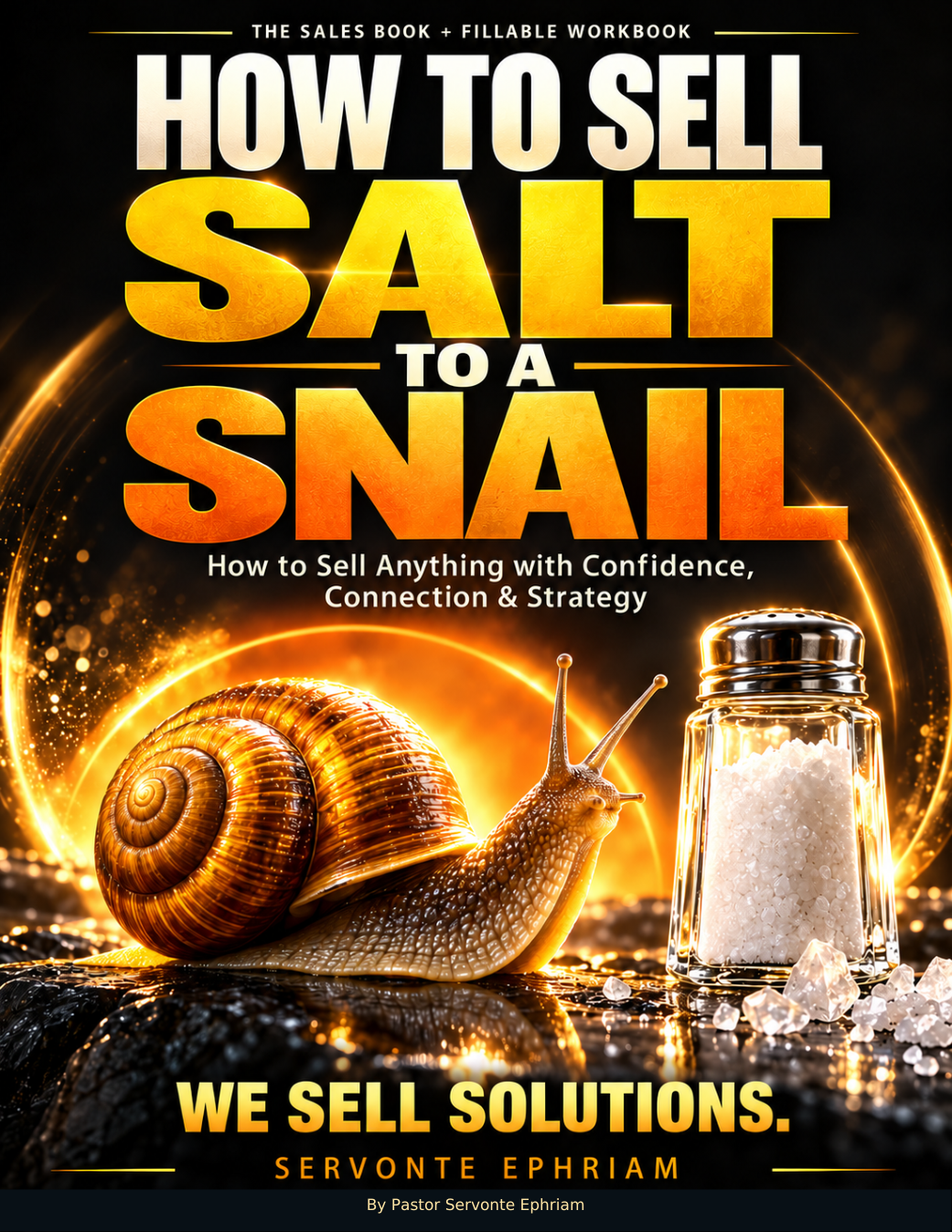
How to Sell Salt to a Snail is a practical 51-page sales book and fillable workbook with ten chapters, fictional sales conversations, 36 writing boxes, and a seven-day practice plan. The examples include food, clothing, beauty services, digital products, and other client work.
Try the three-page sample on the product page. Work through an exercise using your real offer. You are building language you can actually use when someone asks, “What do you do?” Sales and income results are not guaranteed; customer fit, delivery, and follow-through matter.
Explore the sales workbook and sample: https://payhip.com/b/CSUIY
By Pastor Servonte Ephriam
#TheRealSLEEnterprises #WeSellSolutions #SmallBusiness #SalesSkills #Entrepreneurship