
You may have had a reason to be upset. That does not mean every word you said helped the situation. Sometimes the argument ends, the room gets quiet, and you are left looking at the effect of a response that happened faster than your judgment could catch up. That moment deserves honesty.
Name what happened without defending every reaction
Start with the actual event. Someone interrupted you. A plan changed. A promise was not kept. Then notice the meaning you attached to it: “They do not respect me.” “Nobody ever considers me.” “I have to make them listen.” Separate the event from the conclusion long enough to examine both.
You do not have to deny that something hurt. You can say, “I felt dismissed,” while also recognizing that shouting, threatening, or humiliating another person caused harm. Taking responsibility gives you a clearer place to practice a different response.
Prepare a sentence before the next difficult moment
When a conversation is safe, try a simple pause: “I want to address this, but I need time to settle before we continue. Can we return to it at seven?” A pause needs follow-through. Disappearing indefinitely can leave the problem untouched.
If threats or violence are part of the situation, prioritize safety and qualified support. Do not use a communication exercise to place yourself or someone else in danger. A workbook is a place for reflection, not a replacement for appropriate professional help.
Repair the part that belongs to you
An apology becomes clearer when it names an action: “I interrupted and raised my voice. That was my responsibility.” Give the other person room to respond without demanding immediate forgiveness. Then name the change you intend to practice.
James 1:19 encourages being swift to hear, slow to speak, and slow to wrath. Read it as an invitation to a different pattern of conduct. Hearing carefully does not require agreeing with everything; it means making room to understand before you answer.
Take the reflection beyond one argument
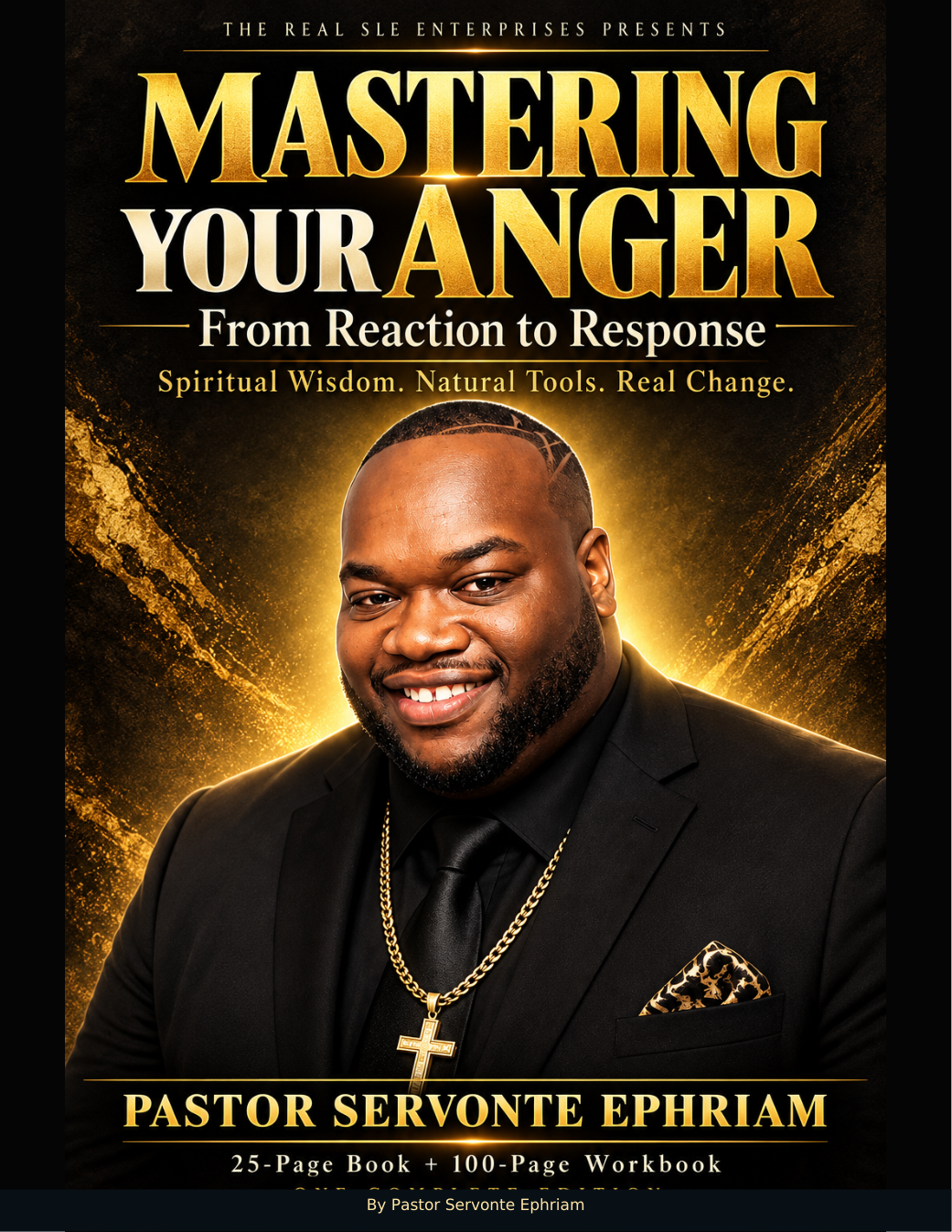
Mastering Your Anger: From Reaction to Response includes a 25-page faith-based book and a 100-page companion workbook, combined in fillable and printable versions. Scripture reflections, prayers, prompts, and practical exercises provide a structure for examining your responses over time.
This is an educational personal-development resource, not therapy or a court-approved anger-management program. Begin with one recent situation and one response you want to practice. Let your progress become visible in the way you listen, return, repair, and follow through.
Explore Mastering Your Anger: https://payhip.com/b/7URvC
By Pastor Servonte Ephriam
#TheRealSLEEnterprises #MasteringYourAnger #Accountability #EmotionalGrowth #FaithInAction