
Brother, everybody knows you can carry it. My question is: how long have you been carrying it without anybody asking what it is doing to you?
You get the call when something breaks. You get the call when somebody needs a ride, a bill paid, a problem handled, or a voice of reason. They say, “Call him. He’ll figure it out.” And somehow you do.
Then you sit in the car before going into the house because you need a few minutes when nobody is asking you for anything.
Let’s talk right there. Before the handshake. Before “I’m blessed.” Before you smile and tell everybody you are good. How are you actually doing?
You learned how to survive. Who made room for your pain?
For some brothers, being called strong started early. You were the little boy who was told to stop crying. The teenager expected to know how to be a man without somebody consistently showing you. The young father trying to give your children something you were still learning how to receive yourself.
That will not describe every man’s story. But if it describes yours, you know how heavy a quiet room can get. You can love your family and still feel lonely. You can have a job and still be scared. You can preach, serve, lead, and still need somebody to sit beside you without asking you to perform.
Brother, having needs does not erase what you bring to the table.
Let’s tell the truth about what comes home with us
Picture a fictional father named Marcus. His supervisor embarrasses him at work. He says nothing because he needs the check. On the drive home, he thinks about bills he cannot quite catch up with. His son asks a simple question at the door, and Marcus snaps.
The job pressure is real. The money pressure is real. His son still did not deserve that response.
That is where honest work begins. We can talk about what hurt you and still talk about who gets hurt when you refuse to address it. “I have been through a lot” deserves compassion. It cannot become permission to frighten, belittle, or shut out the people who love you.
Sometimes the next faithful step sounds like this: “Son, you did not cause what happened at work. I took my frustration out on you. That was wrong.” Then you begin practicing a different response.
God can hear the prayer behind “I’m good”
Psalm 147:3 says, “He healeth the broken in heart, and bindeth up their wounds.”
Notice that Scripture makes room for the wound. You do not have to hide yours to be welcome in prayer. Bring God the grief you keep changing the subject about. Bring Him the disappointment you do not have a polished testimony for yet.
And when you need a qualified counselor, make that appointment. Seeking care does not make your prayer less sincere. A pastor, a dependable friend, and a mental health professional can offer different kinds of support. You do not have to ask one person to be everything.
Brother, start with one honest sentence
Try writing, “What I wish somebody understood about me is…” Keep going without grading your words. You do not have to describe every painful detail. You can stop whenever you need to.
Next, name one place where pressure is affecting your behavior. Are you withdrawing from your children? Picking fights? Avoiding a conversation you know needs to happen? Be specific enough to choose a different action.
Then make one clear request to someone trustworthy: “Can we talk this week? I need you to listen before you offer advice.” If the first person cannot give you that support, your need is still worth taking seriously.
What kind of strength do you want to pass down?
Your children can learn that a man keeps his word and admits when he is wrong. That a man can protect people without controlling them. That a man can feel grief without making everybody around him afraid.
You do not have to become a different person overnight. You do have to decide whether you will keep calling an unaddressed pattern “just how I am.”
Ask yourself tonight: What am I carrying? Who can help me carry it responsibly? What will I do this week that gives the people I love a healthier version of my presence?
Keep the conversation going
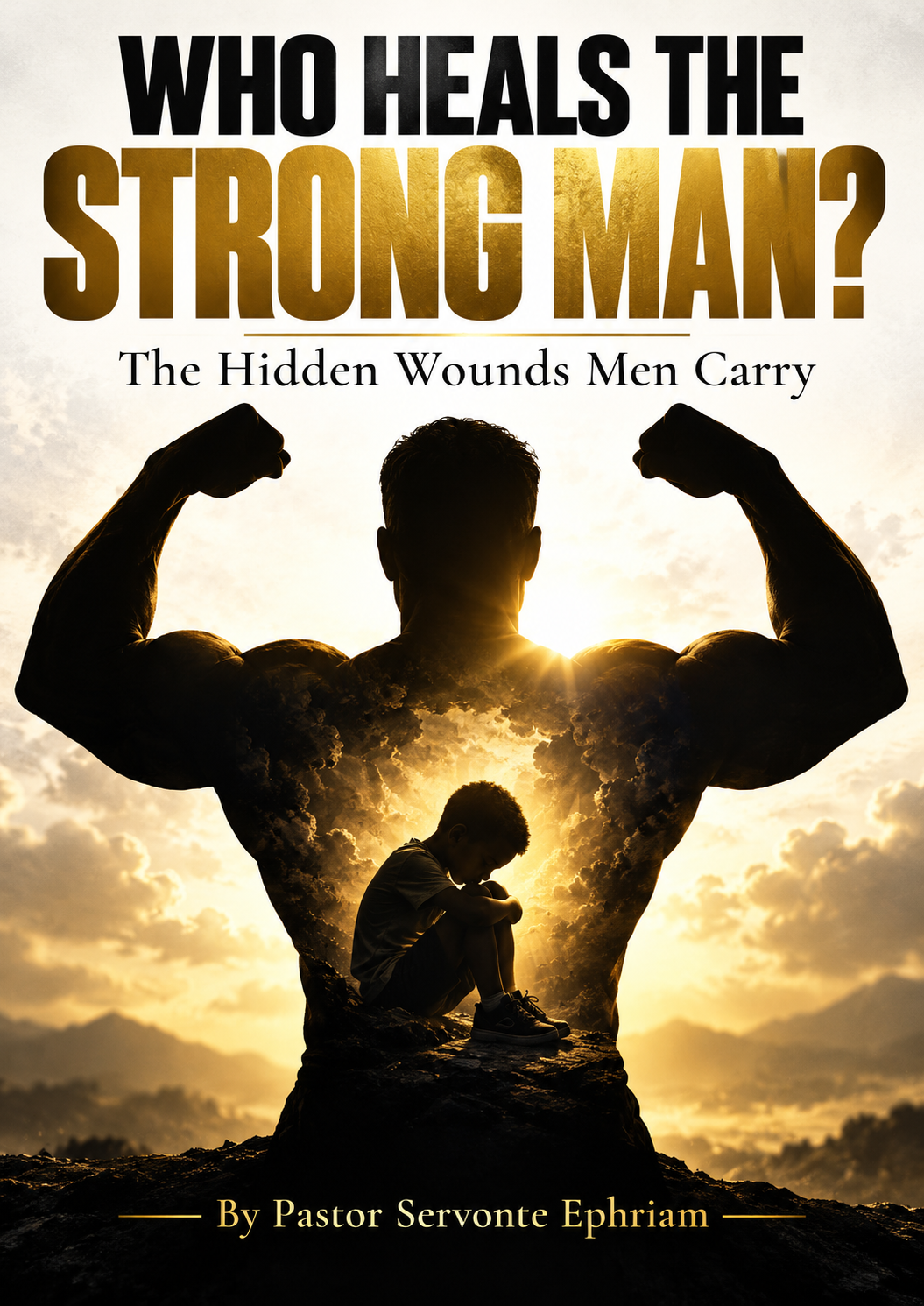
I created Who Heals the Strong Man? The Hidden Wounds Men Carry (https://payhip.com/b/6jKhn) to make room for these conversations. The expanded 59-page workbook includes KJV Scripture, fictional examples, fillable reflection spaces, and a four-week practice plan.
Use it at your own pace. It offers pastoral education and reflection; it does not replace professional mental health care. Brother, the man behind the responsibilities deserves care, too. Let that include you.
By Pastor Servonte Ephriam
#WhoHealsTheStrongMan #BlackMenMatter #MensWellness #FaithAndHealing #Fatherhood #TheRealSLE #PastorServonteEphriam