
Whether you’re an enthusiastic beginner or a seasoned sewing professional, the quality of your workspace can make a huge difference to your projects and overall sewing experience. At the centre of any productive sewing room is the sewing table—a piece of furniture that’s often overlooked, but absolutely essential.
Here’s why investing in a good sewing table pays off for every stitcher:
Ergonomics: Your Comfort Matters
Sewing is a skill that demands precision and patience, but also invites long hours. A well-designed sewing table provides the right height and surface area, helping you maintain a comfortable posture. Sitting at an inappropriate table can lead to neck and shoulder pain, backaches, and even repetitive strain injuries.
Organisation: A Place for Everything
If you’re anything like me and you’ve felt overwhelmed by the chaos of tangled thread, scattered pins, and misplaced scissors, you’ll appreciate the value of a table with built-in storage. Drawers, shelves, and cubbies keep essential tools within reach and help maintain order. You’ll spend less time searching for supplies and more time bringing your creative ideas to life.
Efficiency: Smooth Workflow, Better Results
A sewing table isn’t just a surface—it’s a workstation. The right table will accommodate your sewing machine, cutting mats, and fabric, allowing you to seamlessly transition between steps. With enough space to spread out patterns and projects, you’ll reduce mistakes and work more efficiently. Some tables even offer dedicated spaces or inserts for your sewing machine and overlocker.
Safety: A Stable Foundation
An unstable or wobbly table can be a recipe for frustration—or worse, accidents. Secure, sturdy construction is vital, especially if you’re working with heavy fabrics or large projects. A good sewing table stays put, letting you concentrate on your craft rather than worrying about spills or slips.
Creativity: Empower Your Ideas
A sewing table is more than just a piece of furniture—it’s the foundation for creativity. When your workspace is organised, comfortable, and efficient, you’re free to experiment and enjoy the process. You can focus on learning new techniques, exploring different materials, and expressing yourself through your projects.
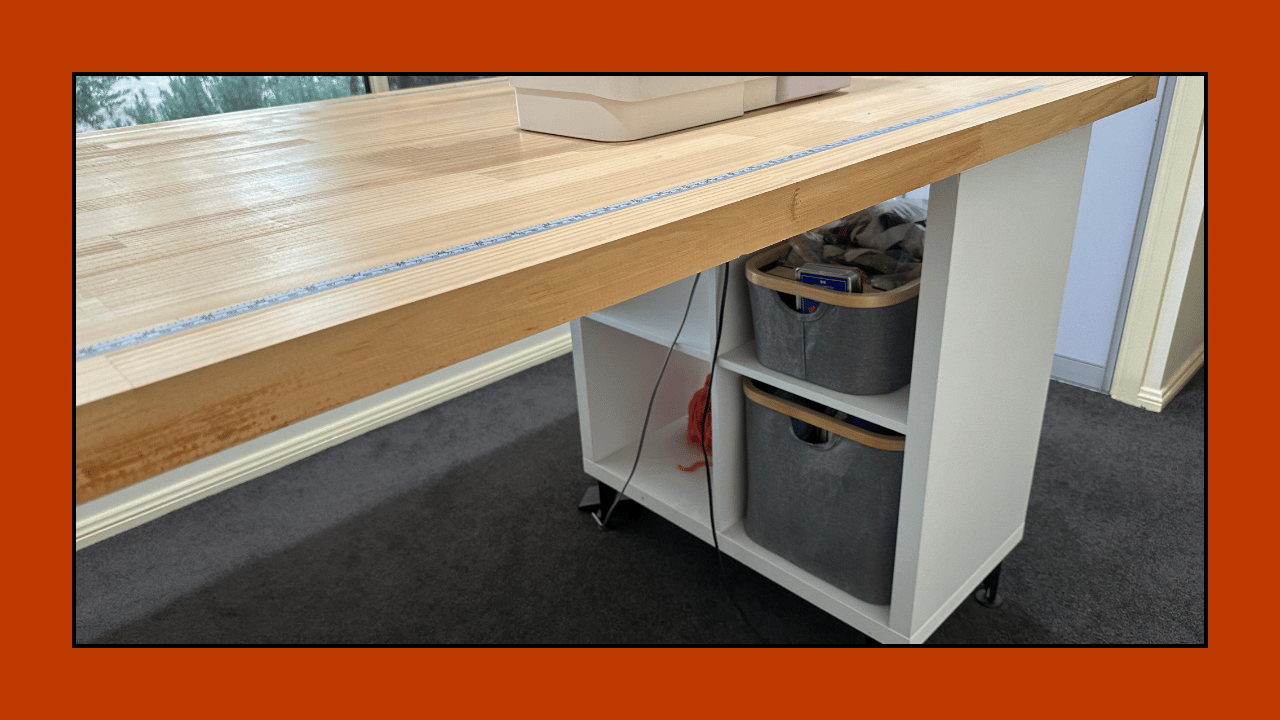
An investment in a quality sewing table is an investment in your sewing journey. Set yourself up for sewing success by prioritising this often-underrated piece of equipment. If you want to make one like mine, this is what I used:
Materials
- 2 x Flexi Storage White Clever Cube 2 by 2 Unit
- 8 x 150mm tall table legs (optional)
- 1 x Specrite 2400mm by 900mm by 33mm Multi Use Timber Panel
- 2 x 60mm Cable Duct for tables
- 2 x 2m Metallic Paper Tape Measure with a sticky backing
- 1L Satin Clear Bench Top Sealer
- Paint brush
- Short and long screws
- 60mm hole saw
Steps
- Attach table legs securely to the bottom corners of each storage cube unit, using the short screws.
- Flip storage units right side up to form the base structure of the table.
- Carefully place the timber panel on top of the storage units. Align it so that it is centred and stable. The timber panel should overhang the cubes slightly. Use the long screws to fix the timber panel securely (from underneath) to the storage cubes.
- Identify where you want the cable ducts for your sewing machine cords. Use the 60mm hole saw to cut the holes in the timber table top. Insert the cable ducts. Glue down if necessary.
- Brush the sealer over the timber table top. Allow to dry.
- Remove backing to the tape measures and carefully stick down on each long side of the table top.
- Arrange your sewing machine and accessories on the table. Route the cables through the cable ducts and to the power-points.
Happy sewing! 🧵✨