
Why Sheep Move the Way They Do: Understanding Flock Flow, Stress, and the Quiet Wisdom of Age
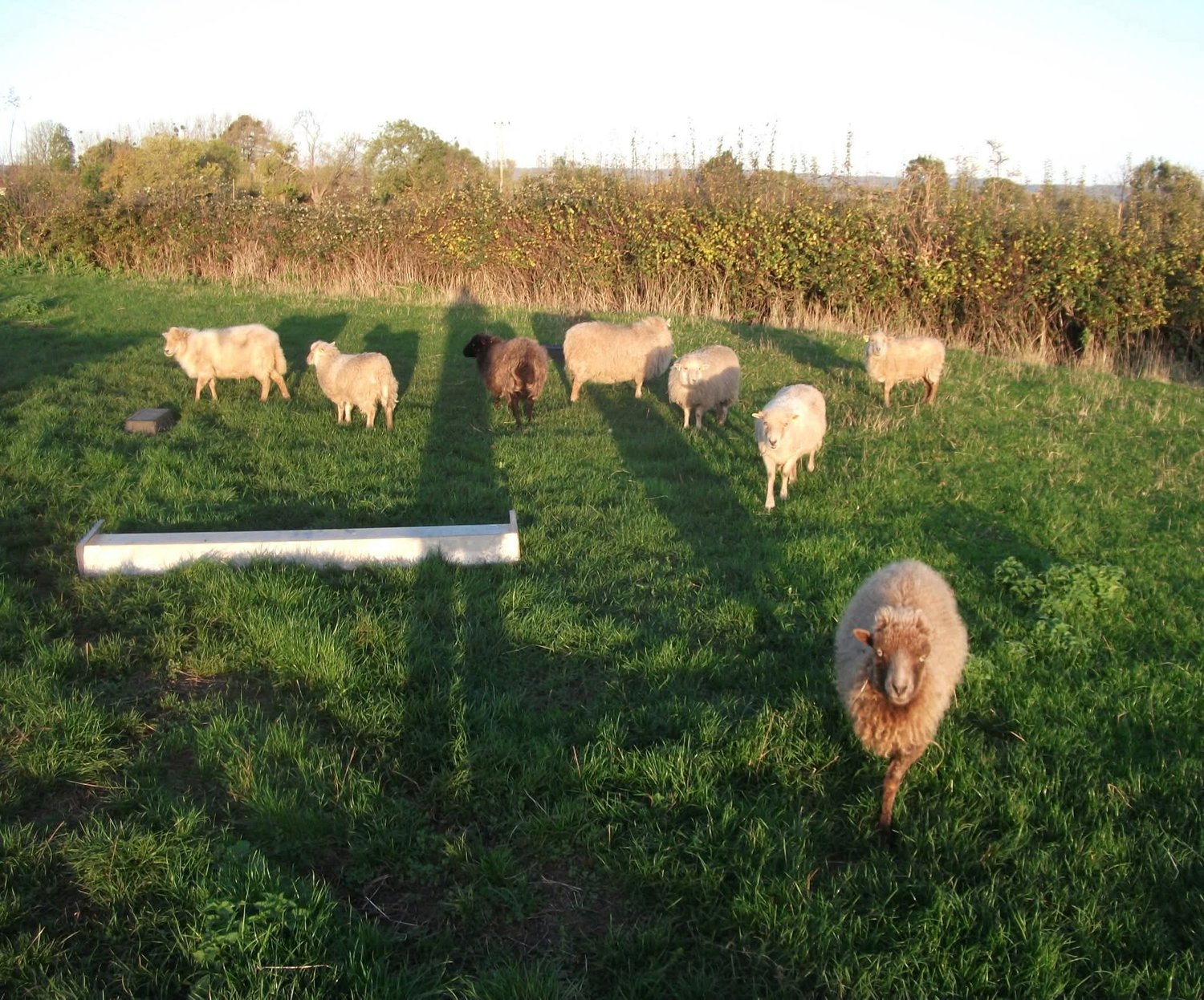
If you spend enough time watching sheep, I mean really watching them, you start to notice that their movement has a pattern. A flock doesn’t simply “go from A to B”. It swells, contracts, hesitates and then moves forward again like a living tide. There’s a softness to it, but also a deep intelligence. Every sheep is making decisions and every decision is shaped by age, confidence, physical comfort and the emotional situation of the moment. Understanding this flock flow isn’t just useful for handling sheep, it’s a window into how they experience the world.
The Quiet Rules Sheep Follow
Sheep move according to three simple but powerful instincts:
- Stay close enough to feel safe.
- Match the pace and direction of those nearby.
- Avoid bumping or crowding unless absolutely necessary.
These instincts are ancient, they’re the reason sheep survived long before fences, crooks or companion homes existed. When you see a flock ripple across a field, you’re watching thousands of years of evolution expressed in real time.
There Is No Single Leader And That’s the Beauty of It
People often ask, “Which one is the leader?” The truth is, there isn’t one. Leadership in sheep is shared. A confident ewe steps forward, another follows and suddenly the flock agrees. It’s democracy in motion, quiet, subtle and incredibly effective. Older sheep often take these forward positions. They know the land and the routine. Their calmness becomes a stabilising force, especially when the flock is unsure.
Age Creates Structure
Age shapes flock movement more than most people realise.
- Older ewes often hold steady, central or forward positions. Their experience anchors the group.
- Lambs stay close to mothers or familiar adults, weaving in and out with youthful uncertainty.
- Teenage sheep (those lively shearlings) often hover at the edges, curious but still learning the rules.
When stress enters the picture, this structure tightens. Lambs pull inward, older sheep step forward and the flock becomes a protective shell.
Physical Comfort Matters
A sheep’s body tells you where it will choose to stand.
- Fit, healthy sheep often take the outer edges or the front.
- Sheep who are lame, elderly, pregnant or simply having a low‑energy day naturally drift toward the centre.
The flock adjusts around them without fuss. It’s one of the most touching things about sheep, their movement protects the vulnerable without needing intention or drama, it’s simply what sheep do.
Stress Changes Everything
When sheep feel pressure, perhaps a dog, a sudden noise, an unfamiliar person, the flock transforms instantly.
- The group tightens.
- Movement becomes faster and more aligned.
- The confident sheep take decisive steps.
- The vulnerable ones move inward.
Sometimes the flock forms a teardrop shape, with the boldest at the front and the weakest tucked safely in the middle. If pressure increases, they bunch tightly, becoming a single moving mass. It’s an ancient defence strategy and it works.
Why This Matters for Companion Sheep
For those of us who work with sheep gently and respectfully, understanding flock behaviour is essential. It helps us:
- move sheep calmly.
- reduce stress.
- support older or vulnerable individuals.
- read emotional states before they escalate.
- create environments where sheep feel safe enough to be themselves.
A flock is not just a group of sheep, it’s a social organism, responsive, sensitive and quietly wise. When we learn to read its movement, we learn to work with sheep rather than against them.
And that’s when the magic happens.