
If you’re taking Anatomy & Physiology for the first time, there’s a good chance you’ve already realized something unsettling:
Reading the textbook is not enough. And rewriting it word-for-word is exhausting, time-consuming, and honestly… not effective.
I learned this the hard way.
The problem with “traditional” anatomy studying
Most A&P students do one (or all) of these things:
- Rewrite entire chapters by hand
- Highlight everything and retain nothing
- Make beautiful notes that take hours and never get reviewed
- Memorize lists without understanding how things connect
Anatomy isn’t about memorizing everything. It’s about understanding what matters, why it matters, and how it shows up on exams.
What actually works for Anatomy & Physiology
After going through A&P myself, here’s what consistently helped information stick:
1. Focus on structure → function
If you can explain why something looks the way it does, you’ll remember it longer.
For example:
- Why epithelial tissues differ in shape
- Why certain neurons conduct signals faster
- Why muscle fibers behave differently under stress
When structure and function click together, memorization becomes easier.
2. Condense information before memorizing
Your brain remembers organized summaries, not walls of text.
Instead of rewriting chapters, aim for:
- Clear definitions in plain language
- Tables or lists that show comparisons
- Visual cues that trigger recall during exams
This is especially helpful for:
- Tissue types
- Nervous system divisions
- Muscle physiology
- Cell structures and functions
3. Study like your professor tests
Exams usually focus on:
- Big concepts
- Relationships between systems
- Key terms that show up repeatedly in lectures
Studying everything equally wastes energy. Studying strategically saves it.
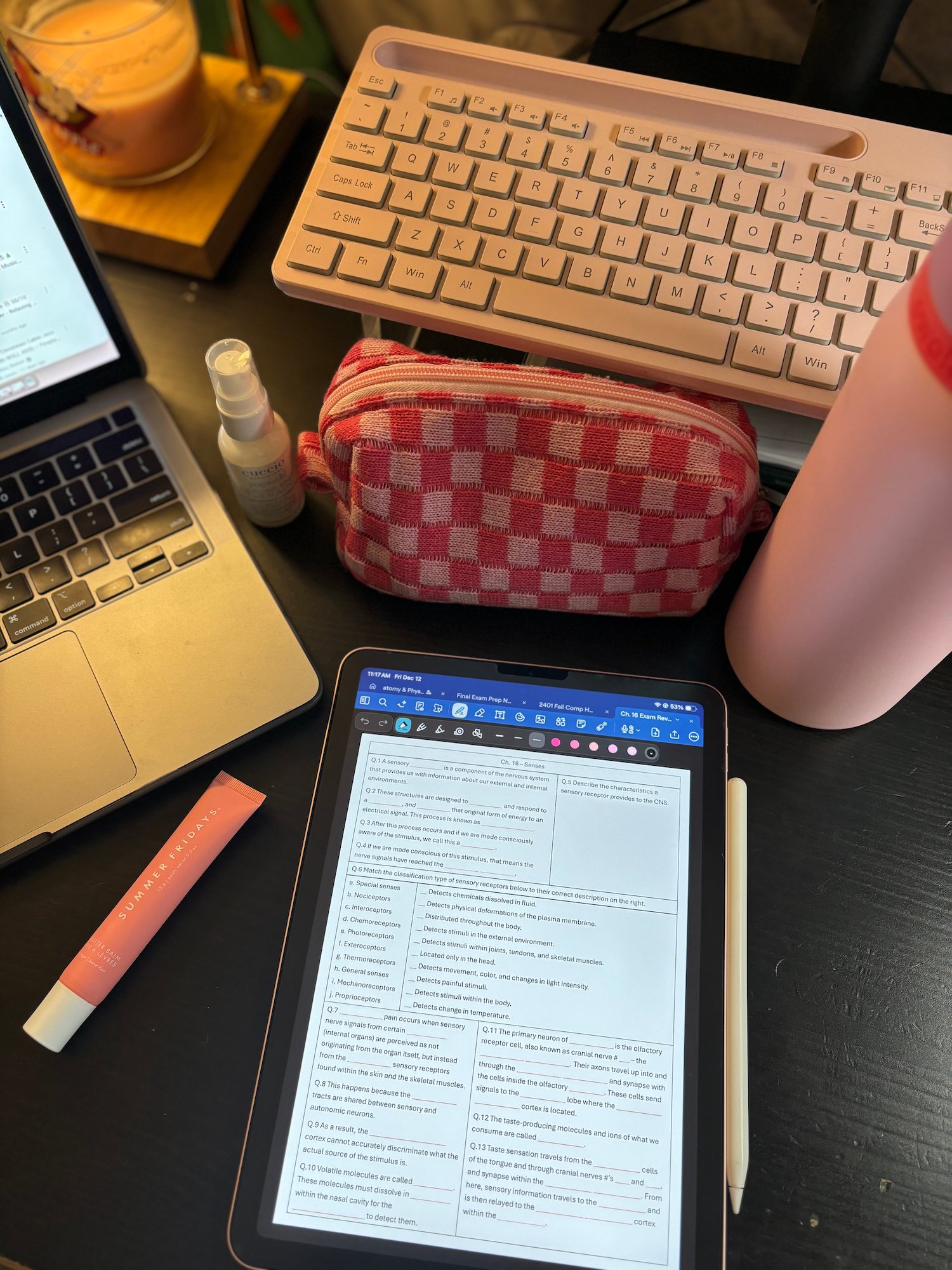
Why I created anatomy notes (and who they’re for)
I started making my own anatomy notes because I wanted something:
- Short enough to review quickly
- Detailed enough to understand concepts
- Organized the way exams are actually written
These notes are not a replacement for lectures or textbooks.
They’re meant to:
- Save you time
- Reduce overwhelm
- Give you a clear starting point for studying
They’re especially helpful if you:
- Are taking A&P for the first time
- Feel lost in lectures
- Want to study efficiently without burning out
How to use anatomy notes effectively
If you decide to use anatomy notes like mine, here’s how to get the most out of them:
- Read through the notes once without memorizing
- Compare them to your lecture slides
- Add your professor’s emphasis or examples
- Use them for active recall (cover & test yourself)
Think of them as a study map, not a shortcut.
Final thoughts
Anatomy is hard — but it doesn’t have to feel impossible. With the right structure, clear explanations, and focused studying, it does get manageable. And once things start clicking, your confidence follows.
If you’re looking for anatomy notes designed to save time and reduce stress, you can check out the notes I’ve made here in my shop 🤍