

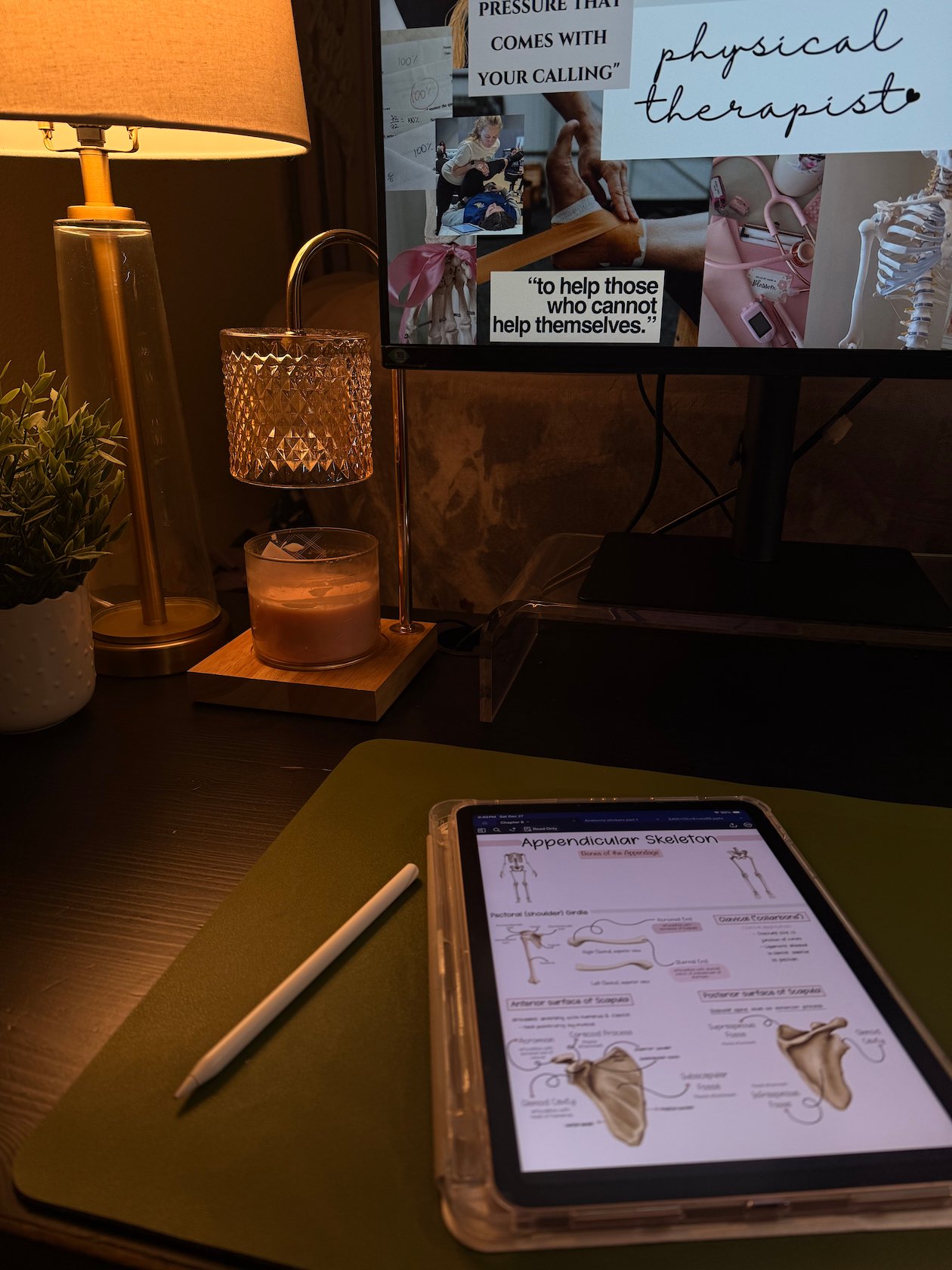
If you’re taking anatomy right now and your study method looks like this:
- read the chapter
- rewrite your notes
- highlight everything
- still fail the quiz
You’re not bad at anatomy.
You’re just studying it the wrong way.
Anatomy isn’t a memorization class. It’s a recognition and application class. And rewriting your textbook is one of the least effective ways to learn it.
Let’s talk about what actually works.
Why Rewriting Your Notes Doesn’t Work for Anatomy
Rewriting feels productive because:
- your hand is moving
- your page looks full
- your brain feels busy
But here’s the problem:
You’re not forcing your brain to retrieve information.
Anatomy exams don’t ask:
“Did you rewrite this sentence?”
They ask:
“Can you recognize this structure, function, or relationship under pressure?”
Passive studying creates familiarity, not understanding.
What Anatomy Professors Are Actually Testing
Most anatomy exams test three things:
- RecognitionCan you identify structures?
- Can you recognize terminology when it’s worded differently?
- RelationshipsHow systems connect
- Cause-and-effect (especially with homeostasis)
- ApplicationPredicting outcomes
- Explaining what happens if something goes wrong
None of those skills improve by rewriting paragraphs.
The Study Method That Actually Works
Here’s a simple, effective anatomy workflow that works for most students:
1. Learn the Big Picture First
Before you memorize anything, ask:
- What is this system’s job?
- Why does it matter?
- How does it connect to other systems?
If you don’t understand the “why,” the details won’t stick.
2. Use Active Recall (Even If It Feels Hard)
Active recall means forcing your brain to answer without looking.
Examples:
- Flashcards
- Practice questions
- Covering labels and testing yourself
- Explaining concepts out loud
If it feels uncomfortable, that’s a good sign. That’s learning happening.
3. Focus on High-Yield Concepts
Not everything in the chapter is equally important.
High-yield anatomy topics usually include:
- terminology
- structure-function relationships
- feedback mechanisms
- clinical correlations your professor emphasizes
Pay attention to:
- what shows up in lecture slides
- what gets repeated
- what appears in lab
4. Review in Short, Frequent Sessions
You don’t need 8-hour study days.
You need:
- short sessions
- repeated exposure
- spaced review
Anatomy rewards consistency, not cramming.
What to Do Instead of Rewriting Your Notes
If you’re tempted to rewrite, try one of these instead:
- Turn notes into flashcards
- Quiz yourself using lecture objectives
- Teach the concept to someone else
- Write 3–5 practice questions per topic
- Summarize a concept in one sentence (no copying)
These methods build exam-ready understanding.
Final Thoughts
If anatomy feels overwhelming, it’s not because you’re incapable.
It’s because anatomy requires different study strategies than most classes.
Once you stop rewriting and start testing your understanding, everything changes.
And if you want structured tools that support active recall and high-yield studying, that’s exactly why I create anatomy resources designed for how this class is actually taught.