
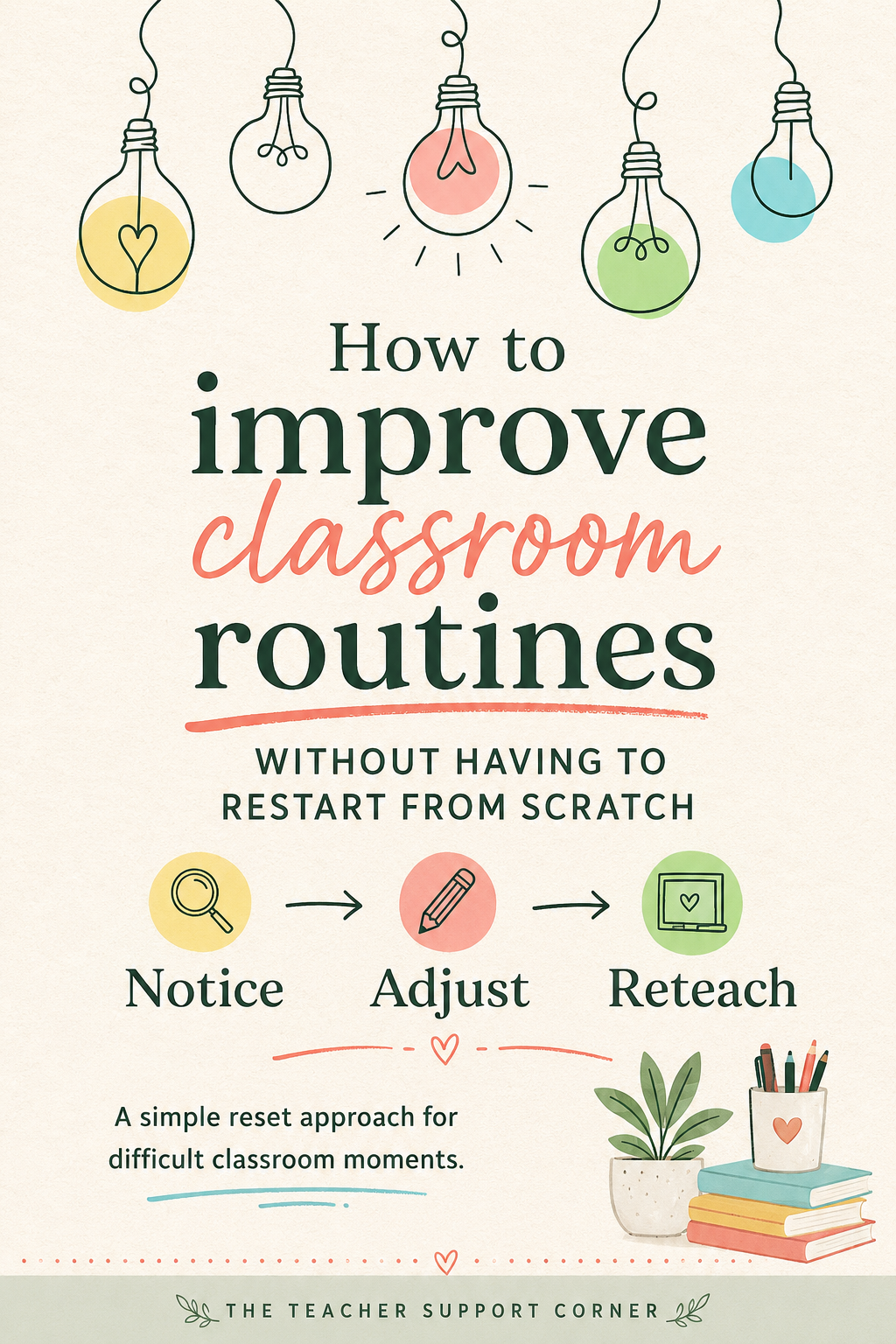
You taught the routine — chose the cue, explained the learner actions, modelled the process, and gave your class time to practise.
For a few lessons, it seemed to be working. Then today, learners ignored the cue. Some responded, others did not. You repeated yourself more than you wanted to. By the end of the lesson, you may have wondered: Are we right back where we started? Not necessarily.
Before you become discouraged teacher remember...
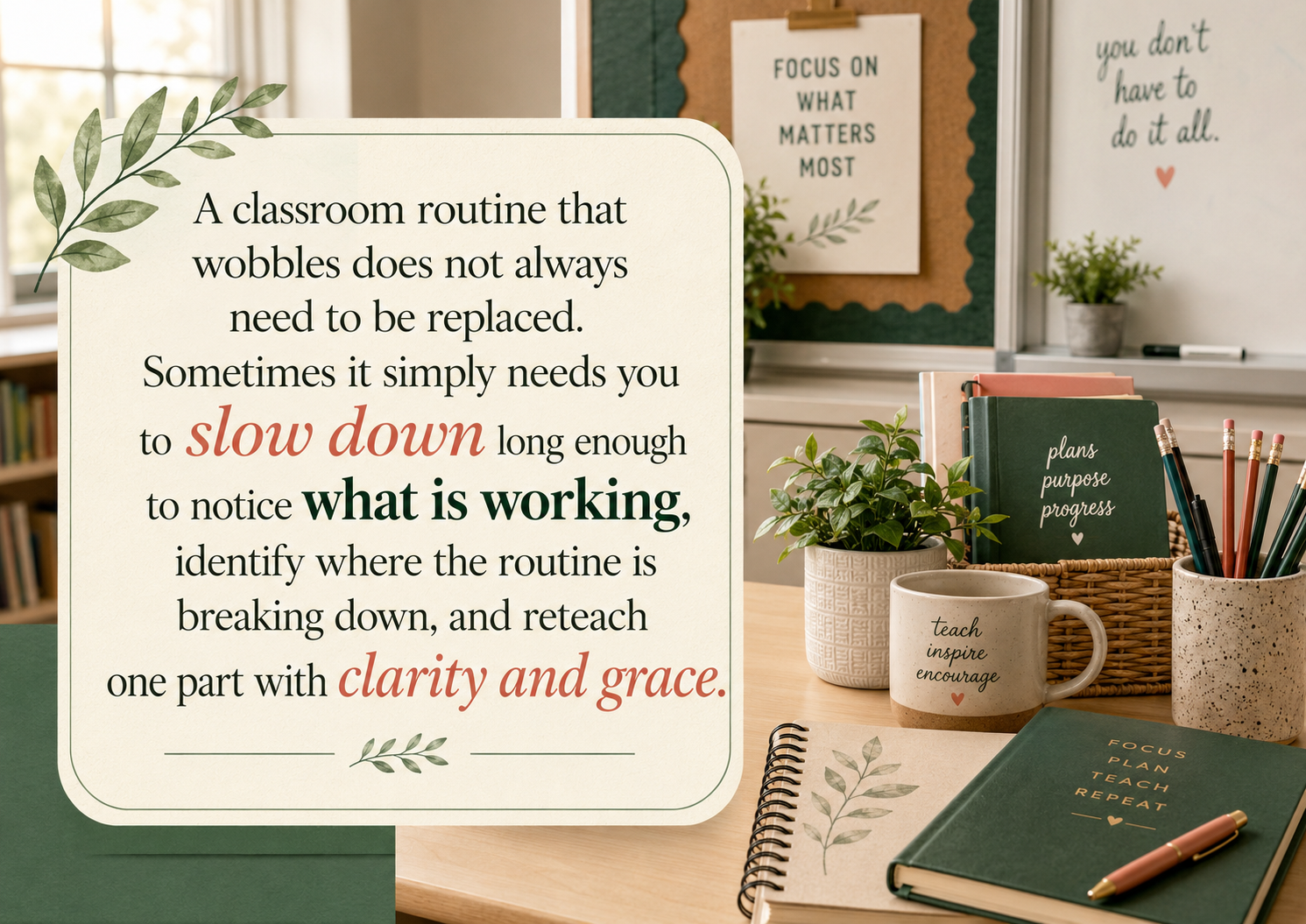
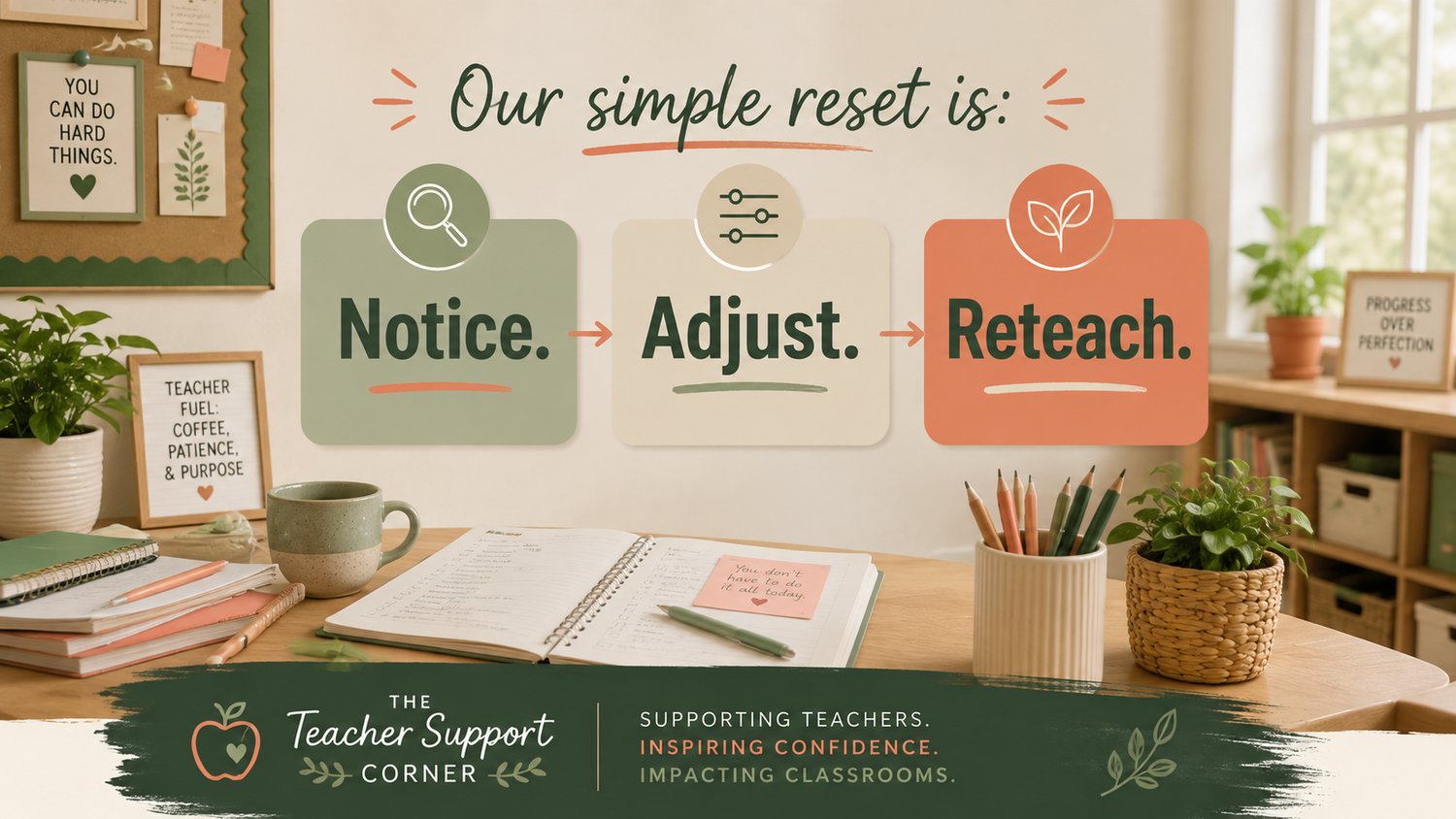
This week, you are not building another routine — we are learning how to strengthen the one you already have. We learning reset when these moments happens. We are exploring the routine review process:
And you do not have to do any of it alone.
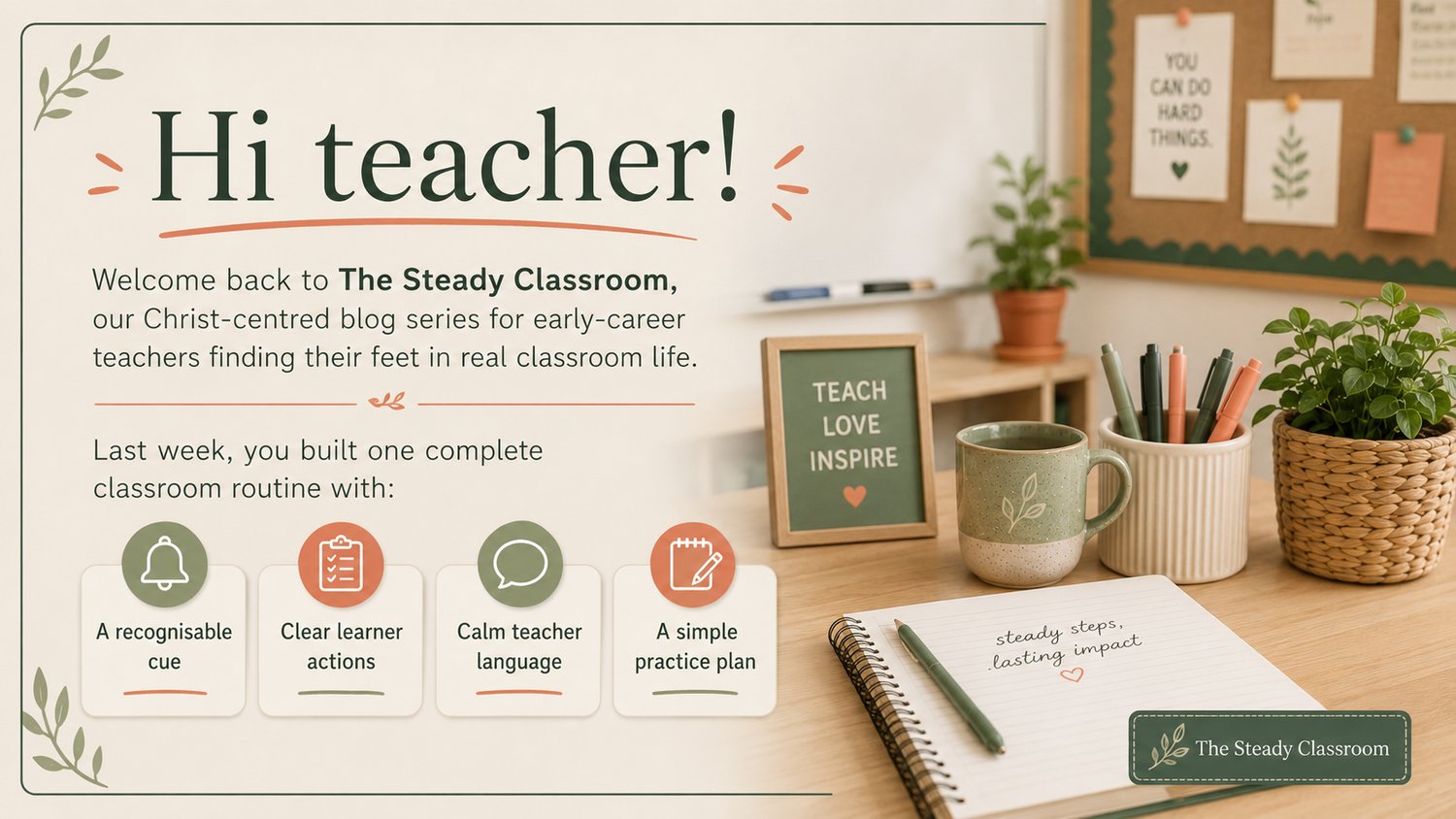
You can revisit Classroom Routines for Early-Career Teachers: 3 Simple Routines to Start This Week if you need a reminder. Read it here https://payhip.com/TheTeacherSupportCorner/blog/news/classroom-routines-for-early-career-teachers-3-simple-routines-to-start-this-week
The journey so far has been simple:
First, you noticed one unclear classroom moment. Then, you built one routine to support it. Now, you are learning what to do when that routine does not hold consistently.
This matters because a difficult lesson can make it feel as though all your progress has disappeared. It has not. A wobble gives you information
So please remember teacher....
Before You Change the Routine, Pause
When a routine stops working, it is easy to react quickly. You may want to change the cue or add more instructions or introduce consequences or even explain the routine again at length in good old lecture style. The thought might also cross your mind to just abandon the whole thing and start over.
Before you do that, take a deep breath and pause.
James 1:5 reminds us that when we lack wisdom, we can ask God, who gives generously. That invitation belongs in the classroom too.
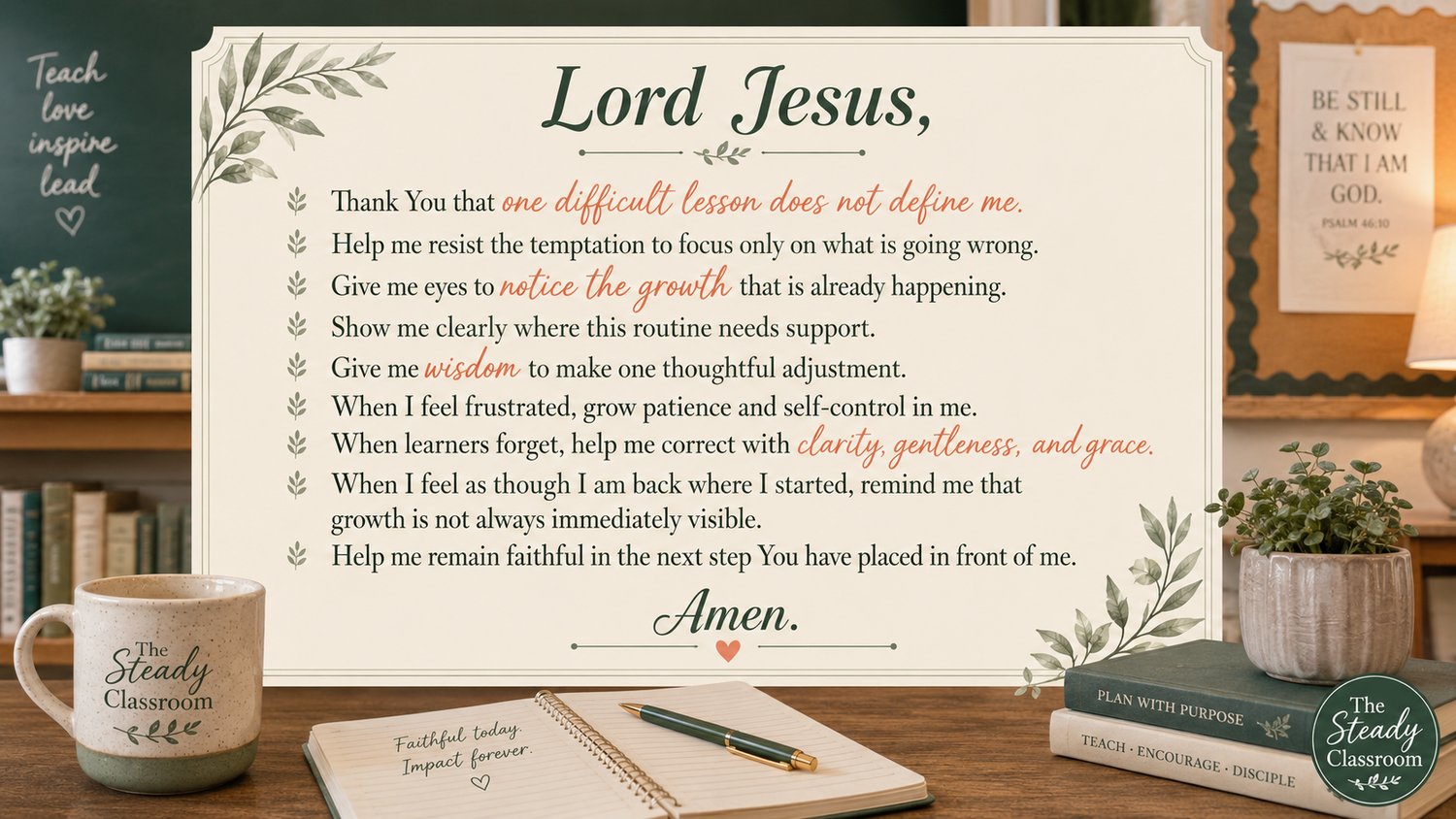
When the urge to abandon or pivoting again comes, you can pray:
This pause matters because frustration can make everything look broken. However, when you slow down and observe, you may discover that the routine is not failing completely. Perhaps learners recognise the cue but forget the final action, or most of the class responds, but a few need more suppor or even that the routine works during a calm morning lesson but falls apart after lunch or you are still learning to use the cue consistently yourself.
That is useful information that can help inform where yoh need to start taking action. Instead of beating yourself up or shaming the way you've gone about see it as an opportunity to seek for more clarity.
Step 1: Notice What Is Actually Happening
Choose one routine that has felt shaky recently. For example how you start your first task in the lesson.
To help is name what is happening we are working through...
In this check we will work through four short questions focusing on one routine that might need help.
Question 1
What is already working?
Write down one thing learners are doing correctly.
For example:
- Most students notice the cue.
- Students stop talking but do not put materials down.
- Students enter calmly but forget to begin the starter.
- Studebts pack away correctly but start before the closing cue.
This question is important. Discouragement often draws your attention only to what went wrong. But Philippians 4:8 reminds us to direct our minds towards what is true and worthy of attention.
That does not mean ignoring problems. It means refusing to let one difficult moment erase the progress that is already there.
You might pray quietly:
Thank You, Lord, for showing me where growth has already begun.
Question 2
Where does the routine break down?
Answer this question by completing this sentence:
The routine begins to break down when learners…
Be specific. Instead of "They do not listen." Use "They hear the attention cue and stop talking, but they continue holding their materials and do not face the front."
That difference matters. The first statement makes the whole routine feel unsuccessful. While the second shows you exactly what needs attention.
Question 3
How many reminders did I give?
You do not need an exact scientific count.
Write an estimate:
- One reminder
- Two reminders
- Three or more reminders
This gives you something simple to compare next time. If you move from five reminders to three, that is progress.
If more students respond after the first cue, that is progress. If you remember to use the cue before raising your voice, that is progress too.
Question 4
What was different today?
Ask yourself:
- Was this lesson at a different time?
- Had learners just returned from break?
- Was the activity more energetic than usual?
- Was the visual reminder missing?
- Were resources not ready?
- Did learners need more processing time?
- Was I rushed or distracted?
Step 2: Adjust One Thing
Once you know where the routine is breaking down, resist the temptation to change everything. I know it's difficult because we want to find the winning method.
Before exhausting yourself with trying all sorts of different methods, keep it simple — Choose one adjustment. Also before making it, ask: Lord, give me wisdom to know what will serve these learners well.
Also remember...
If the Cue Is Being Ignore, check whether the cue is clear and consistent.
Ask:
- Am I using the same cue each time?
- Can every learner see or hear it?
- Am I introducing another instruction at the same time?
- Am I waiting until the room is already too noisy before using it?
You may need to pair a spoken cue with a visual one.
For example:
“When you hear the phrase and see my hand raised, complete the three actions we have practised.”
Clarity is an act of care. You are giving learners a better chance of responding successfully.
If Only Part of the Routine Is Working, do not reteach everything. Instead focus on the missing step.
You might say:
“You responded quickly and stopped talking. That part is improving. The next step we need to practise is putting our materials down and facing the front.”
That language is both truthful and hopeful. It names what needs to change without pretending that nothing has improved.
Colossians 3:12 calls us to compassion, kindness, humility, gentleness, and patience.Those qualities can shape correction too. You can be clear without humiliating students and hold the expectation without turning the moment into a confrontation.
If the Routine Has Too Many Steps — Simplify it. A routine with three or four actions is often easier to remember than one with seven.
For an attention routine, you might use:
1. Stop talking.
2. Put materials down.
3. Face the front.
4. Listen.
Simplifying does not mean lowering your expectations. It means making the path towards those expectations clearer.
If Only Some Learners Respond, ask whether the whole class needs another brief rehearsal.
You could say:
“Some of you completed the routine correctly. We are going to practise once more so that everyone knows the full response.”
If most students are responding consistently, individual learners may need:
- A visual reminder
- More processing time
- An individual prompt
- Additional support
Pray for discernment.
Ask: Lord, help me see the learner, not only the behaviour.
Then follow your school’s behaviour and learner-support procedures where appropriate. You are building a habit alongside your learners.
Place a reminder:
- In your lesson plan
- Beside the board
- On your desk
- On your teaching slides
- On a small routine card
Forgetting does not mean you are incapable. It means you need a prompt while the habit is still becoming familiar. Sometimes faithfulness looks very practical. It can look like placing a small note where you will see it tomorrow.
Step 3: Reteach the Routine With Grace
Once you have made one adjustment, teach the routine again. Do not wait until the room is already unsettled. Choose a calm moment. I've found the start of a period as the best time. Taking 5 minutes to reteach a routine at the start of the day or period, is better than spending whole days trying to settle a class again.
Keep the reset short. Restate the Cue to your students by saying exactly what your students should listen or look for. This could sound like, “When you hear the signal, this routine begins.”
Restate the Student Actions by using simple clear language. This could sound like, “Stop talking, put your materials down, face the front, and listen.”
Explain Why the Routine Matters. You might say, “We are practising this so that everyone can hear the next instruction and we do not lose learning time.”
A routine should not feel like control for the sake of control. Instead it needs to support learning, responsibility, consideration, and calm.
Model It by showing what you intend the routine to look like. You can also model an incorrect version and ask, “What did I miss?” This allows learners to notice the expected actions actively.
Practise It Together by letting your students rehearse the routine. Then give one specific piece of feedback. For example, “You stopped talking quickly. Let us repeat it and remember to put the materials down as well.”
A Complete Example
Imagine that you introduced an attention-signal routine last week. The cue is a short clap pattern — for example clap-clap pause clap-clap pause.
When students hear it, they should:
1. Stop talking.
2. Put their materials down.
3. Face the front.
4. Listen.
The routine worked well on Monday and Tuesday. On Wednesday, only some students respond.
Your first thought may be, it has already fallen apart.
You notice:
- Most learners heard the cue.
- Most stopped talking.
- Several continued handling their materials.
- You repeated the cue three times.
- The class had just completed an energetic group task.
That tells you something important. The routine is not completely broken. There are some positives to celebrate. Students do recognise the cue. They understand the first action.
The part that needs support is moving from using their materials to giving you their full attention.
You say, “You heard the cue and stopped talking. That part is improving. We need to practise putting the materials down and facing the front as well.”
You model the complete response. Students return to their group task for thirty seconds. You use the cue again.
This time, more students complete all four actions. Even though It is not perfect, but it is different. And different can be progress.
Before rushing towards what still needs work, pause long enough to notice what changed. Acknowledge the positive changes that you can see by simply saying, Thank You, Lord, for showing me where growth is happening.
Use a Simple Three-Lesson Tracker
One difficult lesson can make it hard to remember whether a routine is improving. Use a simple tracker for your next three lessons.
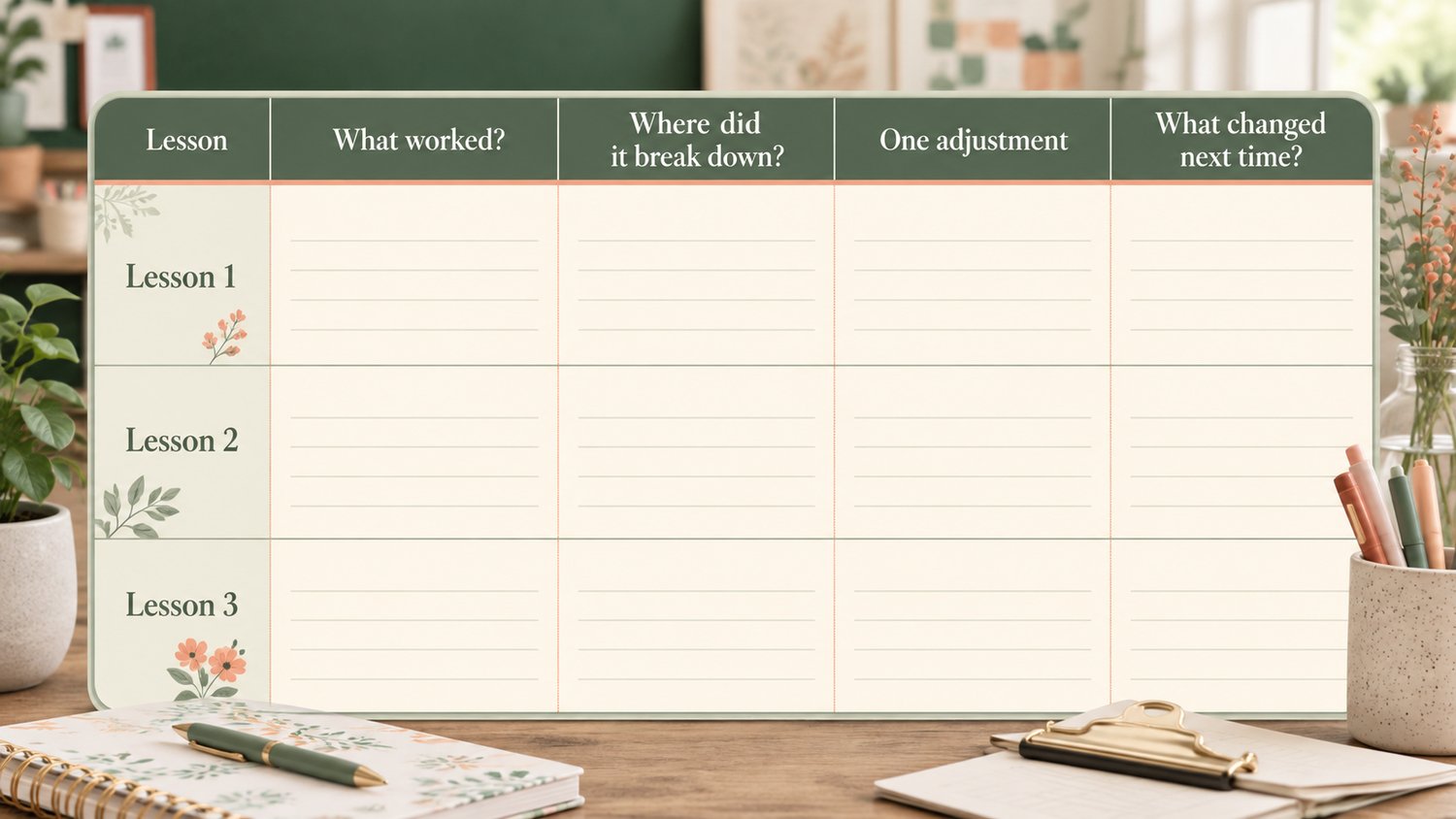
Keep your notes short. You are not writing a behaviour report, but looking for patterns.
After three lessons, ask:
- Are more learners responding after the first cue?
- Am I giving fewer reminders?
- Are learners remembering more of the routine?
- Is the transition becoming quicker?
- Am I responding more calmly?
- Is one particular part still causing difficulty?
This gives you evidence. You no longer have to rely only on the feeling that “nothing is working.” Notice progress because may look smaller than you expected.
It may be:
- Five reminders becoming three
- Half the class responding becoming most of the class
- Students remembering two steps instead of one
- A transition taking two minutes instead of four
- You using the cue calmly instead of raising your voice
- You resetting the routine without turning the moment into a confrontation
These small changes matter.
Galatians 6:9 reminds us not to become weary in doing good. The harvest does not always appear immediately. Sometimes the work in front of you is repetition. Sometimes it is correction. Sometimes it is noticing one small sign that something is beginning to take root.
Jesus is present there too.
When Should You Change the Routine Completely?
Perseverance does not mean refusing to make a needed change. After observing, simplifying, and reteaching the routine consistently, you may discover that it does not fit your learners or classroom context.
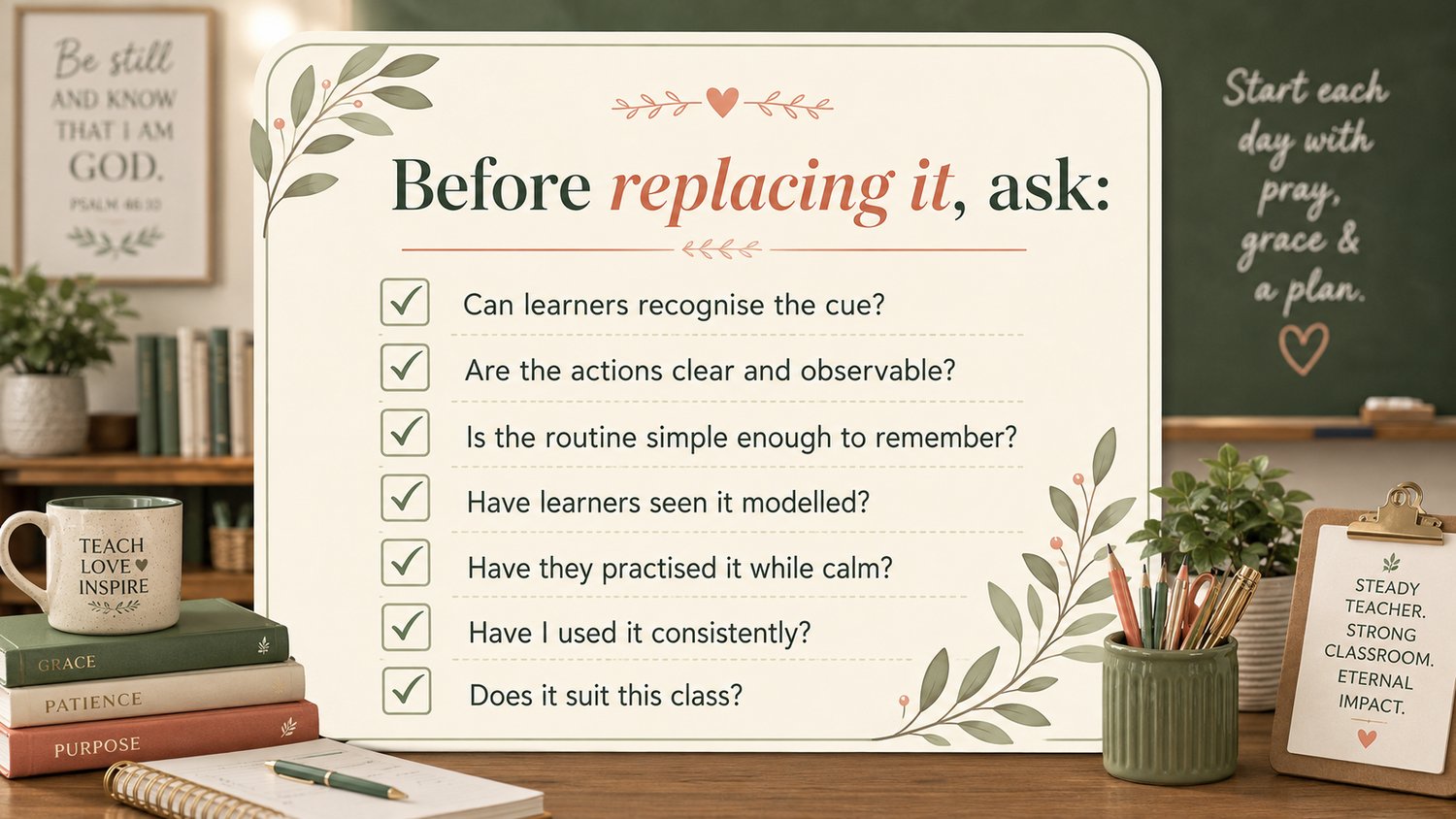
Bring the decision to God. Ask for wisdom rather than changing the routine from frustration or embarrassment. And always remember that a thoughtful adjustment is not failure. It t is part of wise stewardship.
Your Quick Win This Week
Choose one routine that has wobbled recently. Then do only this:
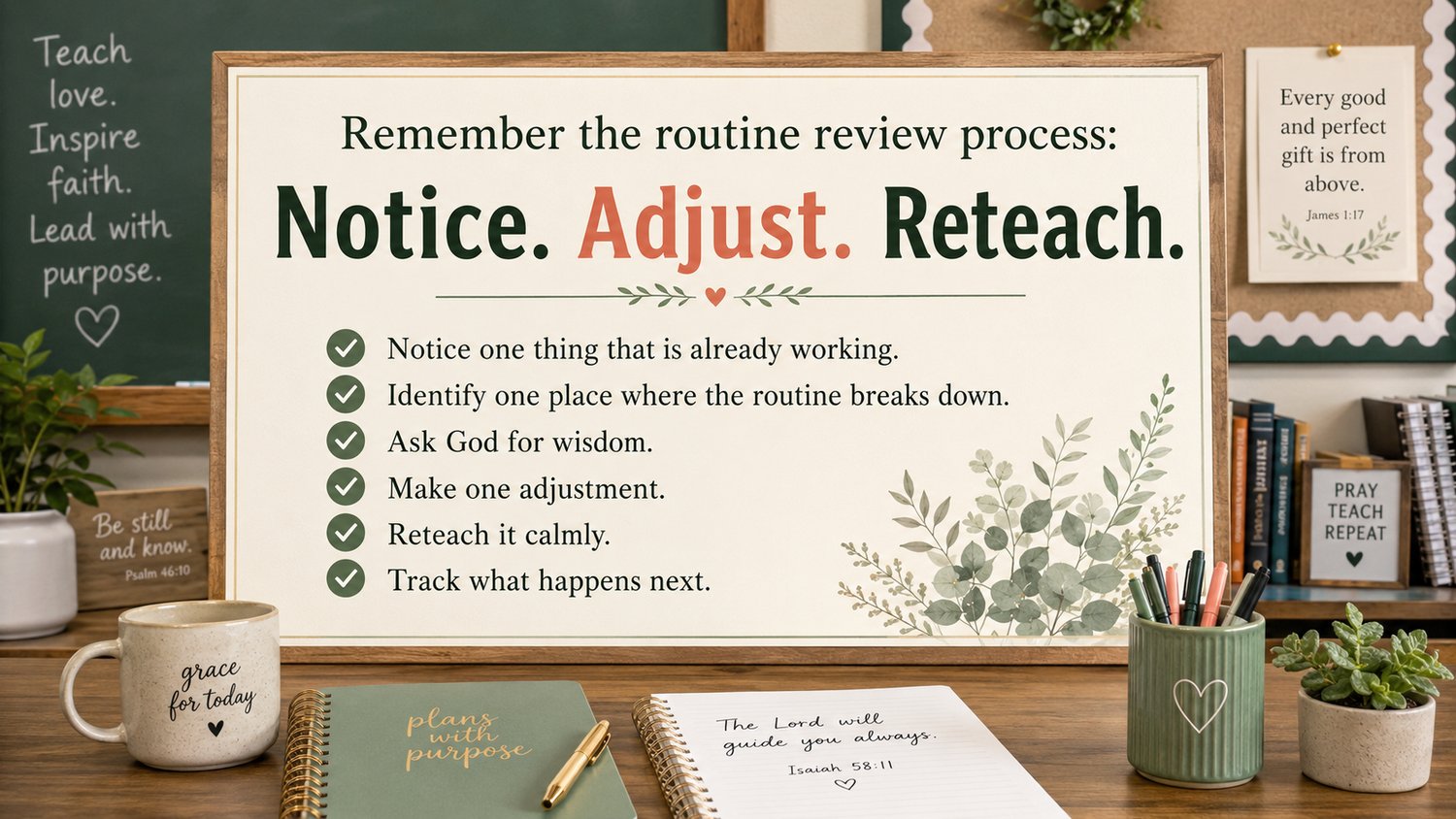
- Notice
- Write down one thing that is already working and one place where the routine breaks down.
- Adjust
- Choose one small change.
- Reteach
Practise the routine again while the room is calm. Then track what happens during the next lesson.
Before you begin, pray:
Lord Jesus, help me notice clearly, adjust wisely, and reteach with patience.
That is enough for this week. You do not need a new classroom-management system. You need one faithful next step.
Start With the Routine Review & Troubleshooting Tool
When a routine starts slipping, it can be difficult to tell whether you need to change the whole process or simply strengthen one part of it.
Before you start over, use The One page Routine Review & Troubleshooting Tool to slow the moment down and look at what is actually happening. This simple one-page tool will help you:
- Name the routine you are reviewing
- Notice the pattern instead of judging one difficult lesson
- Check whether the cue, studentvactions, modelling, practice, and consistency are clear
- Choose one adjustment to make
- Review the routine again after 3–5 lessons to see what has changed
It is designed to help you move from:
“This routine is not working.”
to:
“I can see where it is breaking down, and I know the next step I am going to try.”
You do not need to change everything today. You need enough clarity to make one thoughtful adjustment and give the routine another opportunity to grow. Download your free Routine Review & Troublesbleshooting Tool here:
https://payhip.com/b/X5iHV
When You Need More Support Than Just Reviewing and Adjusting
The planner helps you reset and track one routine. But you may find that you also need support with:
- Finding calm teacher language
- Planning lessons with greater clarity
- Building routines for different classroom moments
- Reflecting without adding more unnecessary paperwork
- Growing confidence without starting from scratch every time
The Early-Career Teacher Lesson Confidence Toolkit includes routine cards, teacher-language scripts, planning pages, and reflection tools designed to support you as you continue finding your classroom rhythm.
Explore the toolkit here:
https://payhip.com/b/PKH2T
The planner helps you reset one routine. The toolkit helps you build greater clarity and confidence across your lessons as well as your routines you need establish.
This Week’s One Supported Step
You do not need to solve everything before Friday. You are learning how to respond thoughtfully instead of starting over every time something wobbles.
A Moment at Jesus’ Feet
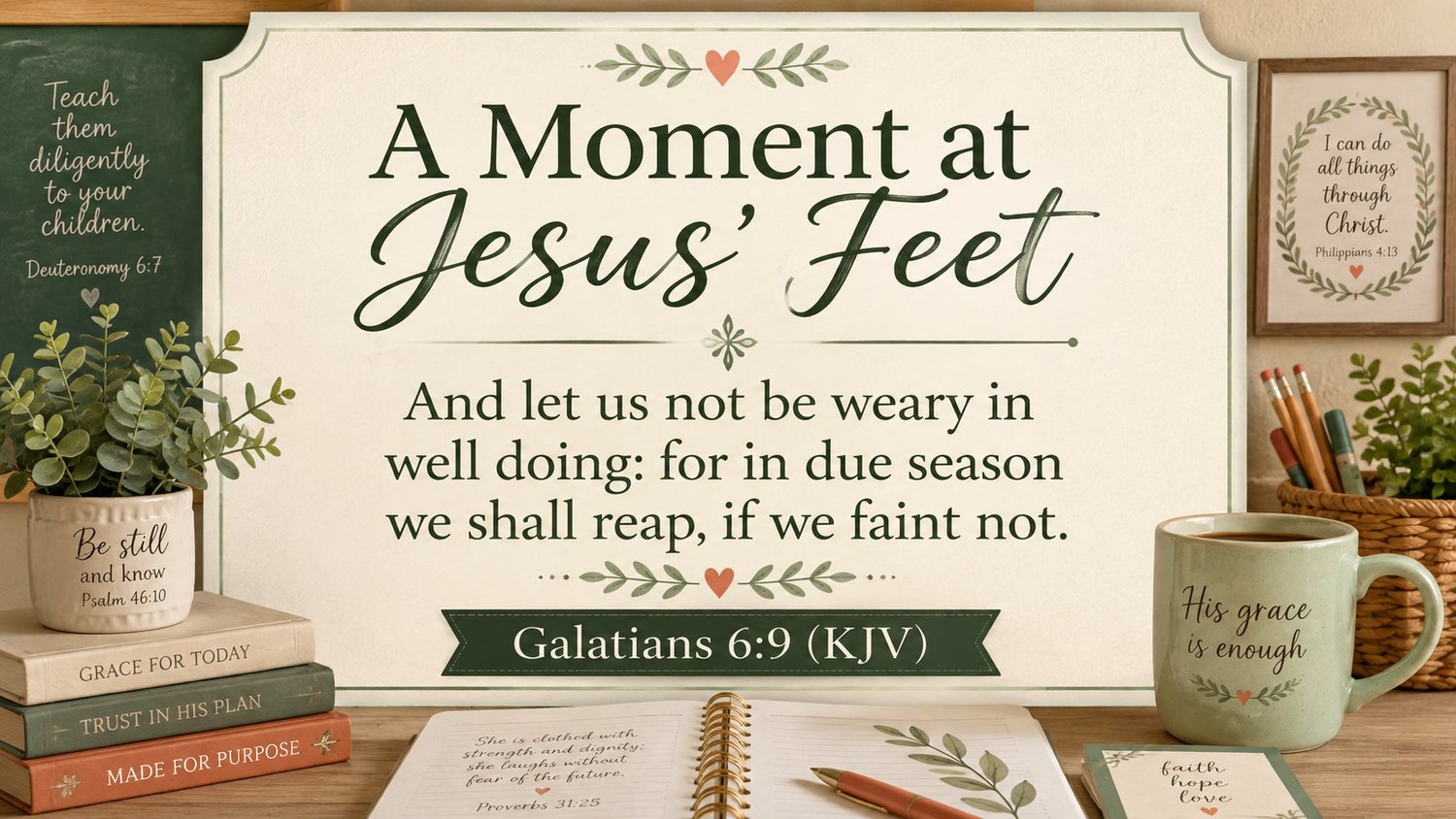
Resetting a classroom routine for the third time can feel discouraging. You may wonder why something so small requires so much attention and may even look around at another teacher’s classroom and imagine that their routines simply work. You may begin questioning whether you are cut out for this. In those moments pause and bring those thoughts to Jesus.
Your worth is not measured by how quickly your class responds to an attention signal. Neither is your calling disproved by an unsettled lesson. Your faithfulness is not invisible to God simply because the result is not immediate. Much of teaching happens in repetition.
You explain again.
You model again.
You correct again.
You encourage again.
You pray again.
And slowly, what once required your full attention begins to become familiar. This is often how growth happens. Not dramatically but faithfully as you do the reteaching process. And the best part is that Jesus is present when you pause before reacting. He is present when you notice the student who improved, when you choose gentleness without giving up the expectation, when you admit that something needs to change, and when you ask for wisdom because you do not know what to try next.
You are not responsible for forcing the harvest. You are responsible for the faithful next step in front of you.
Take a Moment to Reflect
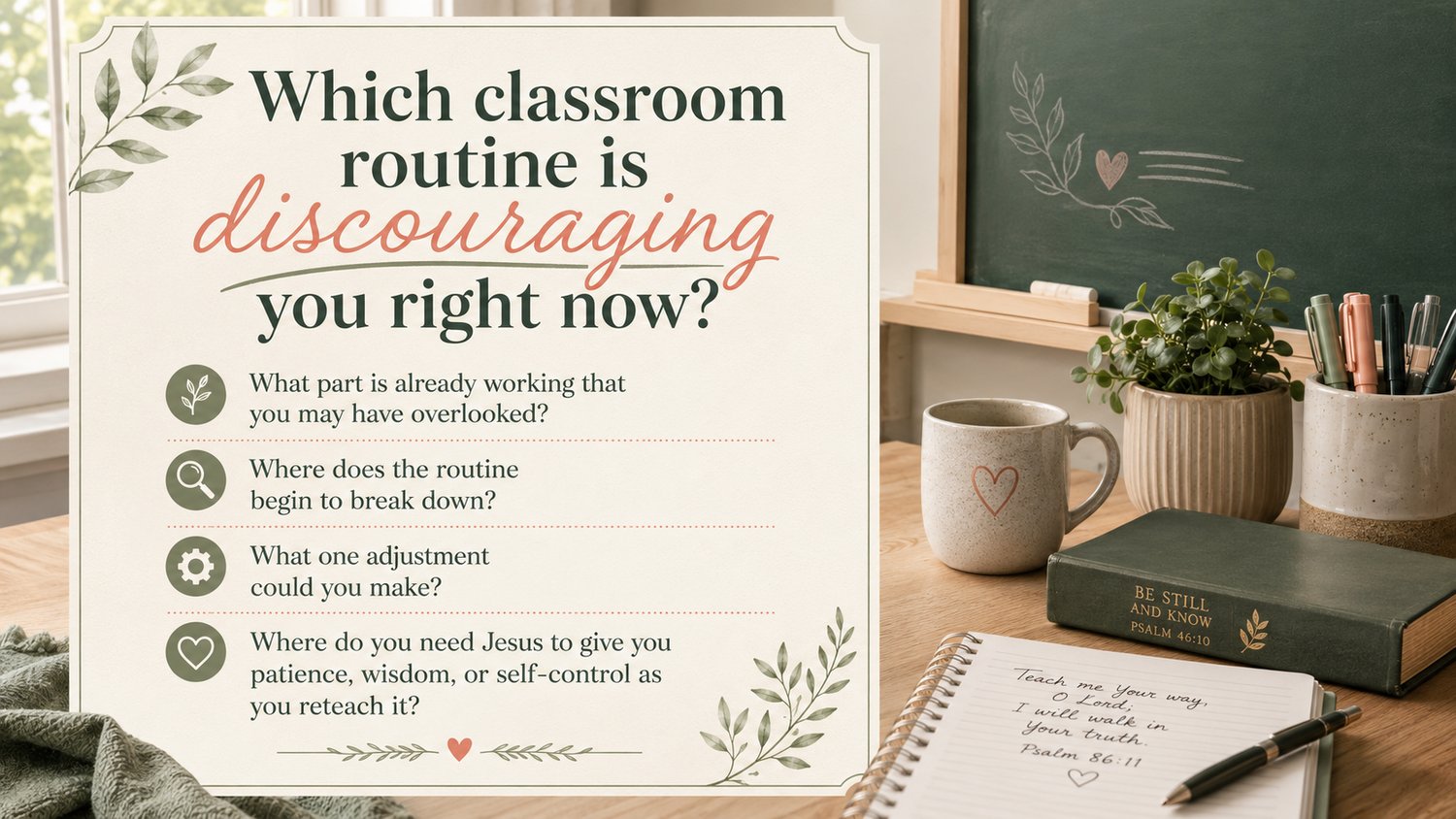
Pause and Pray
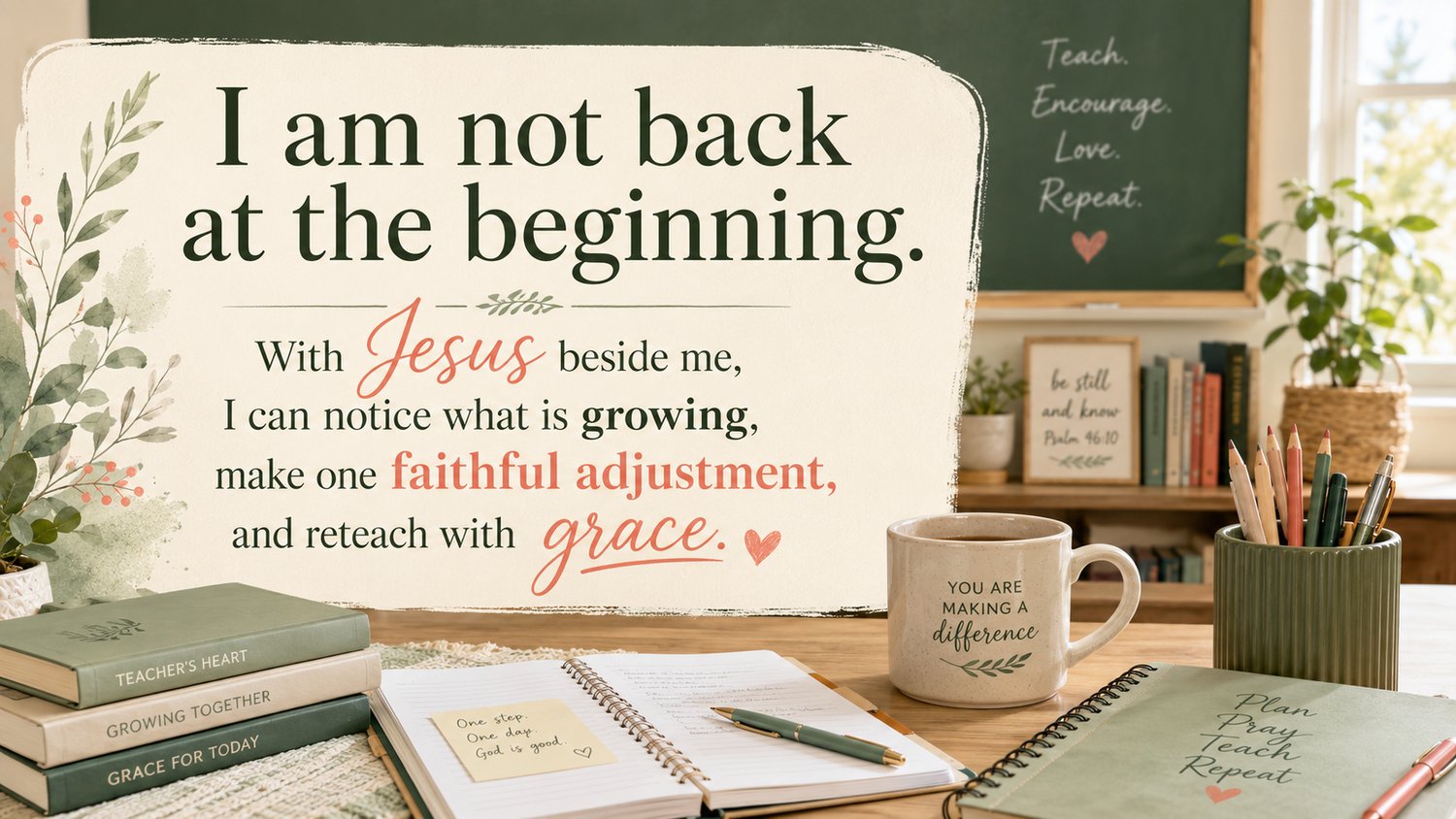
This Week’s Affirmation
Let’s Connect
Which routine are you resetting this week: entry, attention, transitions, early finishers, or the lesson ending?
Share one word in the comments. Then, if you can, share one thing that is already working. Another early-career teacher may need to see that a routine does not have to be perfect for progress to be happening.
Next week, we will look at three simple tools that can help classroom routines become easier for you and your learners to remember.
Remember to give yourself grace as you take small, steady steps forward, teacher. Jesus is present in the classroom you have today, not only in the classroom you hope to have one day.
You are finding your feet, and you do not have to do it alone.
Until next week!
Janeth | The Teacher Support Corner
Comments ()