
You just received that call or email informing you that your application for that teaching post was successful. Or perhaps you are just back from meeting your students and the school staff. Excitement and nerves jump through your body - your first teaching post after graduating. Wow!
You are now the teacher responsible for what happens next. That can feel exciting. It can also bring a completely different kind of uncertainty.
What should happen when learners first walk in?
How will I get everyone’s attention without repeatedly raising my voice?
What do I do when the bell is approaching and I am still teaching?
What if I look as inexperienced as I feel?
You may already have a teaching philosophy, and know that you want your classroom to feel respectful, purposeful, welcoming, calm, or Christ-honouring. Your expectations might also already be written down and your first lessons taking shape. But knowing the kind of teacher you want to become does not automatically tell you what Monday morning should look like. That is the gap we are going to make smaller today. You do not need a complete classroom-management system before Day One. You need to make a few useful decisions before you are trying to make them while a class of learners is waiting for you.
And this time, when students walk into the room, you are not stepping into somebody else’s established classroom for a lesson or two. This time it is your own classroom. How do you navigate this successfully?

Welcome to The Steady Classroom, our Christ-centred blog series for early-career teachers finding their feet in real classroom life.

During teaching practice, you gained real experience. You planned lessons, explained content, worked with students, managed classroom moment with your mentor or occasionally alone, reflected on your teaching and envisioned what you would do differently when you have your own classroom. But often, you were teaching inside systems somebody else had already established. Students may already have known where to sit, what happened when they entered, recognised the class teacher’s attention signal, knew when they were allowed to pack away, and already knew where resources belonged. A great deal of classroom rhythm already have existed before you arrived for your teaching practice. Now you may be the person establishing some of that rhythm. That is new work.
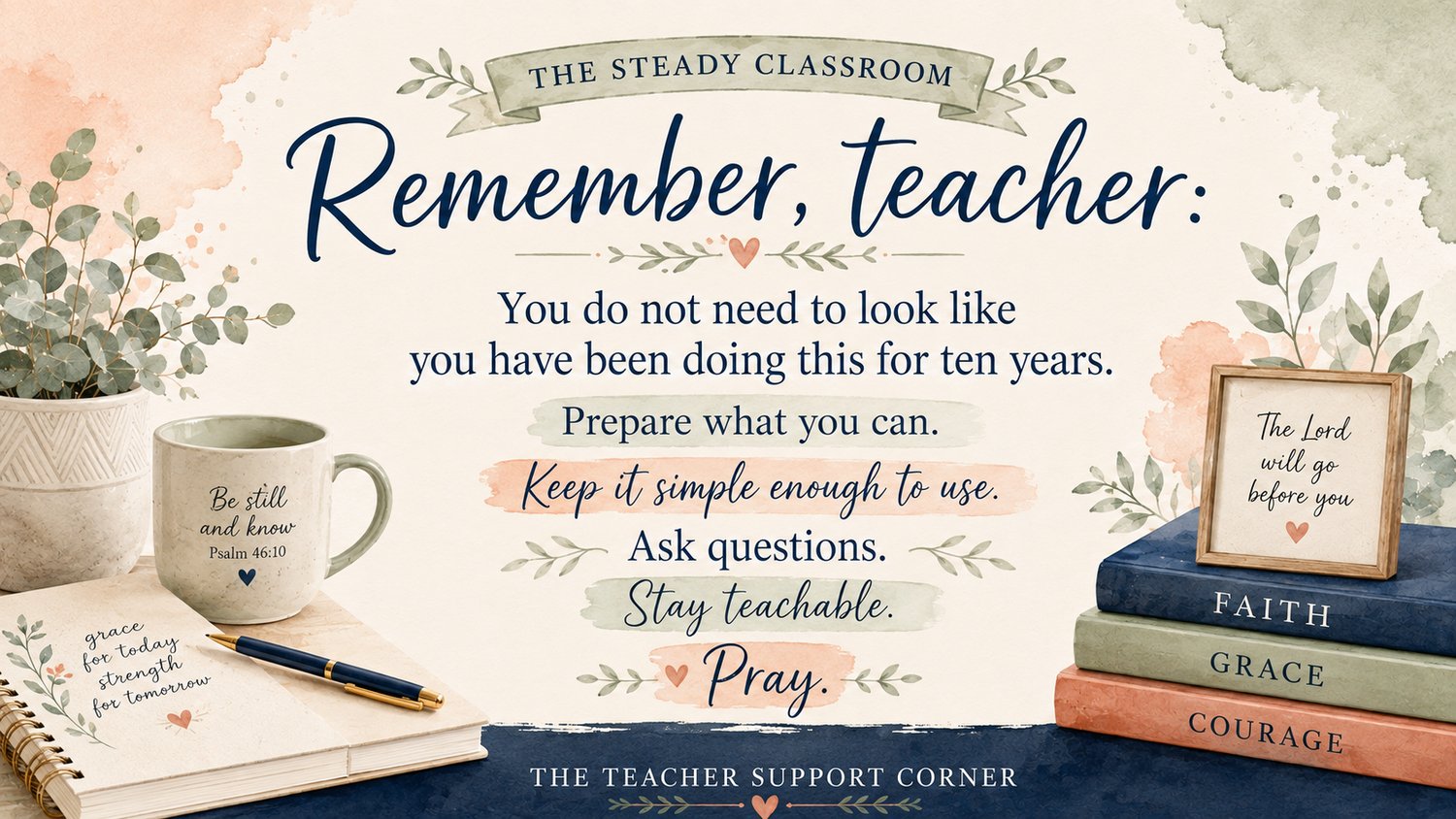
Before we dive in please remember teacher...
First, Find Out What Your School Has Already Decided
Before you create systems of your own, find out which decisions have already been made for you. This can save you a great deal of unnecessary worry. Ask your mentor, head of department, grade leader, or another experienced colleague about practical things such as:
- How attendance is recorded
- What happens when learners arrive late
- The school’s expectations around phones or devices
- Behaviour and referral procedures
- How homework is normally handled
- Where classroom resources are kept
- How learners are dismissed
- Who you contact if you need support during a lesson
You do not need to design a personal solution for something your school already has a clear procedure for.
You do not need to hide the fact that you are new. They already know. Teachability will serve you much better than pretending certainty.
James 1:5 (one of my personal anchor verses) reminds us that when we lack wisdom, we can ask God, who gives generously.
Sometimes His provision looks like the colleague who has taught at your school for six years and can answer the question you have been worrying about all weekend. Ask God for wisdom. Then allow yourself to ask people too.
Prepared Does Not Mean Having Everything Under Control
There is a particular pressure that can come with your first teaching job. You do not want to look like a rookie. After all, you are just from university information is still fresh in the mind. So you prepare another thing. Then another. Another rule. Another classroom-management idea. Another video about what every successful teacher supposedly does on Day One. Before long, you are trying to predict every possible thing that might happen before you have even met the learners who will be sitting in front of you.That does not always create confidence. Sometimes it simply creates more to carry.
Proverbs 16:9 reminds us that we can plan our way while recognising that the Lord directs our steps.
Preparation matters, but you are still learning to navigate this new dimension of teaching you stepped into - give yourself grace and patience to grow. Yes, the students entrusted to you deserve thoughtful preparation.
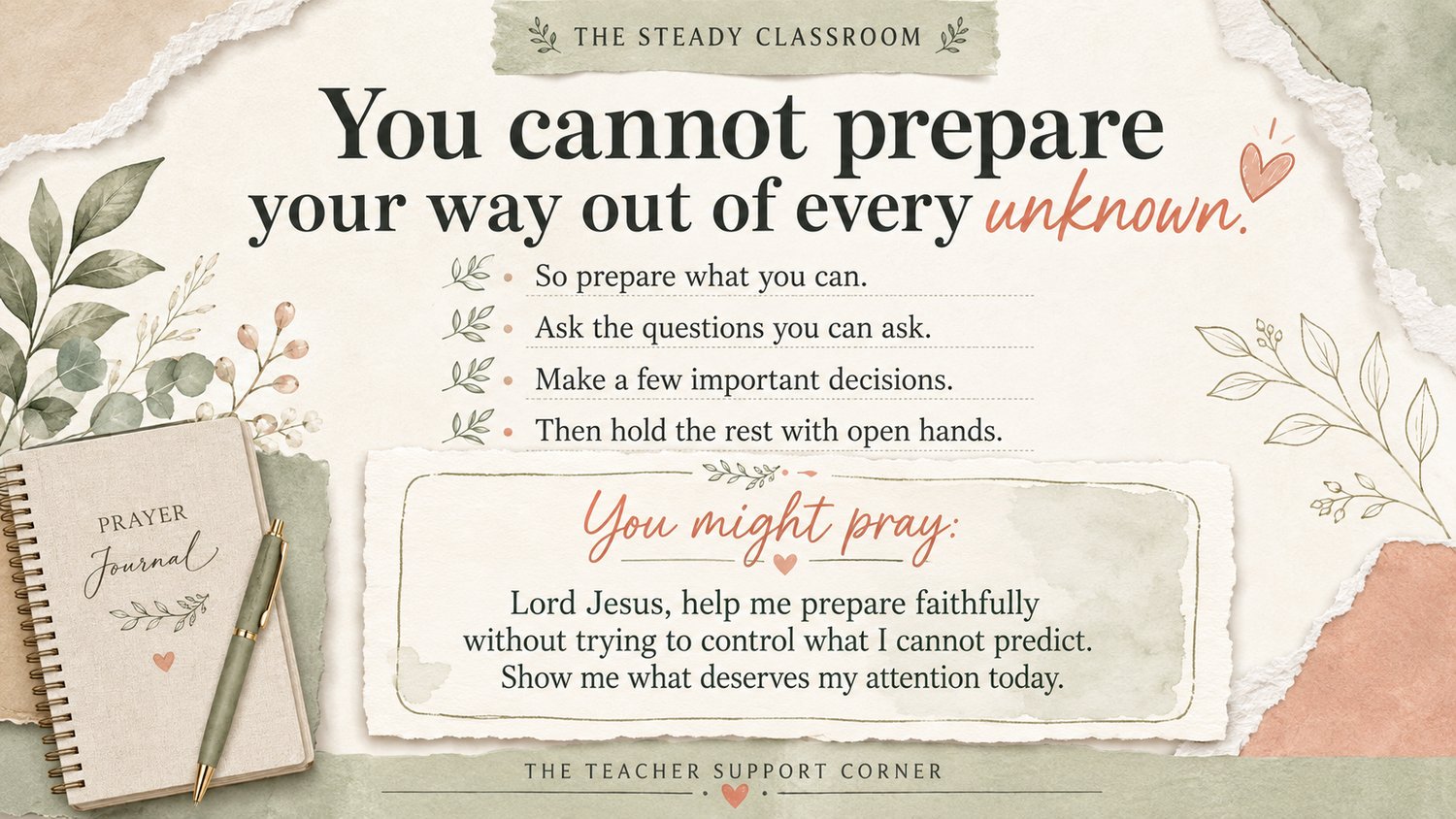
faithful preparation is not the same as control. You cannot know exactly how your first class will respond, or will need more explanation, or whether your first activity will take ten minutes or twenty.
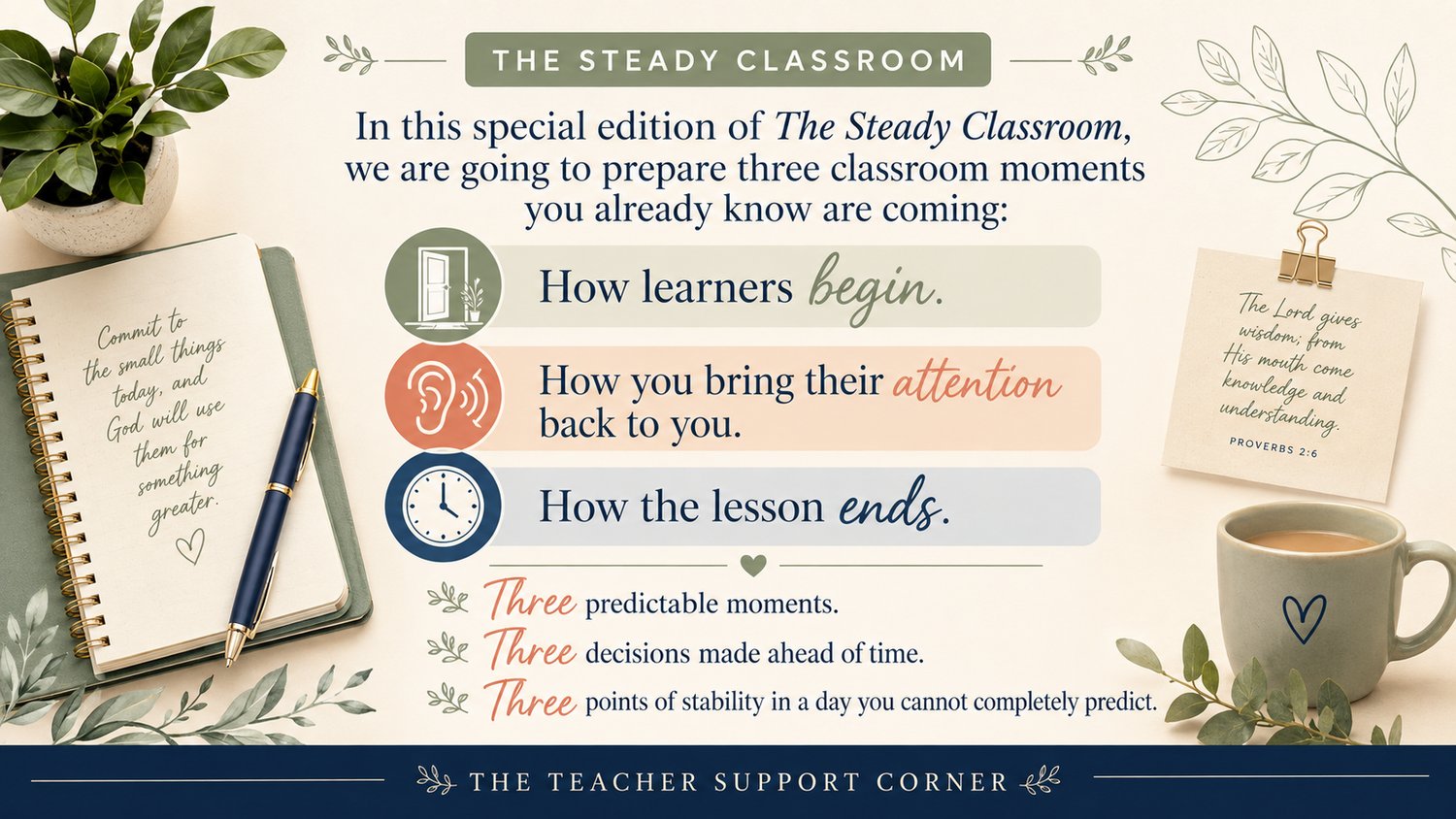
And then start with these three moments.
Decision 1: How Will Students Begin?
The first few minutes of your lesson already require a lot from you. You may be meeting your students for the first time, checking names, finding resources, taking attendance, answering questions all while tying to remember what comes next.
A clear beginning removes some of those decisions from the moment. Ask yourself three questions.
Question 1: What Do I Want Learners to Do?
Keep it simple. Perhaps:
- Enter the room.
- Place bags in the agreed space.
- Take out the required book and equipment.
- Begin the task displayed on the board.
You are not trying to create an impressive entrance routine. You are answering:
What should learners actually do when they arrive?
Cue: How Will Learners Know What to Begin?
The task on the board might become the cue. If students enter and see the starter ready, they immediately have somewhere to direct their attention. That means the environment is helping you communicate.
If you expect them to begin something, have it ready before they arrive.
If they need a particular resource, know where it will come from.
If seating has already been decided, make sure learners can work out where they belong.
The fewer unnecessary questions you need to answer during those first few minutes, the more attention you can give to the students themselves.
Say: What Will I Actually Tell Them?
Prepare one clear sentence. For example: “Good morning. Your first task is on the board. Place your bag under your desk, take out your book, and begin.” You may adjust the wording after meeting your class. That is fine.
For now, you have language ready. And there is something quietly important about preparing the beginning well.

That is not only classroom management. It is a form of service.
Decision 2: How Will You Bring the Class Back to You?
At some point, your students will be talking. That is not automatically a problem. They may be discussing a task, working together, answering questions or just moving between activities. The issue is whether everyone knows what happens when you need their attention again. Decide this before the room is noisy.
Decide: What Do I Want Learners to Do?
“Listen” can be surprisingly unclear. What does listening look like? Perhaps you want students to:
- Finish the sentence they are saying.
- Put down what is in their hands.
- Face the front.
- Listen for the next instruction.
Those actions are observable. Students can practise them. You can recognise whether they happened.
Cue: How Will They Know You Need Their Attention?
Choose something simple. Perhaps:
- A short phrase
- A raised hand
- A countdown
- A clap pattern
- Another signal already commonly used in your school
It does not need to be clever. It needs to be simple, recognisable and something you are comfortable using consistently.
Say: What Will You Tell Learners?
You might say: “When you hear the signal, finish your sentence, put down what is in your hands, and face me.” Then show them. Do not assume that explaining the signal once means everyone now knows the process. Your job is not only to announce the expectation. You need to teach it.
What If They Do Not Respond the First Time?
This may happen. It does not mean you have lost control of your first lesson. It means you have something to teach. You can say:“We are going to practise that once more so everyone knows what happens when you hear the signal.” Then practise again with patience.
Colossians 3:12 calls believers to clothe themselves with compassion, kindness, humility, gentleness, and patience. Those qualities can shape the way you establish expectations from the beginning. Gentleness does not require vagueness. Patience does not mean having no boundaries. You can be clear and gracious at the same time. And if you feel yourself becoming flustered, there may be space for a very short prayer:
Jesus, help me speak clearly and respond with self-control. You do not need to prove yourself through a power struggle. You are teaching learners how this classroom moment will work.
Decision 3: How Will the Lesson End?
The final few minutes are easy to overlook when you are planning your first lesson. You think about the introduction, explanation, student activities, questions you might ask. Then suddenly the bell is approaching, students are packing, and you still have three things left to say. Plan the ending before you need it.
Decide: What Needs to Happen Before Learners Leave?
Perhaps learners need to:
- Finish the current sentence or task.
- Record homework.
- Return resources.
- Pack away.
- Wait to be dismissed.
Your exact sequence will depend on your school and class. The important part is deciding it in advance.
Cue: How Will Students Know the Lesson Is Moving Into Its Final Minutes?
You might use a phrase such as: “We are moving into our final five minutes.” That tells learners the lesson is changing phase without suggesting they should immediately begin packing.
Say: What Will You Tell Them?
For example: “We are moving into our final few minutes. Finish the sentence you are writing, check the homework on the board, and wait before packing away.” Then give yourself enough time to actually do what you planned. If you want five calm minutes, start the closing process five minutes before the end. Not thirty seconds before the bell.
This sounds very straightforward while you are reading it. It feels different when you are teaching, watching the clock, answering questions, and trying to decide whether you have time for one more example. That is why deciding beforehand helps.
Do Not Only Explain These Moments — Teach Them
Here is something worth knowing before Day One: Students may not do exactly what you explained the first time. That does not automatically mean they are being deliberately difficult. Sometimes they genuinely need the process taught more explicitly. For each of these three classroom moments:
- Tell them what will happen.
- Show them what it looks like.
- Let them practise.
- Correct one specific thing if necessary.
- Practise again.
For example: “You remembered to take your books out. This time, let us practise beginning the task without waiting for another instruction.” That is teaching. You are not simply correcting behaviour after something has gone wrong, but also helping students understand what successful participation looks like in your classroom.
And while you teach them, God is also forming things in you. Instilling these wonderful virtues as you go through the refining and learning process:
Patience.
Wisdom.
Self-control.
The willingness to explain again without allowing your frustration to lead the moment.
The ability to remain teachable when your first idea needs adjusting.
Your first classroom will teach you too.
Your Practical Quick Win: The 5-Minute Day One Page
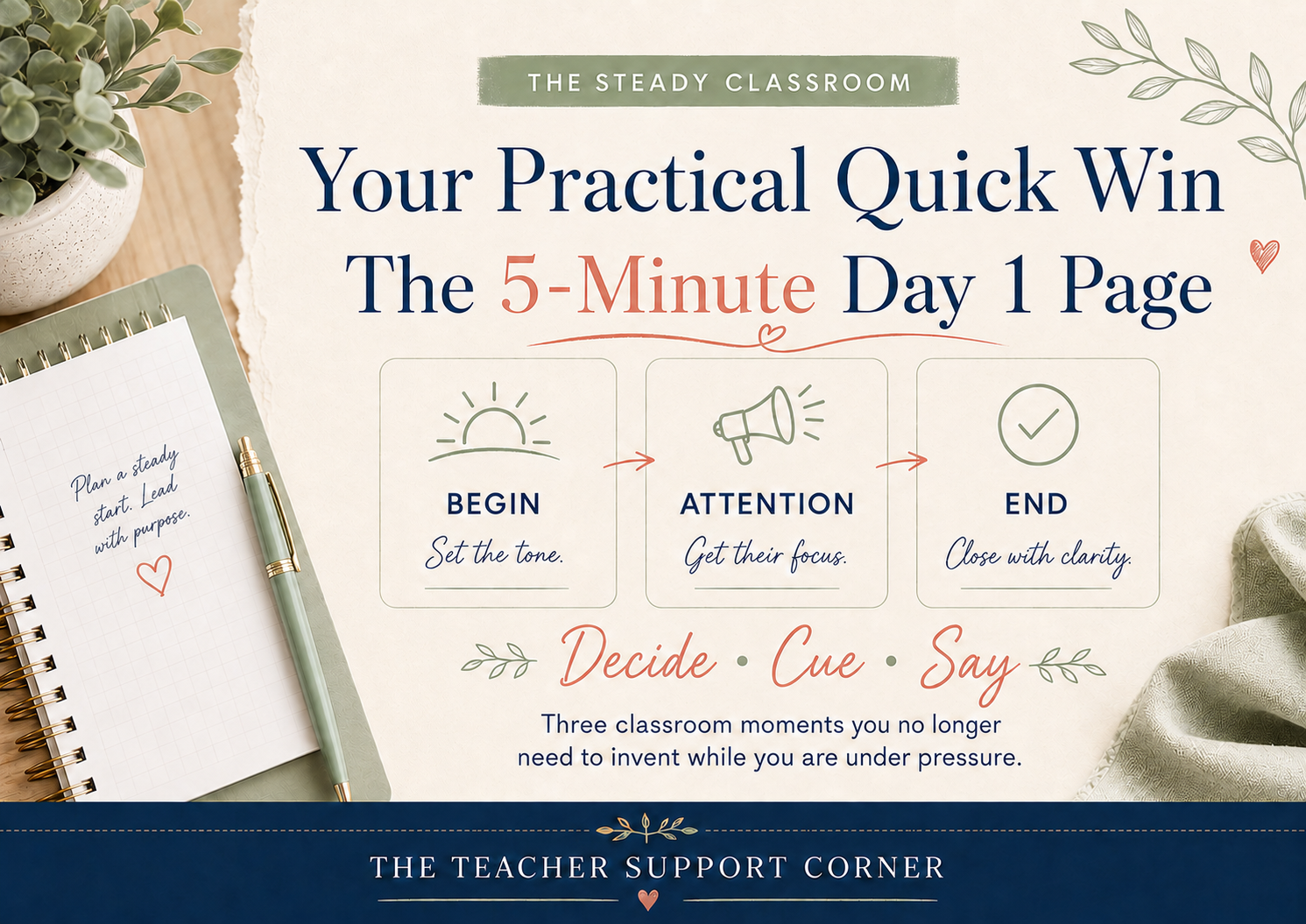
You do not need to create another large document after reading this article. Take one sheet of paper.
Divide it into three sections:
BEGIN
ATTENTION
END
Under each one, write three things.
1. Decide
What exactly do I want learners to do?
2. Cue
How will they know this classroom moment has started?
3. Say
What short sentence will I use?
Your page might look like this:
BEGIN
Decide: Bags away, books out, begin starter.
Cue: Starter displayed on board.
Say: “Good morning. Your first task is on the board. Take out your book and begin.”
ATTENTION
Decide: Stop talking, materials down, face front, listen.
Cue: Clap pattern.
Say: “When you hear the signal, finish your sentence, put your materials down, and face me.”
END
Decide: Finish task, check homework, pack when instructed, wait.
Cue: “Final five minutes.”
Say: “We are moving into our final five minutes. Finish your sentence and check the homework before packing away.”
That is your quick win.
Five minutes.
One page.
Three classroom moments you no longer need to invent while you are under pressure.
Keep that page beside your lesson plan during your first week.
You do not have to memorise every new piece of teacher language while your brain is already processing everything else about your new classroom. A written reminder is not evidence that you are unprepared. Sometimes it is evidence that you prepared wisely.
What If Day One Still Feels Messy?
It might. Your lesson introduction could take longer than expected. Students may stare blankly at your attention signal. You may forget the exact sentence you planned. The bell may surprise you even though you promised yourself it would not. None of those moments automatically means Day One has failed. You are working with real people, not the version of the lesson that existed in your imagination.
Preparation gives you somewhere to begin. Experience teaches you what needs adjusting.
Proverbs 16:9 reminds us again of that relationship between planning and God’s direction. Your plans matter. But they do not need to become something you grip so tightly that you cannot respond to the learners in front of you. Before the lesson, you might pray: Lord Jesus, I have prepared what I know to prepare. Give me wisdom for what I cannot predict. Help me see the learners in front of me and respond with clarity, patience, and grace. Then walk in. Not because you know everything. Because you have prepared what you can and you know Who goes with you.
Want Help Applying This Before Day One?
The one-page exercise above is enough to help you start. But perhaps one of those three classroom moments still feels uncertain. Maybe you know you want learners to begin calmly but you are not sure exactly what the routine should include. Maybe you have chosen an attention signal but have not thought through how you will teach and practise the response. Maybe you want somewhere to write down the teacher language, plan the practice, and return after a few lessons to reflect on what actually happened.
That is why I created the One Classroom Routine Planner.
And right now, you can get it free.
The planner gives you one structured place to work through one classroom routine from beginning to end.
Use it to:
- Choose the classroom moment you want to prepare
- Define exactly what you want learners to do
- Choose a clear cue
- Prepare the words you will use
- Plan how you will model and practise the routine
- Notice signs of progress once you begin using it
- Reflect on what happened
- Choose one thoughtful adjustment
You do not need to plan every possible classroom routine before Day One. Choose the one that currently feels most uncertain. Work through that one carefully. Then allow yourself to learn from the real learners who walk into your classroom.
Get the free One Classroom Routine Planner here:
https://payhip.com/b/0oCHN
This Week’s One Supported Step
Set aside time. Prepare your Day One page:
Begin.
Attention.
End.
For each one, write:
Decide. Cue. Say.
Then choose the classroom moment that still feels most uncertain, and use the free One Classroom Routine Planner if you want more support thinking it through.
After that, stop trying to prepare for every possible situation. You have done something useful. You have given yourself three anchors.And you can continue learning once you meet the learners themselves.
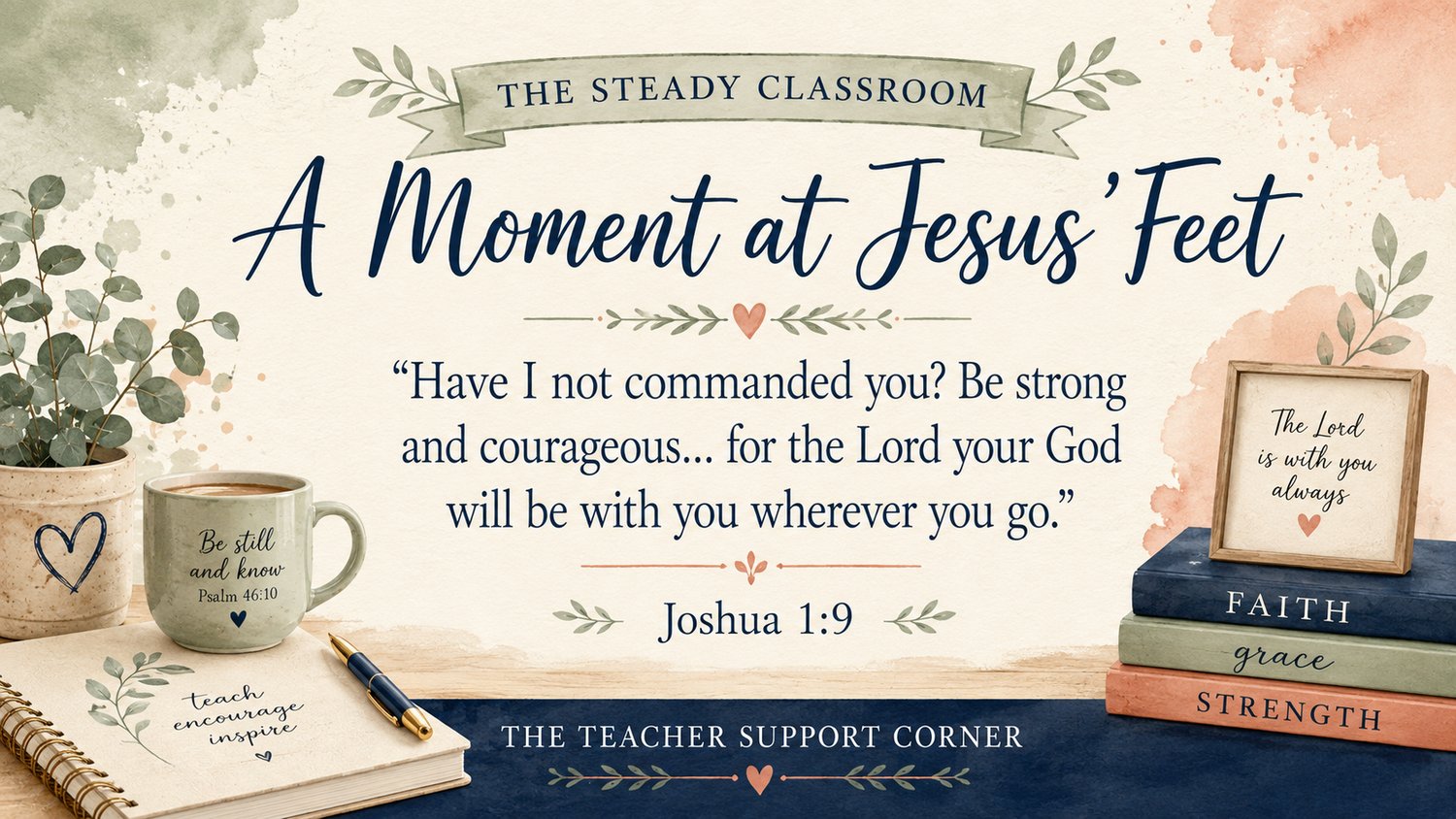
Joshua’s situation was very different from walking into your first classroom. But his story reminds us of something important about biblical courage.
Courage does not begin when uncertainty disappears. Its foundation is God’s presence. You may still feel nervous when you unlock the classroom door, still check the starter task for the third time or still wonder whether your voice sounds confident enough. You may need to ask somebody where the spare books are. You may teach your attention signal and immediately realise that part of it needs changing. None of those things mean you cannot move forward faithfully.
You do not need to manufacture the confidence of somebody ten years further into their career.
Jesus is not waiting to meet some future version of you who finally knows exactly what to do.
He is present at the beginning. Present while you prepare, while you pray over the room, when the first student arrives, when something does not go according to plan, when you ask for help and even you return the following day with one thing you want to do differently.
Your first classroom does not need a performance of expertise. It needs a teacher willing to prepare faithfully, remain teachable, and serve the learners who actually arrive. You can be the teacher in the room and still be learning how to be that teacher.
Take a Moment to Reflect
- What part of Day One are you most tempted to over-prepare because you are afraid of looking inexperienced?
- Which of the three classroom moments would give you the greatest sense of clarity if you decided it today?
- What can you prepare practically?
- What are you trying to control that you need to place back into Jesus’ hands?
- And what would faithful preparation look like if you allowed yourself to still be new?
Pause and Pray
Lord Jesus,
Thank You for bringing me to this beginning. You know the excitement I feel and the questions I am carrying.
Give me wisdom as I prepare. Help me focus on what matters rather than trying to predict everything that could happen. Give me clear words when I teach. Give me patience when learners need more practice than I expected, and humility to ask for help. Give me self-control when I feel nervous or frustrated.
Help me remember that preparation is important, but control is not mine to carry.
Go with me into the classroom. Help me see the learners You have placed in front of me and serve them faithfully as I continue learning too. In Jesus' Name. Amen.
Let’s Connect
If you are preparing for your first classroom, which moment feels most uncertain right now:
Beginning the lesson, getting everyone’s attention, or ending the lesson calmly?
Share one in the comments.
Another brand-new teacher may be carrying exactly the same question. And if your own first Day One is already behind you, share one practical thing you wish somebody had told you before you walked into that classroom.
As you step into your classroom and start working with the students in front of you, know that Jesus is already present in the classroom you are preparing to enter.
You are finding your feet, and you do not have to do it alone.
Until next week!
Janeth | The Teacher Support Corner
Comments ()