
Boosting Math Skills with Real-World Applications: Using Discounts to Teach Calculation
As teachers, we constantly seek ways to make learning both engaging and practical for our students. Mathematics, especially, can benefit from contextual learning that shows students the relevance of what they are studying. One effective approach is using real-world scenarios, such as shopping discounts, to teach and practice calculation skills.
Resource Links
Resource Overview
This resource is a practical exercise that focuses on teaching students how to calculate discounts and the final prices of various sports equipment. This exercise is not only engaging due to its real-world application but also enhances students' arithmetic skills. Here’s how you can implement this resource effectively in your classroom.
Exercise Breakdown
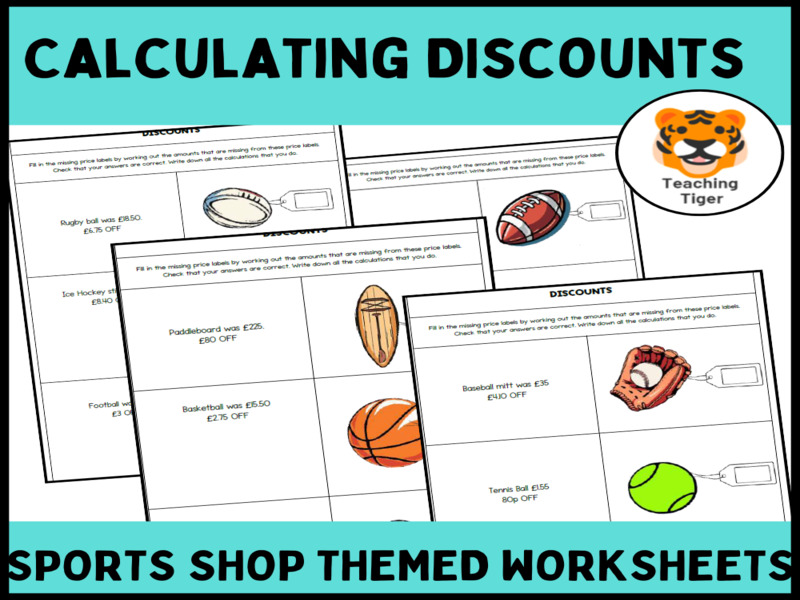
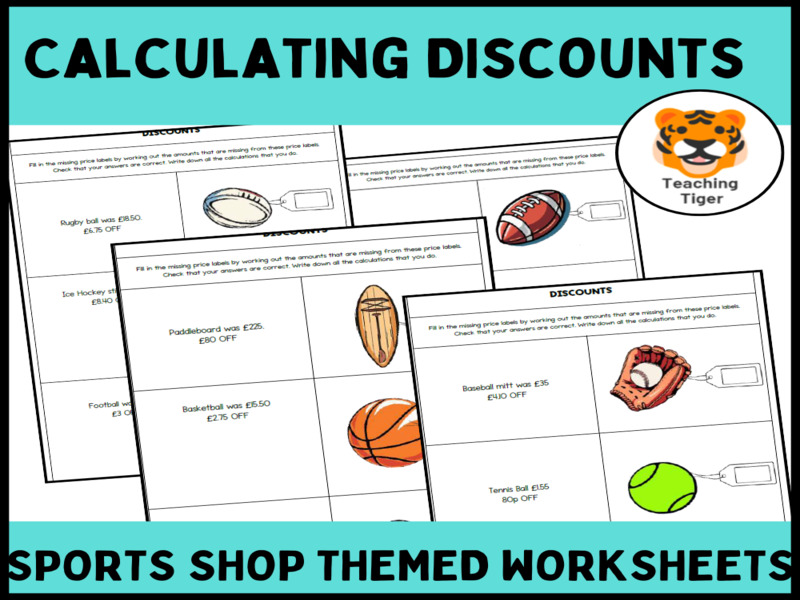
The document presents a list of sports items with their original prices and the discounts applied. Students are tasked with calculating the new prices after the discounts. Here are some examples from the document:
- Paddleboard
- Original Price: £225
- Discount: £80
- Task: Calculate the new price.
- Basketball
- Original Price: £15.50
- Discount: £2.75
- Task: Calculate the new price.
- Tennis Racket
- Original Price: £49
- Discount: £21
- Task: Calculate the new price.
The exercise is repeated with various other items like rugby balls, ice hockey sticks, footballs, and more. Each item provides an excellent opportunity for students to practice subtraction and reinforce their understanding of financial literacy.
Implementation Tips
- Introduction to Discounts: Begin by explaining what discounts are and how they are used in real-world shopping. Discuss why stores offer discounts and how they can benefit both the store and the customer.
- Worked Examples: Before students start the exercise, work through a couple of examples as a class. Show the step-by-step process of subtracting the discount from the original price to find the final price.
- Individual and Group Work: Allow students to first attempt some calculations individually to build confidence. Follow this with group activities where they can collaborate and discuss their methods and answers.
- Real-World Connections: Encourage students to think of other examples where they might encounter discounts, such as during holiday sales or when using coupons. Discuss how these skills are valuable in everyday life.
- Checking Answers: Teach students how to check their answers by adding the discount back to the final price to see if they get the original price. This reinforces their subtraction skills and helps ensure accuracy.
- Extension Activities: For advanced students, introduce percentage-based discounts. For example, if an item costs £50 and is discounted by 20%, how would they calculate the new price? This adds complexity and enhances their understanding of percentages.
Benefits
- Engagement: Students are more likely to engage with material that has clear real-world applications.
- Practical Skills: Calculating discounts is a useful life skill, enhancing students' financial literacy.
- Confidence in Math: Regular practice with relatable scenarios can boost students' confidence in their mathematical abilities.
Conclusion
Incorporating this discounts exercise into your teaching toolkit can transform a simple arithmetic lesson into an engaging, practical, and highly beneficial learning experience. By connecting classroom learning with real-world applications, we can help students see the value in what they are learning and build skills that will serve them well beyond the classroom.
Encourage your students to approach each problem with curiosity and confidence, knowing that they are developing skills that will help them make smart financial decisions in the future. Happy teaching!