
🎵 Teaching Rhyming Words in Grades 1–3: Fun, Easy & Effective Ideas
Teaching rhyming words is one of those magical early literacy skills that just clicks with kids—once it’s taught in a way that’s playful, hands-on, and meaningful. Rhyming not only helps students hear patterns in language, but it also builds phonological awareness, a critical foundation for reading success. 🙌
Whether you're teaching first graders who are just beginning to explore sounds or third graders who need a little extra reinforcement, here are some go-to strategies, activities, and tips for making rhyming words come alive in your classroom!
Check out these resources to teach rhyming words
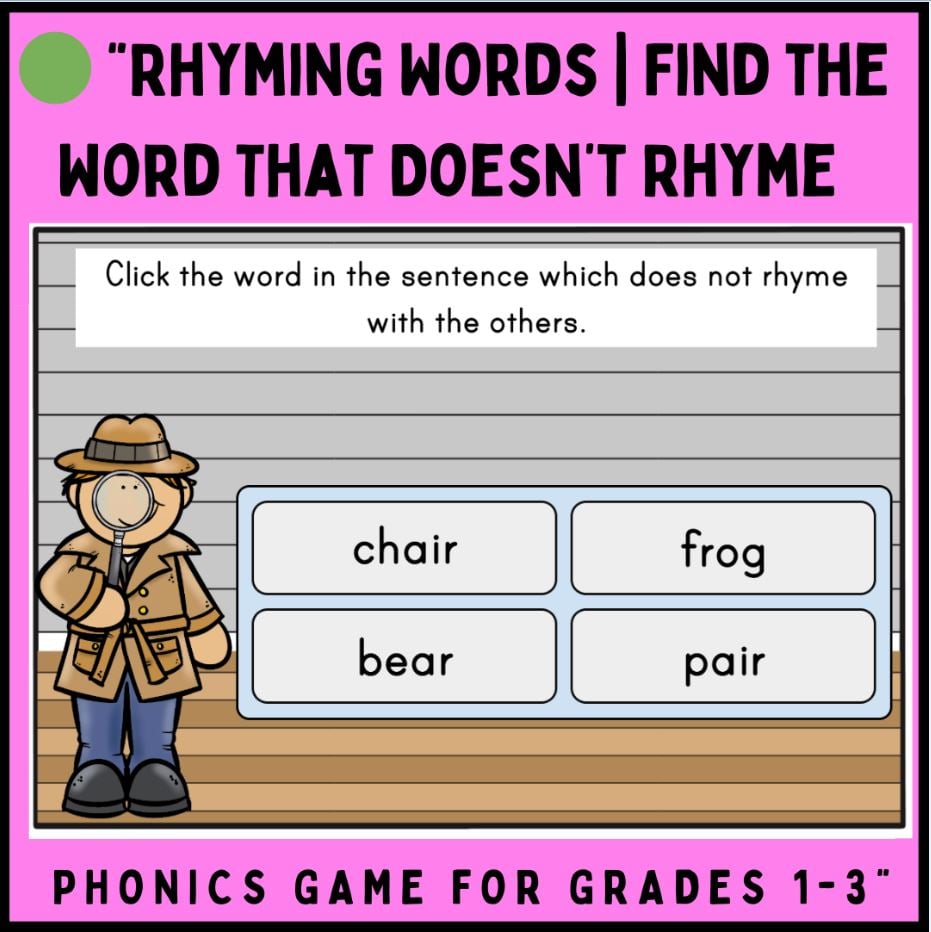
Rhyming words Odd One out Quiz
🧠 Why Rhyming Matters
Before we jump into the fun stuff, here’s a quick reminder of why rhyming is so important:
- It helps students hear and manipulate sounds, which is key to decoding.
- It builds vocabulary and word recognition.
- It improves listening and memory skills.
- It’s just plain fun—kids love it! 🎉
🎯 When to Teach Rhyming
Rhyming is typically introduced in Kindergarten, but it's a skill that needs consistent review and reinforcement in Grades 1 to 3. Some students master it quickly; others may struggle to "hear" rhymes for a while.
✅ For Grade 1, focus on recognizing and matching rhymes.
✅ In Grade 2, add sorting, generating, and writing rhymes.
✅ By Grade 3, rhyming can be used in poetry, word games, and as part of spelling/phonics patterns.
🎉 Engaging Rhyming Activities
1. Rhyme Detective Game 🔍
Give students a set of 3–4 words and ask them to find the one that doesn’t rhyme. Turn it into a mystery game where they’re "Rhyme Detectives" solving rhyme crimes!
Example: cat, hat, sun, mat → "Sun" doesn’t belong!
This works great digitally (👋 self-checking slides or interactive cards) or on paper!
2. Read Alouds with Rhyme 📚
Books like Rhyming Dust Bunnies by Jan Thomas or Hop on Pop by Dr. Seuss are perfect for modeling rhyme. Pause and let students chime in when they hear a rhyme. It makes for an engaging shared reading experience!
3. Rhyme Sorts 🧺
Provide a mix of picture or word cards and have students sort them by rhyme families: -at, -ig, -op, etc. You can do this with pocket charts, centers, or even online drag-and-drop activities.
4. Rhyming Word Hunts 🔍✏️
Challenge students to find rhyming pairs around the classroom, in their books, or even in a shared poem. Create a “rhyme wall” where students can post new pairs they find throughout the week!
5. Write the Rhyme ✍️
Provide sentence stems like:
I saw a frog sitting on a ____.
Then let students fill in the rhyme (log, dog, etc.). It’s great for independent or partner work—and they love making silly rhymes!
💡 Tips for Teaching Rhyming Words
- Use visuals: Pictures make it easier for students to connect sounds to meaning.
- Say it out loud: Rhyming is auditory—students need to hear it before they can read or write it.
- Keep it playful: Songs, chants, and games work wonders!
- Scaffold: Start with recognition, then move to production.
- Differentiate: Some students may need extra support with sound discrimination.
🎁 Grab This Free Rhyming Detective Activity!
Want an easy, no-prep way to practice rhyming? I’ve got you covered!
Download this free “Rhyming Detective” printable or digital quiz where students find the word that doesn’t rhyme. Great for literacy centers, morning work, or early finishers!
👉 [Insert download link or sign-up form here]
👩🏫 You’ve Got This!
Teaching rhyming is one of those joyful pieces of early literacy that builds confidence and sparks creativity. Keep it light, keep it fun, and keep listening for those “aha!” moments when students suddenly hear the rhyme and run with it. 💬💥
Have a favorite rhyme activity of your own? Drop it in the comments or tag me on Instagram—I’d love to see what you’re doing in your classroom!