John Steinbeck’s Of Mice and Men is a cornerstone of English Literature, offering rich opportunities for students to explore complex characters and their roles in conveying themes like loneliness, dreams, and social injustice. Teaching character analysis in this novella goes beyond memorizing traits—it requires students to examine motivations, relationships, and symbolic significance while connecting these elements to the broader historical and social context of 1930s America. Effective character study helps students develop critical thinking, close-reading skills, and empathy, all of which are essential for essay writing and exam success.
To engage students, teachers can use a variety of approaches:
- Close reading of key scenes (e.g., George and Lennie’s introduction, Crooks’ monologue).
- Exploring character contrasts (e.g., Slim’s wisdom vs. Curley’s aggression).
- Debating character morality (Was George justified in his final act?).
- Linking characters to themes (How does Curley’s Wife represent societal oppression?).
By breaking down each character’s role, language, and relationships, students gain a deeper understanding of Steinbeck’s critique of the American Dream and human vulnerability.
How This Character Profiles Resource Helps
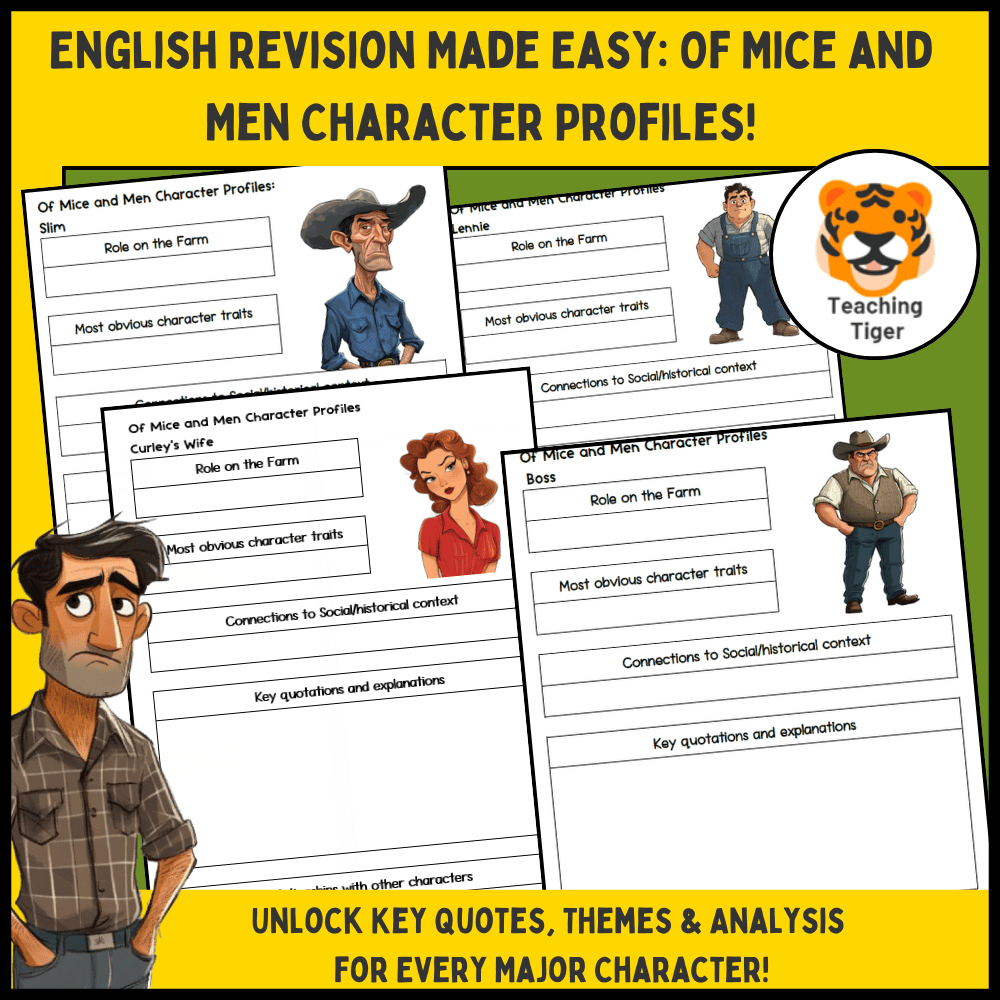
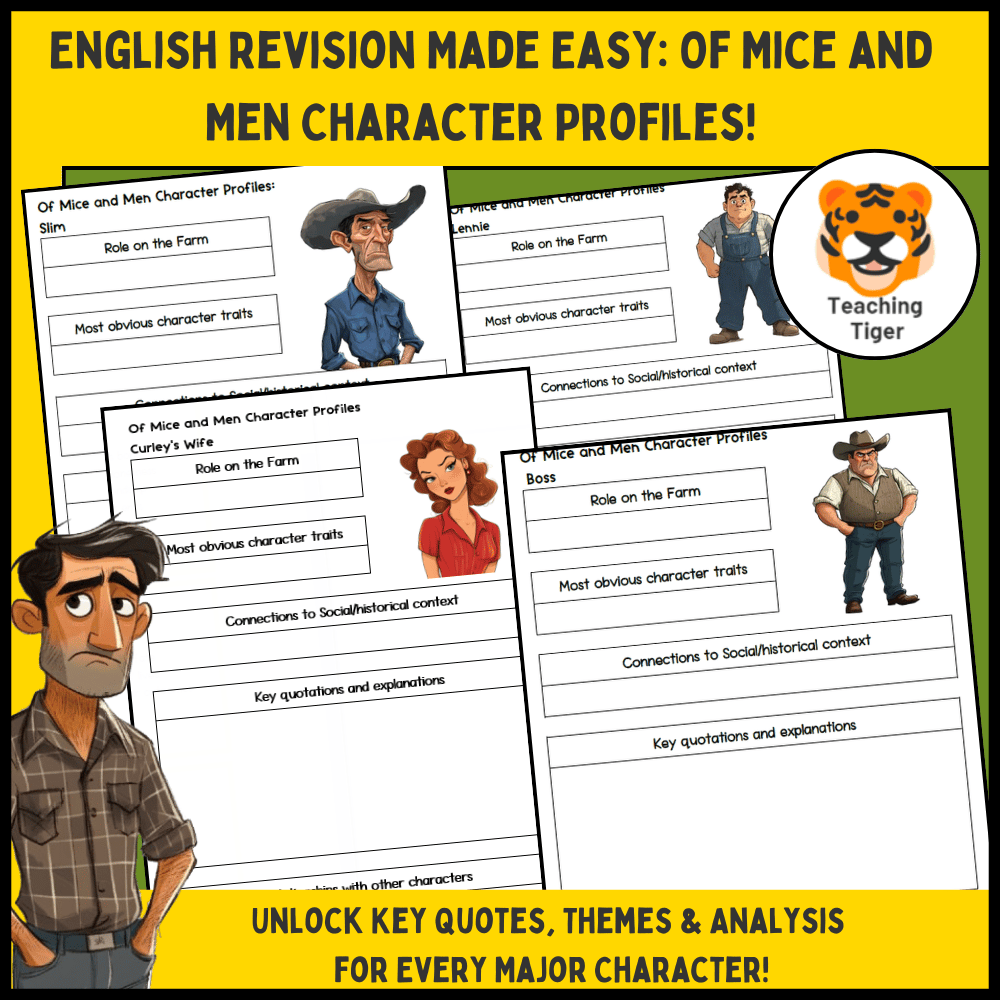
Find the character resource here. This ready-to-use Of Mice and Men Character Profiles resource streamlines character analysis by providing a structured, visually clear template for every major character (George, Lennie, Curley’s Wife, Crooks, etc.). Each profile guides students through key aspects: role on the farm, defining traits, social/historical context, significant quotes, and relationships—. Teachers can use it for whole-class modeling, group work, or independent revision, while students benefit from organized notes that simplify essay planning. The inclusion of key quotes with explanations helps learners analyze language , while the context section strengthens their ability to evaluate Steinbeck’s purpose . Perfect for differentiated instruction, the template supports struggling writers with clear prompts and challenges advanced students to make thematic connections. Whether displayed as posters, used in jigsaw activities, or compiled into revision booklets, this resource turns character analysis into an interactive, memorable process—helping students unlock deeper meaning and write stronger exam responses.