

Mastering HCF and LCM with the Factor Method: A Guide for Teachers🌟
As educators, our goal is to equip students with a solid foundation in mathematics, enabling them to solve problems with confidence and accuracy. Understanding the concepts of Highest Common Factor (HCF) and Least Common Multiple (LCM) is essential for students, as these concepts form the basis for many advanced topics in math. The factor method is a straightforward and effective technique for finding both HCF and LCM, making it an invaluable tool for teaching. In this blog post, we’ll explore how to use the factor method to find HCF and LCM, with tips and examples to help you guide your students through the process.
What is the Factor Method?📏
The factor method involves breaking down numbers into their prime factors. Once the prime factorization is done, these factors can be used to determine the HCF and LCM. This method simplifies the process and provides a clear, step-by-step approach that students can easily follow.
Step-by-Step Guide to Finding HCF Using the Factor Method
- Prime Factorization: Begin by finding the prime factors of each number. Prime factors are the prime numbers that multiply together to give the original number.
- For example, to find the prime factors of 60 and 48:
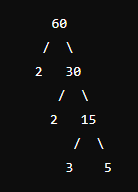
- 60 = 2 × 2 × 3 × 5
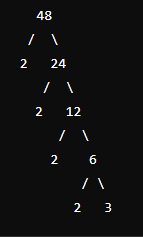
- 48 = 2 × 2 × 2 × 2 × 3
- Identify Common Factors: Look for the common prime factors between the numbers.
- From our example:
- Common prime factors: 2, 2, 3 (the minimum power of each common prime factor).
- Multiply the Common Factors: Multiply the common prime factors to find the HCF.
- HCF of 60 and 48 = 2 × 2 × 3 = 12
Example of a Factor Tree for HCF
Let’s create a factor tree for 60 and 48 to visualize the prime factorization process:
Factor Tree for 60:
Factor Tree for 48:
Step-by-Step Guide to Finding LCM Using the Factor Method
- Prime Factorization: As with HCF, start with the prime factorization of each number.
- Using the same example:
- 60 = 2 × 2 × 3 × 5
- 48 = 2 × 2 × 2 × 2 × 3
- Identify All Prime Factors: List all prime factors, taking the highest power of each prime factor.
- Prime factors: 2, 3, 5
- Highest power of 2: 2 power of 4
- Highest power of 3: 3 power of 1
- Highest power of 5: 5 power of 1
- Multiply the Highest Powers: Multiply the highest powers of all prime factors to find the LCM.
- LCM of 60 and 48 = 2 power of 4 x 3 x 5= 16 × 3 × 5 = 240
Example of a Factor Tree for LCM
We can use the same factor trees from above to identify the highest powers of each prime factor.
Teaching Tips🎓
- Visual Aids: Use factor trees to visually break down numbers into their prime factors. This helps students see the process step-by-step.
- Practice Problems: Provide plenty of practice problems with varying levels of difficulty. Start with smaller numbers to build confidence, then gradually introduce larger numbers.
- Group Work: Encourage students to work in pairs or small groups to solve HCF and LCM problems. Collaboration can help them learn from each other and understand different approaches to the same problem.
- Real-Life Applications: Show students how HCF and LCM are used in real life, such as in scheduling, dividing tasks, or finding common periods in repeating events. This helps them see the practical value of what they’re learning.
- Interactive Tools: Utilize online tools and apps that allow students to input numbers and see the factorization process. These tools can make learning more interactive and engaging.
Example Problems
Problem 1: Find the HCF of 36 and 54.
- Prime factorization:
- 36 = 2 × 2 × 3 × 3
- 54 = 2 × 3 × 3 × 3
- Common prime factors:
- 2, 3, 3
- HCF = 2 × 3 × 3 = 18
or Factor tree
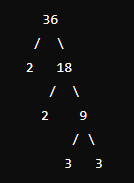
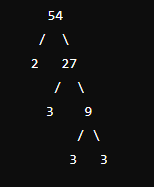
Problem 2: Find the LCM of 36 and 54.
- Prime factorization:
- 36 = 2 × 2 × 3 × 3
- 54 = 2 × 3 × 3 × 3
- Highest powers:
- 2^2, 3^3
- LCM = 2^2 × 3^3 = 4 × 27 = 108
Conclusion
Using the factor method to find HCF and LCM is a powerful and accessible technique that simplifies the process for students. By breaking down numbers into their prime factors, students gain a deeper understanding of the relationship between numbers and can solve problems with greater ease. Incorporate visual aids, practice problems, and real-life applications into your lessons to make learning these concepts both fun and effective.
Happy teaching! 📚✨