
Teaching Students About Martin Luther King Jr.: A Guide to Engaging, Powerful Learning
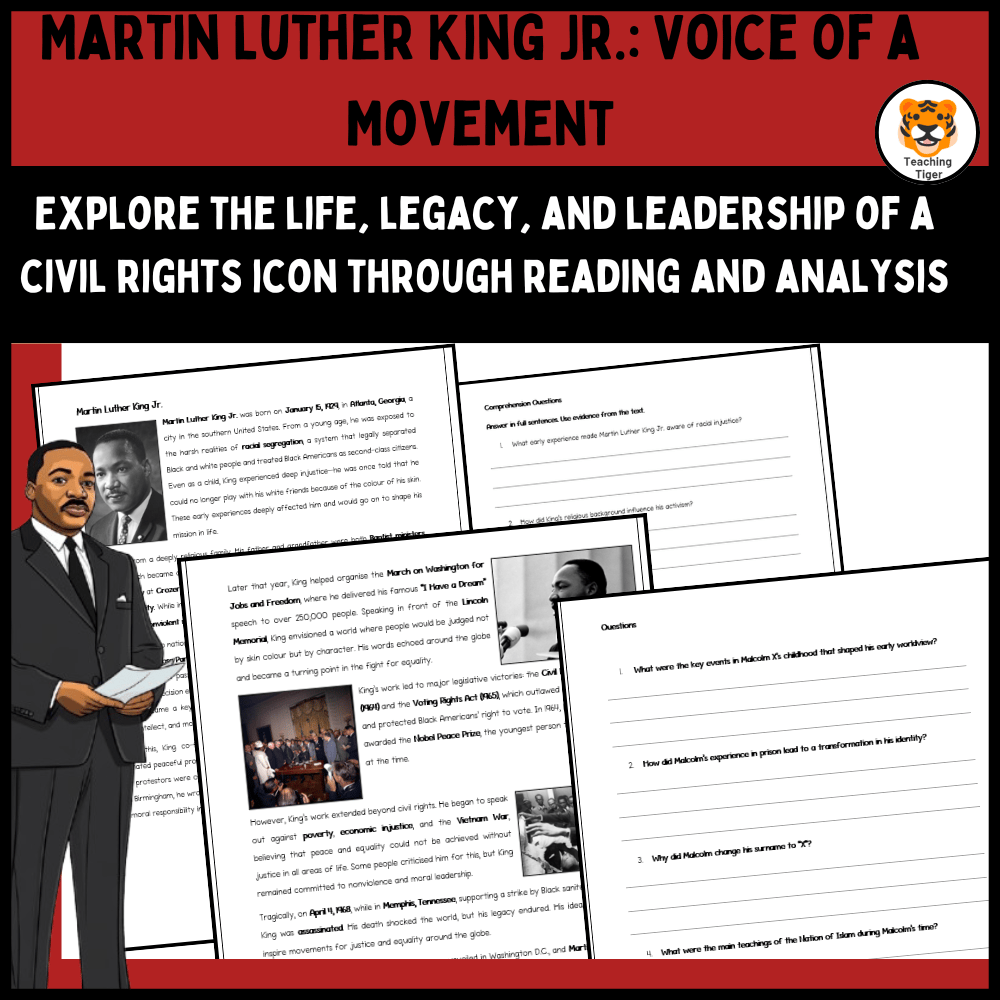
As educators, teaching students about figures like Martin Luther King Jr. provides an opportunity to explore essential themes of justice, equality, and peaceful protest. King's contributions to the American Civil Rights Movement are significant not just in history but in shaping modern social justice movements worldwide. Teaching Martin Luther King Jr. to students requires a thoughtful approach that encourages both historical understanding and critical thinking. Find a Martin Luther King comprehension resource here.
Why Teach About Martin Luther King Jr.?
Martin Luther King Jr. is widely regarded as one of the most influential leaders in the fight for civil rights in the 20th century. His leadership during the American Civil Rights Movement in the 1950s and 60s, his advocacy for nonviolent resistance, and his iconic speeches like the "I Have a Dream" address make him an essential figure to study in both history and English language arts curricula. Introducing students to his life and teachings not only deepens their understanding of history but also allows them to connect with issues of social justice that are still relevant today.
How to Engage Students with Martin Luther King Jr.'s Legacy
When teaching Martin Luther King Jr. to students , it’s important to balance factual knowledge with opportunities for discussion, critical thinking, and reflection. Here are some strategies to engage your students with this topic:
1. Use Primary Sources – Let Students Hear King's Words
Martin Luther King Jr. was an eloquent speaker, and his speeches continue to resonate today. Listening to or reading sections of "I Have a Dream", his Letter from Birmingham Jail, and other key speeches will give students direct access to King's vision and philosophy. Primary sources allow students to engage with King's own words, giving them a clearer sense of his beliefs and motivations.
Activities:
- Classroom discussion: After reading excerpts, ask students to reflect on the meaning of specific phrases from his speeches.
- Speech analysis: Have students analyze the rhetorical devices King uses (e.g., repetition, appeal to emotion, and logical arguments) to strengthen his message of equality and justice.
2. Explore King's Philosophy of Nonviolence
One of the most powerful aspects of Martin Luther King Jr.’s leadership was his commitment to nonviolent resistance. This can be a difficult concept for younger students to fully grasp, so it’s important to break it down with examples from both the past and present.
Activities:
- Case studies: Study key nonviolent protests led by King, such as the Montgomery Bus Boycott or the Selma to Montgomery March, and compare them with modern-day movements like Black Lives Matter.
- Class debate: Divide the class into groups to debate the effectiveness of nonviolent protest versus other forms of resistance.
3. Connect King's Legacy to Today
While Martin Luther King Jr. was a product of his time, his fight for equality remains relevant. Connecting King’s message to modern-day struggles can help students see the impact of his work and realize the ongoing fight for justice.
Activities:
- Discussion: Ask students to connect King’s teachings to current issues of racial inequality, police brutality, or economic justice.
- Essay writing: Have students write about how they believe King would view current events, encouraging them to reflect on the continuing relevance of his message.
4. Encourage Empathy and Understanding
Teaching Martin Luther King Jr. isn’t just about facts; it’s about inspiring students to connect with his vision of a just and equal world. Encouraging empathy and understanding is a vital part of teaching his legacy.
Activities:
- Reflective journaling: After learning about King’s life and beliefs, have students write in journals reflecting on their own values regarding equality and justice.
- Personal connections: Ask students how they might approach challenging situations in their own lives using the principles of nonviolence that King advocated.
5. Use Creative Teaching Methods
Teaching history doesn’t always have to be about lectures or textbook reading. Use interactive, creative approaches to help students engage with King’s legacy in a way that resonates with their learning styles.
Activities:
- Role-play: Have students act out significant moments in King’s life, such as his speeches or meetings with other civil rights leaders.
- Art projects: Students can create posters, digital art, or even perform skits based on Martin Luther King Jr.'s speeches, showing their understanding of his message in a creative form.
Why This Matters: The Lasting Legacy of Martin Luther King Jr.
Martin Luther King Jr.’s life continues to shape the way we think about equality, justice, and the fight for civil rights. Teaching his legacy in schools helps ensure that the values he championed — nonviolence, equality, and freedom — are carried forward into the next generation.
By exploring Martin Luther King Jr.'s life, actions, and words, students not only gain a deeper understanding of history but also the tools to think critically about the issues we continue to face today. His life is a testament to the power of words, actions, and hope in the face of injustice.
Conclusion: Teaching Martin Luther King Jr. to students
Teaching students about Martin Luther King Jr. offers the perfect opportunity to explore important issues of social justice while honing literacy and historical thinking skills. Through engaging, thought-provoking activities that combine both critical analysis and personal reflection, students will leave with a deeper understanding of one of the most important figures in history.
By making Martin Luther King Jr.'s life and work relevant to today's world, we help inspire a new generation of students to stand up for justice and work toward a better future — just as King did.
Further Resources for Teaching Martin Luther King Jr.
- Speeches: "I Have a Dream" and "Letter from Birmingham Jail"
- Books: Martin's Big Words: The Life of Dr. Martin Luther King Jr. by Doreen Rappaport
- Documentaries: King: A Filmed Record... Montgomery to Memphis (1970)
- Activities: Check out my Martin Luther King Jr. comprehension worksheets and activities to use in your classroom!