
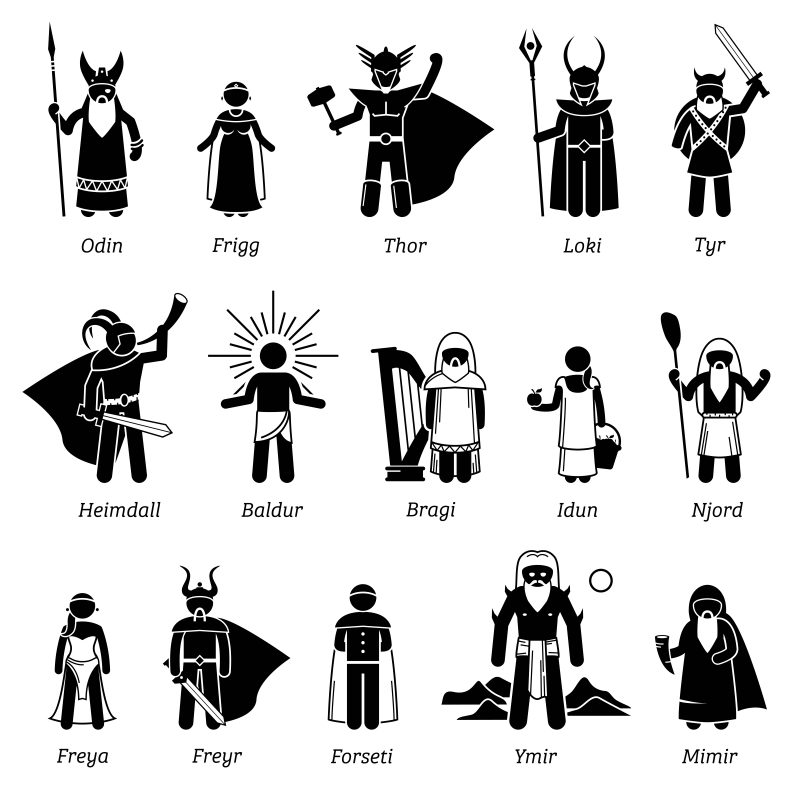
Helping primary-aged children explore the world of the Vikings can be one of the most exciting parts of the history curriculum. Among the longboats, runes, and raids, nothing captures pupils’ imagination more than the Viking gods themselves. Their adventures are dramatic, funny, and sometimes wild—perfect for sparking curiosity and supporting rich learning across subjects.
This blog offers background knowledge for teachers, practical teaching approaches, and ideas for making Viking mythology accessible, accurate, and enjoyable in the primary classroom.
On my page I have many Viking resources, the link here will take you to an excellent resource on the Viking Gods for use in class
Why Teach the Viking Gods?
Viking mythology isn’t just a collection of old stories—it’s a window into how Norse people understood the world. Exploring the gods helps children:
- Build historical understanding: Myths reveal values such as bravery, loyalty, and the importance of nature in Viking society.
- Compare beliefs: It supports curriculum links to other ancient belief systems, like the Greeks or Egyptians.
- Engage with stories: The gods’ adventures naturally encourage reading, storytelling, drama, and writing.
- Think critically: Myths prompt discussion about moral choices, consequences, and character traits.
Who Were the Viking Gods? Key Knowledge for Teachers
Norse mythology centres on the Aesir (main gods) and the Vanir (nature gods). Here’s a quick, teacher-friendly overview of the most relevant figures for primary learners:
Odin – The All-Father
Odin is the chief of the gods, associated with wisdom, poetry, war, and magic. He sacrificed an eye to gain knowledge and is often depicted with his ravens Huginn and Muninn. Children love the idea that he watches over the world, gathering stories.
Thor – God of Thunder
Probably the most popular among pupils, Thor is strong, brave, and wields his magical hammer, Mjölnir. He is the protector of gods and humans. Many myths about Thor involve epic battles with giants which lend themselves well to retellings and drama.
Loki – Trickster God
Loki is mischievous, clever, and unpredictable. He is not evil in every story, but he causes plenty of trouble. Because Loki changes shape (sometimes into animals), pupils often enjoy creative art or writing tasks based on him.
Freyja – Goddess of Love and Magic
Linked to beauty, nature, and sorcery, Freyja rides a chariot pulled by cats. She provides a great opportunity to explore the role women played in Viking myths—which is often stronger than in other ancient cultures.
Frey – God of Fertility and Peace
Frey is associated with prosperity, sunshine, and good harvests—useful for linking to geography, climate, and Viking farming.
Frigg – Goddess of Family and Home
Odin’s wife, Frigg is wise and protective. Her story about trying to save her son Balder opens discussions about family, emotions, and fate.
Myths to Use in the Classroom
Some stories work particularly well for primary-aged children:
- Thor Loses His Hammer – a humorous tale of disguise and trickery.
- The Building of Asgard’s Wall – introduces giants, Loki’s schemes, and ideas of negotiation.
- The Death of Balder – gentler emotional themes for older pupils (e.g. Years 5–6).
- How Odin Got His Wisdom – great for discussions about sacrifices and decision-making.
Creative Ways to Teach the Viking Gods
1. Storytelling and Drama
- Act out scenes using props such as cardboard shields, helmets, and Thor’s hammer.
- Encourage pupils to retell myths from a different character’s point of view (e.g., a worried giant or Odin’s ravens).
- Use freeze frames to explore moments of tension or choice.
2. Art and Craft
- Create Viking god trading cards with stats (strength, wisdom, magic).
- Design symbols or runes for each god.
- Make longboat figureheads inspired by Norse creatures and gods.
3. Cross-Curricular Writing
- Write newspaper reports about a myth (“BREAKING NEWS: Thor’s Hammer Stolen!”).
- Create character diaries for Odin, Freyja, or Loki.
- Invent a brand-new Norse god and describe their powers.
4. Links to History and Geography
- Show how beliefs influenced Viking life: ceremonies, farming, battles, and voyages.
- Explore how the Vikings explained natural events (thunder = Thor).
- Compare Norse beliefs with Christianity, especially around the time Vikings settled in Britain.
5. Digital and Research Tasks
- Use child-friendly sources (BBC, National Geographic Kids).
- Create animations or comic strips using simple digital tools such as Pixton, Book Creator, or iMovie.
Sensitive Teaching Tips
Although Viking myths can be dark, they can be handled carefully with primary pupils:
- Focus on heroism, adventure, problem-solving, and moral choices.
- Avoid overly violent or graphic retellings; use simplified versions.
- Highlight the difference between myth, history, and belief.
Recommended Resources for Teachers
- Books:
- Norse Myths: Tales of Odin, Thor and Loki by Kevin Crossley-Holland
- Viking Boy by Tony Bradman (great class novel)
- The Usborne Illustrated Norse Myths
- Websites:
- BBC Teach: Vikings
- National Museum of Denmark (kid-friendly mythology pages)
- Classroom Materials:
- Printable myth cards
- Interactive maps of Viking routes
- Rune alphabet posters
Final Thoughts
Teaching the Viking gods is an opportunity to bring history alive. With their thrilling adventures, dramatic personalities, and rich symbolism, these deities can deepen pupils’ understanding of the Viking world while supporting literacy, art, and critical thinking. With the right stories and activities, your classroom can become a place where young learners not only study history—but feel part of it.