
Unraveling Probability: A Guide to Teaching the Likelihood of One Event Happening
Probability, a fundamental concept in mathematics, is the study of uncertainty and chance. When it comes to teaching the probability of a single event, educators play a crucial role in demystifying this abstract concept for students. In this blog post, we will explore effective strategies and engaging activities to guide math students in comprehending the likelihood of a single event occurring.
Understanding the Basics:
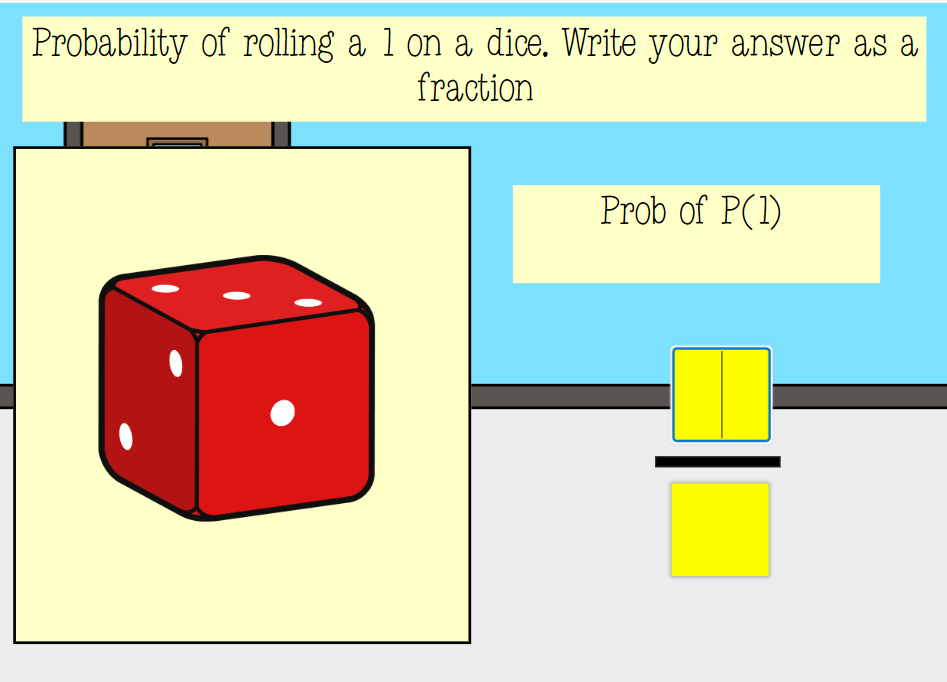
Probability is expressed as a number between 0 and 1, where 0 indicates impossibility, 1 denotes certainty, and values in between represent varying degrees of likelihood. The probability of an event is calculated by dividing the number of favourable outcomes by the total number of possible outcomes. When focusing on a single event, students grasp the essence of probability as a measure of the chances associated with that specific occurrence.
Strategies for Teaching Probability of One Event:
Real-Life Connections:
- Begin by relating probability to everyday scenarios, making the concept tangible for students.
- Use examples like weather predictions, coin tosses, or drawing cards from a deck to demonstrate the application of probability to real-life situations.
Interactive Activities:
- Engage students with hands-on activities that involve probability of one event.
- For instance, conduct experiments with coloured dice or spinners, allowing students to observe and record outcomes.
Probability Scale:
- Introduce the concept of a probability scale, emphasizing the continuum from 0 to 1.
- Illustrate that a probability of 0 means the event is impossible, while a probability of 1 signifies certainty.
Visual Representations:
- Use visual aids such as diagrams, charts, or graphs to depict the probability of one event.
- Create pie charts or bar graphs where students can visually compare and contrast different probabilities.
Language of Probability:
- Familiarise students with the language associated with probability.
- Teach terms like "certain," "likely," "unlikely," and "impossible" to describe the likelihood of events.
Experimentation:
- Encourage students to conduct experiments to determine probabilities.
- For example, flipping a coin multiple times and recording the outcomes provides a practical understanding of probability.
Problem-Solving Scenarios:
- Present students with diverse problem-solving scenarios involving the probability of one event.
- Allow them to apply their knowledge to calculate probabilities and make informed predictions.
Discussion and Reflection:
- Foster class discussions to share strategies and reasoning regarding probability.
- Provide opportunities for reflection, encouraging students to articulate their understanding of the likelihood of events.
Conclusion:
Teaching the probability of one event happening is a pivotal step in building a strong foundation for students in the realm of mathematics. By incorporating real-life connections, interactive activities, and visual representations, educators can make probability more accessible and engaging. Through experimentation, problem-solving scenarios, and meaningful discussions, students not only grasp the mathematical concepts but also develop critical thinking skills. As educators, our goal is to empower students with the tools to navigate uncertainty, fostering a lifelong appreciation for the beauty and practicality of probability in their academic journey and beyond.
Some Resource Ideas
Probability-Using Words and Numbers to Describe Probability