
There is something special about freshly baked bread—the aroma filling the kitchen, the beautiful crust and that first delicious slice. But when you need to follow a gluten-free diet, finding bread that you genuinely enjoy can sometimes be challenging.
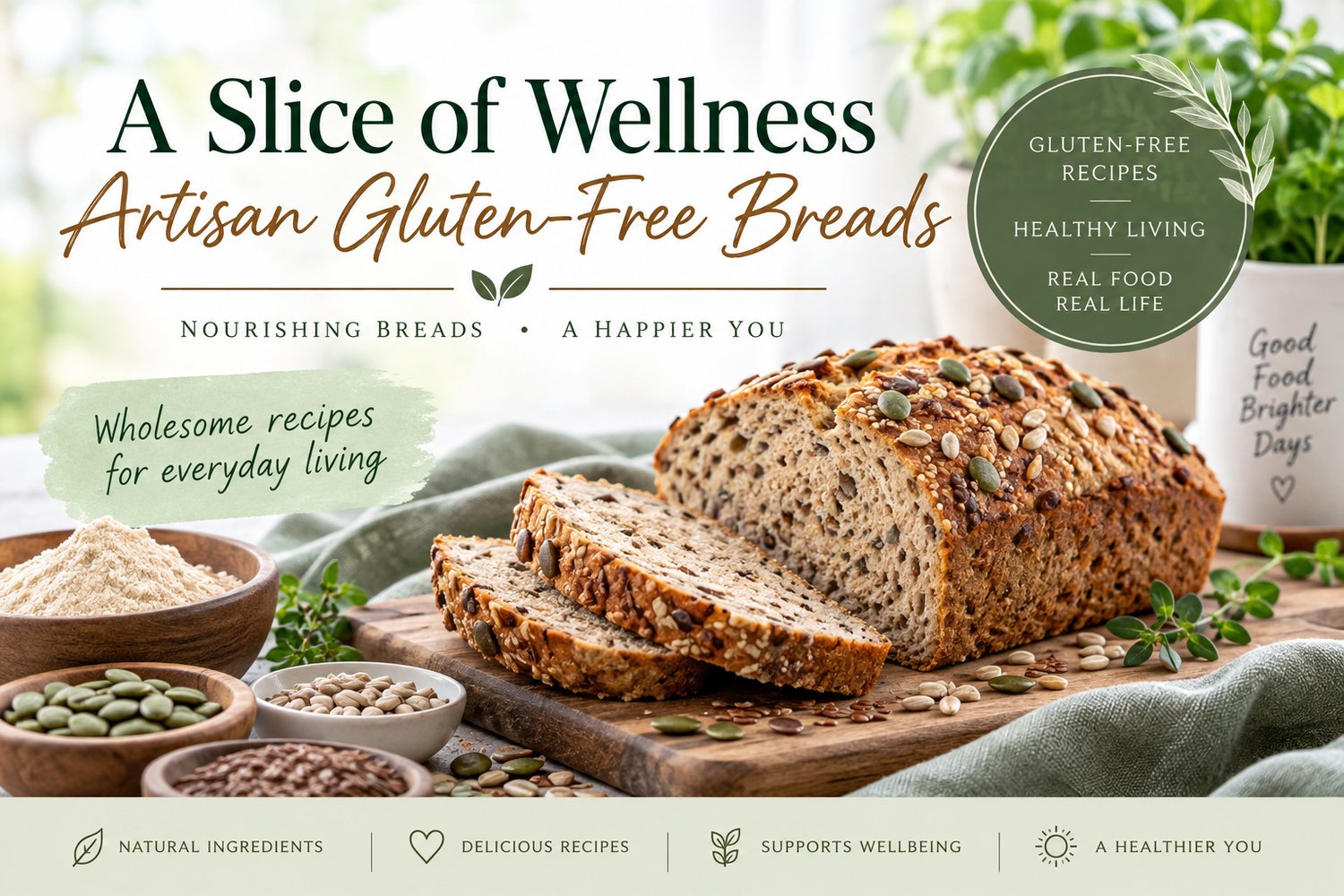
That was part of the inspiration behind my eBook, A Slice of Wellness: Artisan Gluten-Free Breads—celebrating the pleasure of making beautiful gluten-free bread at home.
Why Do People Go Gluten-Free?
Gluten is a group of proteins found in grains including wheat, barley and rye. For most people, gluten can be eaten without a problem. However, for people with coeliac disease, consuming gluten causes an abnormal immune response that damages the lining of the small intestine.
Research and clinical guidelines consistently show that a strict, lifelong gluten-free diet is currently the treatment for coeliac disease. Removing gluten allows the small intestine to heal and helps prevent further damage.
Coeliac Australia estimates that approximately 1 in 70 Australians has coeliac disease, with many people remaining undiagnosed. Some people without coeliac disease also report symptoms associated with eating gluten or wheat. However, these symptoms can have a number of causes. Anyone who suspects coeliac disease should speak with their doctor about testing before removing gluten from their diet, because starting a gluten-free diet beforehand can affect the accuracy of diagnostic testing.
Gluten-Free Doesn't Automatically Mean Healthy
One important lesson from nutrition research is that the words "gluten-free" don't automatically mean "healthy."
Some commercially manufactured gluten-free foods can be relatively low in fibre or contain higher amounts of refined starches, fats or sugars. A poorly planned gluten-free diet can also make it more difficult to obtain adequate amounts of nutrients such as fibre, iron and calcium.
This is why it is important to think about the quality and variety of the foods we eat, not simply whether they contain gluten.
Naturally gluten-free ingredients can include foods such as buckwheat, quinoa, millet, sorghum, rice, legumes, nuts and seeds. These ingredients can bring their own flavours and characteristics to gluten-free cooking and baking.
Rediscovering Bread
Bread is one of the foods people can miss when transitioning to gluten-free eating.
But being gluten-free doesn't have to mean giving up the experience of breaking into a beautiful loaf of bread.
Gluten-free baking simply requires us to approach bread differently. Without wheat gluten providing its familiar elasticity and structure, combinations of gluten-free flours and other ingredients can be used to create satisfying textures and flavours.
And that's where a little creativity in the kitchen can make all the difference.
Introducing A Slice of Wellness
My eBook, A Slice of Wellness: Artisan Gluten-Free Breads, was created to inspire you to discover just how enjoyable homemade gluten-free bread can be.
It is about moving beyond the idea that gluten-free bread has to be something you simply "put up with."
Instead, gluten-free baking can become something to enjoy—the process of preparing the ingredients, watching your loaf bake, smelling freshly baked bread throughout the kitchen and finally cutting that first slice.
Whether enjoyed toasted for breakfast, alongside soup, topped with avocado and vegetables or simply eaten fresh, homemade gluten-free bread can once again have a place at the table.
A Different Way to Think About Gluten-Free Living
For someone newly adjusting to a gluten-free diet, it is easy to focus on everything that can no longer be eaten.
But there is another way to look at it.
Gluten-free living can introduce you to new grains, ingredients, flavours and ways of preparing food that you may never have considered before.
A Slice of Wellness: Artisan Gluten-Free Breads celebrates that discovery.
Because being gluten-free doesn't have to mean saying goodbye to beautiful bread.
It can simply mean discovering a new way to make it. Check out the webpage https://payhip.com/b/1raAS
A Little Note
If you suspect you may have coeliac disease, it is important to speak with your doctor and undergo appropriate testing before beginning a gluten-free diet. A gluten-free diet is medically necessary for people diagnosed with coeliac disease, but it is not automatically a healthier diet for everyone.
Please note: This blog provides general information only. If you have coeliac disease or another medical condition requiring a gluten-free diet, always follow the advice of your healthcare professional.