

🌿 kitchen witch herbs, herbs for kitchen witches, magical herbs and meanings, herb folklore, kitchen witchcraft for beginners, traditional herbs and uses, herbal magic, witchy herb guide 🌿
🌿 Kitchen Witch Herbs: Traditional Uses, Folklore & Herbal Magic
Long before modern supermarkets and pharmacies, herbs were an important part of everyday life. They were grown in gardens, gathered from the countryside and used in cooking, traditional remedies, household preparations and folklore.
For the modern kitchen witch, herbs can represent a beautiful connection between nature, history and intention. Many familiar ingredients sitting in our kitchen cupboards have centuries of stories attached to them.
From rosemary and lavender to sage and thyme, let's explore some popular kitchen witch herbs, their traditional uses and the symbolism associated with them. 🌙
🌿 What Is a Kitchen Witch?
Kitchen witchcraft is a modern term for spiritual or magical practices centred around the home, hearth, food, herbs and everyday rituals.
Rather than requiring elaborate tools, kitchen witchcraft often transforms ordinary activities—brewing tea, preparing food, tending herbs or baking bread—into intentional rituals.
Herbs are particularly popular because plants have been connected with food, traditional medicine, folklore and spiritual practices across many cultures for centuries.
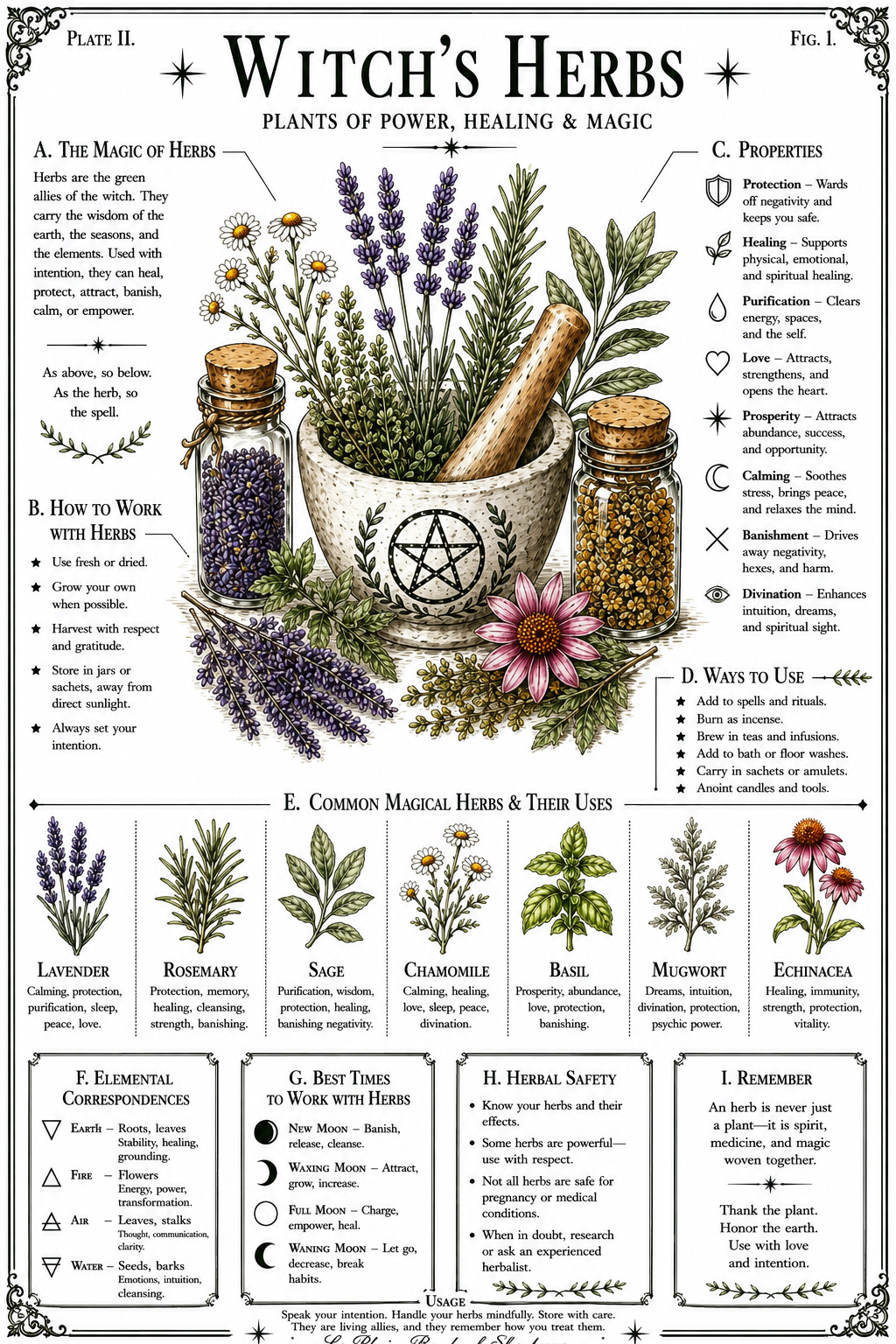
🌱 Rosemary — Remembrance & Protection
Rosemary has a long history in European cooking and herbal traditions.
It has also developed strong associations with remembrance. Historically, rosemary appeared at weddings and funerals and became a symbol of memory, loyalty and remembrance.
In modern witchcraft and folklore-inspired practices, rosemary is commonly associated with:
Protection • Remembrance • Cleansing • Clarity
Try growing rosemary on a sunny windowsill or simply enjoy its fragrance while cooking.
💜 Lavender — Calm & Peace
With its distinctive purple flowers and instantly recognisable fragrance, lavender has been cultivated for generations.
Its name is commonly linked to the Latin lavare, meaning “to wash,” reflecting its historical association with bathing and cleansing.
Within modern spiritual traditions, lavender commonly symbolises:
Peace • Calm • Love • Purification • Rest
Dried lavender can also make a beautiful addition to decorative herb bundles and botanical displays.
🌿 Sage — Wisdom & Tradition
Culinary sage has a long history as both a food ingredient and traditional herb.
The botanical name Salvia derives from Latin words associated with health and wellbeing, reflecting the reputation the plant acquired historically.
In folklore and modern witchcraft, sage is often associated with:
Wisdom • Protection • Cleansing • Longevity
It is worth remembering that different plants are sometimes casually called “sage.” Culinary sage (Salvia officinalis) is not the same plant as every herb sold for ceremonial burning.
🌱 Thyme — Courage & Strength
Thyme has been used throughout Mediterranean and European history.
During the medieval period, it developed associations with courage and bravery, and it appears throughout European herbal and culinary traditions.
Modern magical correspondences commonly include:
Courage • Strength • Protection • Purification
It is also an incredibly versatile culinary herb, making it perfect for a kitchen herb garden.
🌿 Mint — Freshness & Prosperity
Mint has been valued since ancient times for its distinctive fragrance and flavour.
Different varieties of mint have been used in foods, drinks and traditional preparations around the world.
Within modern witchcraft, mint is commonly associated with:
Prosperity • Energy • Refreshment • Protection
Fresh mint is also one of the easiest herbs to grow—although it can spread very quickly, so growing it in a pot is often helpful!
🌼 Chamomile — Peace & Good Fortune
Chamomile has a long history in European herbal traditions and is perhaps best known today as an ingredient in herbal infusions.
Its small white flowers resemble tiny daisies.
In folklore and contemporary spiritual practices, chamomile is often connected with:
Peace • Luck • Prosperity • Rest
🌿 Basil — Love & Abundance
Basil may be best known as a kitchen ingredient, but its history extends far beyond pesto.
Different varieties of basil have played roles in culinary, cultural and religious traditions across different parts of the world.
Modern magical traditions often associate basil with:
Love • Prosperity • Protection • Abundance
Keeping a small basil plant in the kitchen is a simple way to bring fresh greenery into your space while having a useful cooking herb close at hand.
🍃 Bay Leaves — Wishes & Success
Bay leaves come from the bay laurel tree (Laurus nobilis).
Laurel held particularly important symbolism in the ancient Greek and Roman worlds, where wreaths of laurel became associated with victory, honour and achievement.
Today, bay leaves are commonly associated in modern spiritual practices with:
Success • Protection • Wisdom • Intention
And, of course, they're still widely used to flavour soups, sauces and slow-cooked dishes.
🌙 Creating Your Own Kitchen Witch Herb Collection
You don't need an enormous herb cupboard to begin exploring kitchen herbs.
Start with a handful of plants you genuinely enjoy using. Learn their botanical names, discover their history and folklore, and explore how different cultures have understood them.
You could create your own kitchen witch journal or herbal grimoire, dedicating a page to each herb and recording:
🌿 Common and botanical name
🌿 Historical and culinary uses
🌿 Folklore and symbolism
🌿 Traditional magical correspondences
🌿 Recipes you've tried
🌿 Your own observations
Over time, you'll create a personal collection of botanical knowledge and folklore.
✨ A Little Magic in the Everyday
One of the loveliest ideas behind kitchen witchcraft is that something doesn't need to be elaborate to feel meaningful.
A pot of rosemary on the windowsill, herbs simmering in tonight's dinner or a notebook filled with botanical discoveries can all encourage us to slow down and appreciate the natural ingredients around us.
The kitchen has been at the heart of the home for generations—and every herb has a history waiting to be discovered. 🌿✨
Important: Historical herbal remedies and traditional uses aren't necessarily evidence that an herb treats or prevents illness. Never ingest an unidentified plant, and check professional medical guidance before using herbs medicinally, particularly during pregnancy, when taking medication or when managing a health condition.
Discover popular kitchen witch herbs including rosemary, lavender, sage, thyme and bay. Explore their history, folklore, symbolism and traditional uses.
Comments ()