

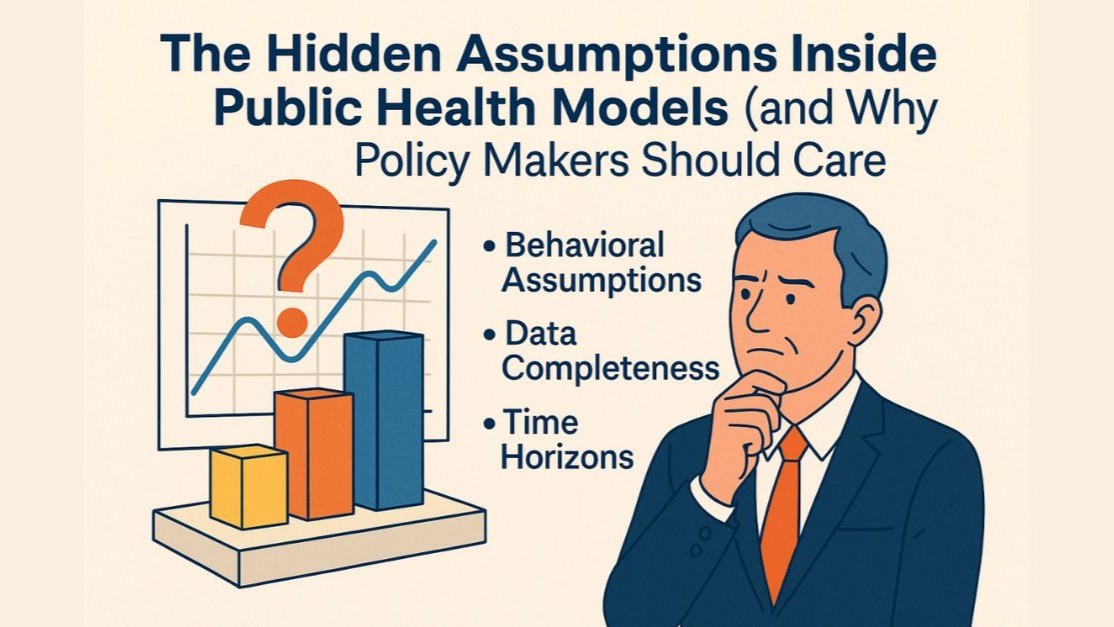
Public health models shape some of the most important decisions of our time—how governments respond to pandemics, where healthcare funding flows, and which interventions are prioritized. Yet behind every projection, chart, or forecast lies a web of hidden assumptions that can make or break policy outcomes. For policy makers, understanding these assumptions isn’t just academic—it’s the difference between sound decisions and costly missteps.
Why Models Aren’t Neutral
At first glance, a public health model can look like an objective, data-driven tool. In reality, every model reflects human choices: which data sets are included, how disease transmission is defined, and what behaviors are assumed. These decisions are not value-free—they’re interpretations of reality. When policy makers treat models as flawless predictors instead of informed estimates, they risk overconfidence in numbers that may not hold true in practice.
The Assumptions That Matter Most
Behavioral Assumptions: Models often assume populations act in predictable ways—wearing masks, seeking vaccines, or reducing mobility. But human behavior is messy, influenced by culture, trust, and politics.
Data Completeness: Many models are built on incomplete data, especially from underreported regions or marginalized populations. Missing data skews outcomes, creating blind spots in policy planning.
Time Horizons: Short-term forecasts may look accurate, but long-term projections rely heavily on guesswork. A model that seems useful today may be misleading tomorrow.
Uniform Populations: Too often, models treat people as identical units, ignoring social inequities that affect health outcomes—like poverty, access to care, or housing conditions.
Why Policy Makers Should Care
When policy makers overlook these assumptions, the consequences ripple widely. An overreliance on optimistic behavioral assumptions could lead to underprepared hospitals. Ignoring inequities in data might mask vulnerabilities in specific communities. And projecting confidence in uncertain long-term forecasts can erode public trust when reality doesn’t match the numbers.
By asking, “What assumptions drive this model?” policy leaders demonstrate accountability, transparency, and a deeper respect for both science and the populations they serve.
From Blind Spots to Better Decisions
So how can policy makers use public health models responsibly?
Demand Transparency: Ask modelers to clearly state their assumptions and limitations.
Use Models as Guides, Not Predictions: Treat outputs as scenarios, not certainties.
Pair Models with Context: Incorporate insights from behavioral science, sociology, and frontline healthcare for a more complete picture.
Communicate Clearly: Share uncertainties openly with the public to build, not erode, trust.
Final Thoughts
Public health models are powerful, but they are not crystal balls. Their value lies not in flawless prediction but in helping decision makers see possibilities, weigh trade-offs, and prepare responsibly. For policy makers, the greatest risk is not that assumptions exist—but that they remain unexamined. By shining a light on those hidden assumptions, leaders can make smarter, more resilient health policies that truly serve the public good.