
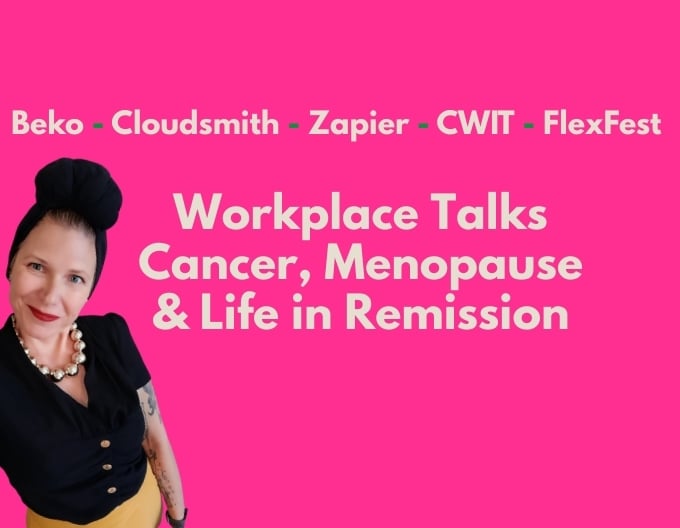
These conversations are already happening inside your organisation, whether they are being talked about openly or not.
A high-performing colleague suddenly starts to struggle with energy and confidence. A manager wants to be supportive but isn’t quite sure what to say. Someone receives a cancer diagnosis and the whole team is unsure how to respond without getting it wrong. Add perimenopause into that mix and the picture becomes even more complicated.
- Around one in four women consider leaving their job because of perimenopause symptoms.
- One in ten women in the UK are currently navigating perimenopause while working.
- At the same time, around half of us will face a cancer diagnosis at some point in our lives.
These are not abstract statistics. They are people already working inside your organisation. Your colleagues, your managers, and often some of your most experienced employees.
Why organisations invite Ali to speak
When awareness days arrive, organisations often ask someone internally to “share their story”. The intention is usually good, but the reality can feel quite uncomfortable for the person being asked to do it. Being the colleague expected to speak publicly about something deeply personal is not always support. Quite often it is exposure.
What organisations actually need is someone who can hold the room, bring clarity to complex topics and help teams talk about health in a way that feels practical rather than awkward.
My talks bring together lived experience of both perimenopause and stage 3 cancer, alongside more than twenty years of working inside large organisations in employee engagement and culture roles. That combination allows me to speak in a way that feels grounded in the reality of work. Leaders leave with practical language and greater confidence in how they respond to health conversations. Teams feel supported without being put on the spot. Organisations move the discussion away from silence and uncertainty towards something more constructive.
These are not sympathy talks. They are structured workplace conversations designed to help people understand what is happening around them and respond with empathy and common sense.
Session formats
I offer flexible sessions designed for employees at different levels of an organisation, including company-wide talks, leadership sessions and panel discussions.
Awareness and education sessions
These sessions work well for ERGs, awareness events or organisation-wide wellbeing programmes. Topics often include understanding perimenopause and menopause at work, navigating cancer diagnosis and remission, and helping teams respond to colleagues with empathy and confidence. The aim is to give people language, understanding and practical ways to support one another without creating awkwardness.
Sessions can be delivered in person, virtually or in hybrid formats and can include Q&A.
Fireside conversations and panels
For organisations hosting broader conversations about health, wellbeing or inclusion, I often contribute as a panel speaker or fireside guest, helping guide open and thoughtful discussion around complex topics.
Manager and leadership conversations
Managers often want to support their teams but are unsure what the right approach looks like. These sessions focus on helping leaders navigate health-related conversations with clarity and confidence while still maintaining professional boundaries.
Signature talks
- The Ally’s Guide to Menopause - A practical workplace session helping colleagues and managers understand menopause and support women effectively without awkwardness or silence.
- When Health Changes at Work - An honest exploration of diagnosis, treatment and life in remission, and how serious health shifts can affect confidence, identity and performance.
- Cancer, Menopause and Workplace Culture - A discussion about how major health transitions affect teams and leadership, and how organisations can respond with credibility and care.
- The Bounce Back - A keynote blending humour, resilience and lived experience to explore recovery, burnout and how people rebuild confidence after difficult periods.
Corporate credibility
Before moving into speaking, I spent more than two decades working inside organisations including Arm, Heineken, EDF Energy and MIB, leading employee engagement, CSR and culture programmes.
That experience matters because I understand how organisations actually work. I know the realities of internal budgets, leadership priorities and the quiet politics that shape what gets approved and what does not.
It also means I understand the pressures leaders are under and the challenges managers face when someone on their team is dealing with a health issue. When I speak, I am not talking from the outside. I am speaking as someone who has spent most of their career on the inside of organisations trying to make meaningful change happen.
What teams say
Beko: “Ali was a force of nature. She created a supportive, uplifting session that helped our colleagues feel more informed and confident about menopause, and more committed to being better allies at work and at home.” Ian Moverley, Head of Internal Communications
Zapier: “Ali delivered exactly what our teams needed. Education that was clear, inclusive and immediately usable. We saw 100% positive feedback and our most engaged ERG event of the year.” Ciara Sullivan, ERG Lead
Cloudsmith: “Ali brought warmth, humour and heart to our Women at Cloudsmith session, making menopause feel human and hopeful. She turned a taboo topic into an uplifting, practical conversation.” Lauren Seawright, Women’s Network Lead
Cambridge Women in Tech: “Ali brought honesty, strength and compassion to her talk, sharing her journey through burnout, perimenopause and cancer with powerful clarity. She leaves women feeling seen, supported and empowered.” Katherine Codin, Founder
FLEXFest: “Ali radiates warmth, strength and humour that makes you feel instantly safe and seen. People walked away with calm, practical tools they could use straight away.” Nikki Adams, Founder
The #TweakAWeek approach
I am also the author of #TweakAWeek, a practical wellbeing framework designed to help women navigate perimenopause through realistic, sustainable lifestyle changes. During workplace sessions I sometimes draw on selected tweaks that resonate widely across teams, particularly around sleep, movement, managing stress and nourishing food.
They are not dramatic interventions or rigid health rules. They are small, consistent adjustments that help people reconnect with the basics that support energy, clarity and resilience. The principle is simple. Small tweaks can make a meaningful difference over time.
Let’s start the conversation
If your organisation is planning an awareness event, ERG session or leadership discussion and you would like to explore what might work best for your people, feel free to connect with me on LinkedIn.
Ali Stripling