

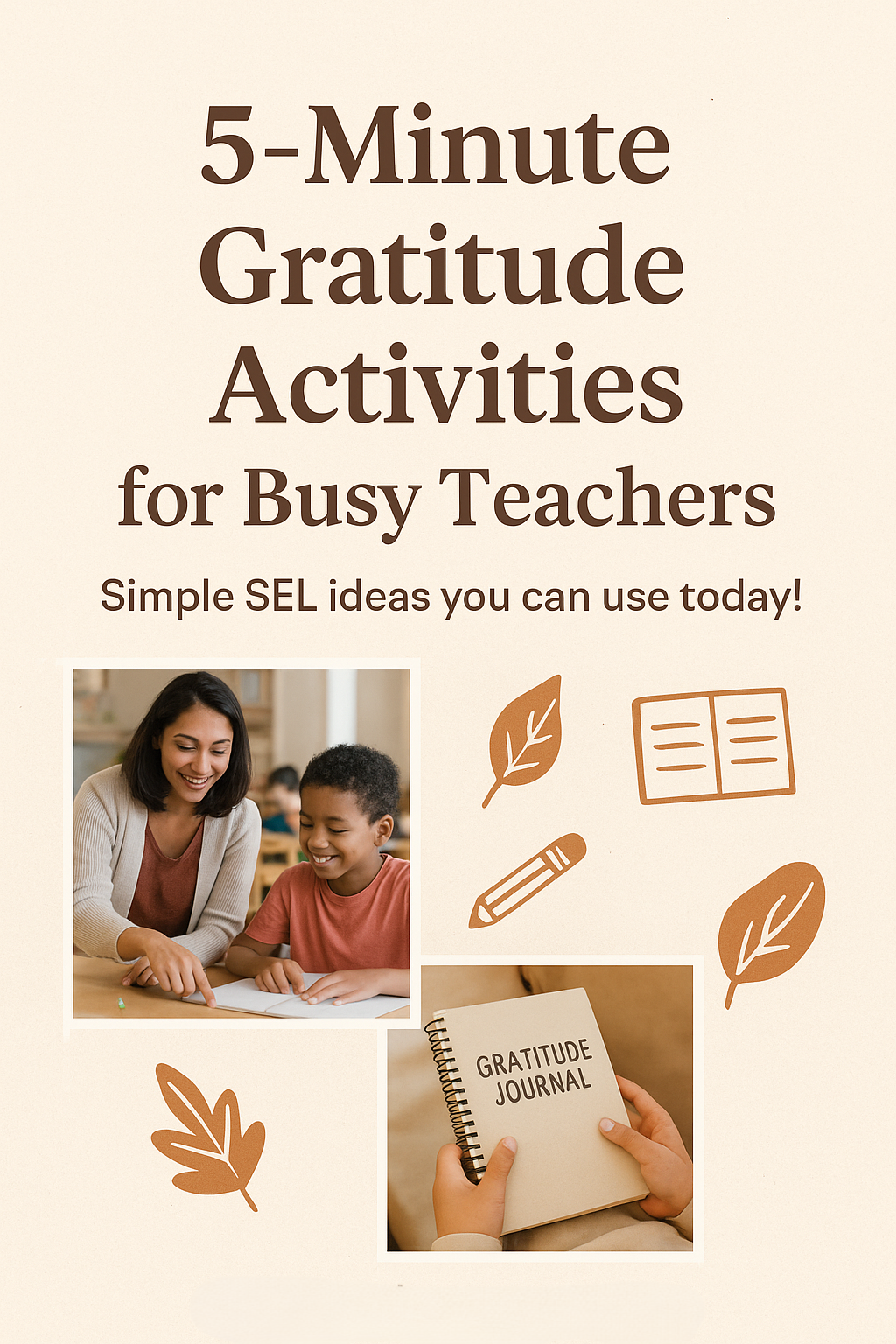
As autumn fades and winter begins to whisper through the air, it’s the perfect time to pause and reflect on gratitude. For teachers, November offers a meaningful opportunity to help students cultivate thankfulness, empathy, and emotional awareness — all essential skills for lifelong well-being.
Integrating gratitude into your classroom isn’t just a “feel-good” activity; research shows it can have lasting academic, social, and emotional benefits.
As an Amazon Associate, I earn from qualifying purchases. This post may contain affiliate links that support classroom content creation at no additional cost to you.
🌟 Why Teach Gratitude?
Gratitude is more than saying “thank you.” It’s a mindset that helps students notice and appreciate the positive aspects of their lives.
“Students who regularly practice gratitude experience higher levels of happiness and optimism.” — Emmons & McCullough, 2003
According to Emmons & McCullough (2003), students who regularly practice gratitude report increased well-being and improved classroom relationships. Similarly, Froh et al. (2008) found that gratitude interventions in schools can increase students’ life satisfaction and reduce negative emotions.
Gratitude also fits beautifully within Social Emotional Learning (SEL) frameworks. According to CASEL (Collaborative for Academic, Social, and Emotional Learning), gratitude strengthens self-awareness and relationship skills — two of the five core SEL competencies.
💬 Classroom Strategies to Teach Gratitude
1. Start a Gratitude Journal Routine
Have students spend five minutes at the start or end of the day writing one or two things they’re grateful for. Encourage specificity — “My best friend helped me with math” is more powerful than “I’m grateful for my friends.”
Pro Tip: Pair journaling time with soft music or a mindfulness moment to promote calm reflection.
👉Gratitude Journal for Kids or Classroom Writing Prompts Pack
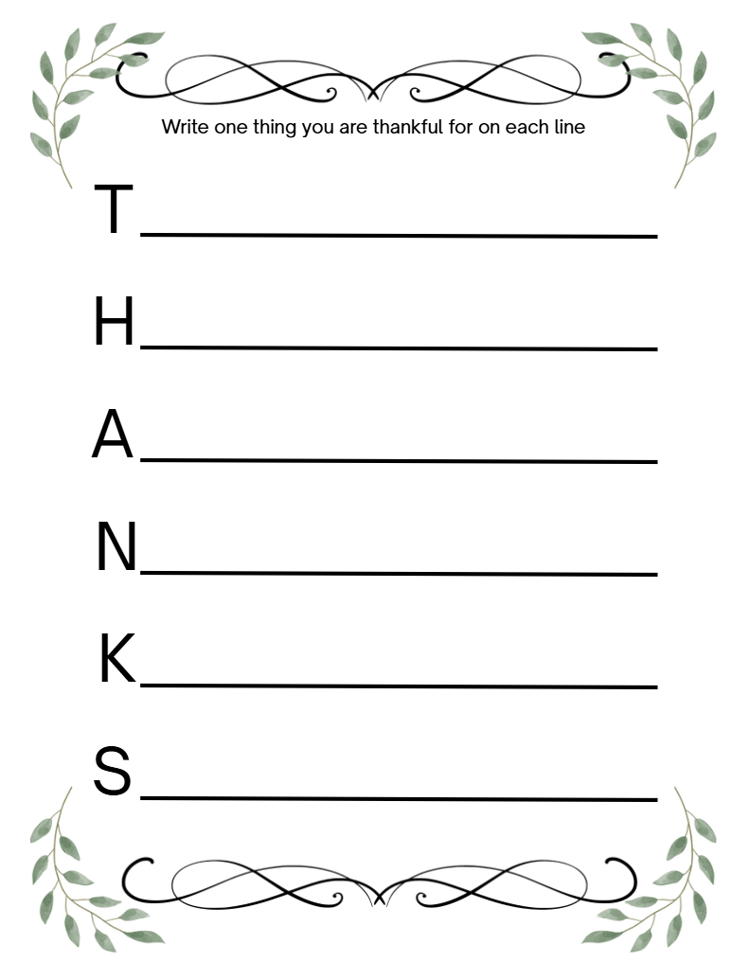 Click Here for my free gratitude page
2. Create a Kindness Chain
Cut strips of colorful paper and have students write acts of kindness they’ve done or observed. Link them into a growing chain displayed across the classroom. It’s a visual reminder that kindness and gratitude are connected and contagious.
SEL Focus: Builds empathy and reinforces positive social behavior.
👉 Kindness Activity Kit or Paper Chain Craft Pack
3. Host a Gratitude Circle Discussion
Once a week, gather students in a circle and ask open-ended questions such as:
- “Who helped you this week?”
- “What made you smile today?”
- “What’s something you’re thankful for that’s not an object?”
Encourage students to listen actively and show appreciation for others’ answers.
SEL Connection: Supports relationship skills and social awareness (CASEL, 2020).
4. Build a Gratitude Wall Display
Turn a bulletin board into a collaborative gratitude wall. Each leaf or snowflake can hold a student’s thankful thought — a perfect way to symbolize the shift from fall to winter.
Extension Idea: Use seasonal imagery — falling leaves for letting go of negativity, snowflakes for appreciating individuality.
👉 Printable Gratitude Wall Templates 🍂❄️ or Seasonal Classroom Display Kits
5. Integrate Gratitude into Academics
Bring gratitude into every subject:
- ELA: Write thank-you letters to community helpers or classmates.
- Math: Graph the class’s top gratitude themes.
- Science: Reflect on environmental gratitude — “What in nature are you thankful for?”
- Art: Create “Gratitude Portraits” illustrating people or moments that bring joy.
When gratitude becomes part of academic routines, it helps students develop emotional depth alongside critical thinking.
🌿 Research Snapshot
- Emmons, R. A., & McCullough, M. E. (2003). Counting blessings versus burdens: An experimental investigation of gratitude and subjective well-being in daily life. Journal of Personality and Social Psychology, 84(2), 377–389.
- Froh, J. J., Sefick, W. J., & Emmons, R. A. (2008). Counting blessings in early adolescents: An experimental study of gratitude and subjective well-being. Journal of School Psychology, 46(2), 213–233.
- CASEL (2020). What is SEL? Collaborative for Academic, Social, and Emotional Learning.
💡 Wrap-Up: Gratitude as a Seasonal Mindset
Teaching gratitude helps students slow down, reflect, and transition gracefully from fall’s energy to winter’s calm. A gratitude-centered classroom nurtures emotional intelligence, community, and a stronger sense of belonging — qualities that last long after November.
“Gratitude turns an ordinary day into a blessing.” 🌼
As an Amazon Associate, I earn from qualifying purchases. This post may contain affiliate links that support classroom content creation at no additional cost to you.
Comments ()