

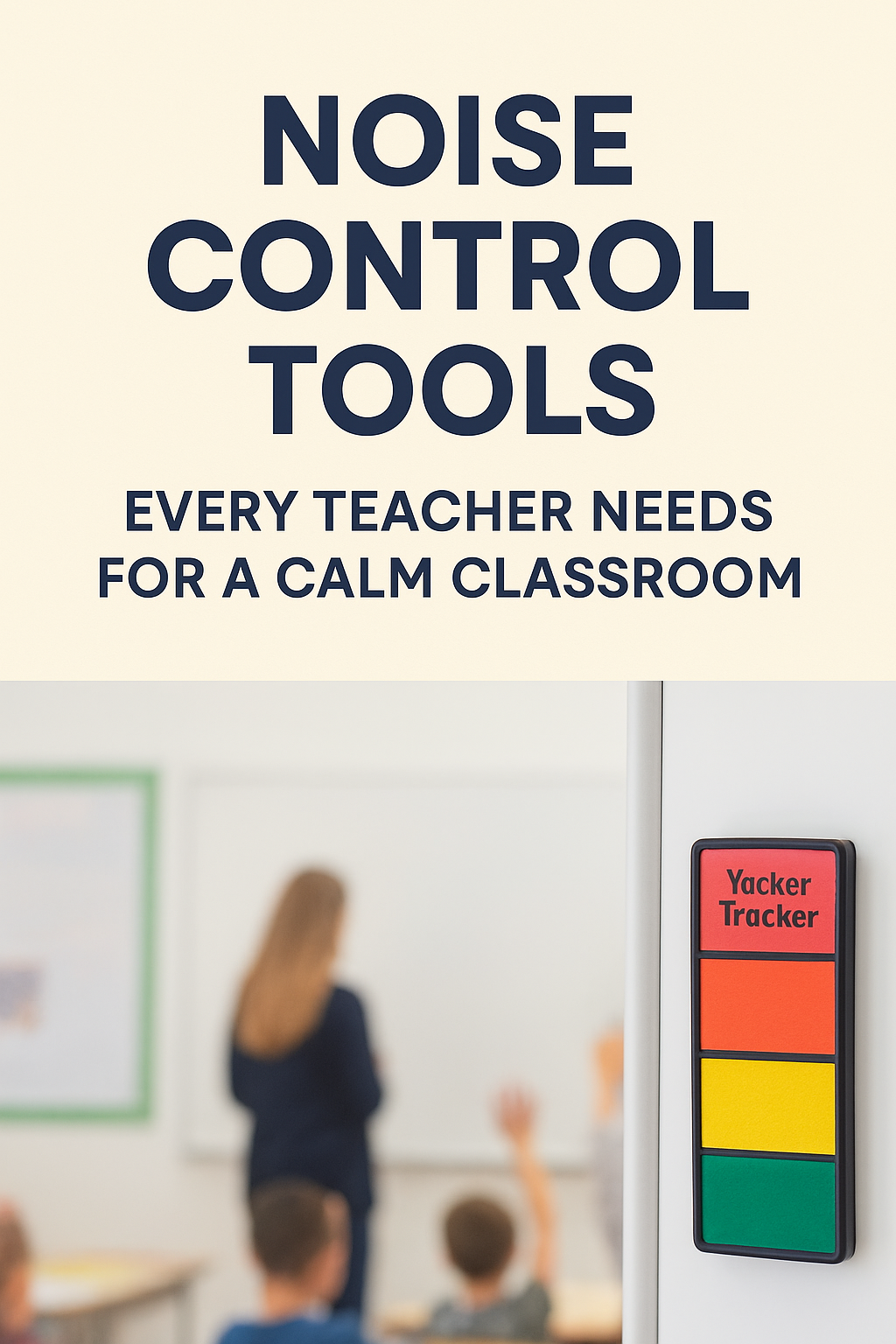
A noisy classroom can make it difficult for students to focus and for teachers to maintain control. Luckily, there are plenty of strategies and tools designed to bring down the volume, create a calmer learning space, and help students stay on task. Below, you’ll find both teacher-approved tools and techniques that can transform your classroom environment.
This post may contain affiliate links. As an Amazon Associate, I earn from qualifying purchases at no extra cost to you.
Why Noise Control Matters in the Classroom
Noise is one of the top distractions for students. Too much chatter or background sound can lead to:
- Lower student engagement
- More classroom management challenges
- Increased stress for teachers
- Reduced comprehension and focus
By incorporating the right noise management tools and strategies, you can create an environment where both teaching and learning thrive.
Top Noise Control Tools for Teachers
1. Visual Noise Monitors
Tools like the Yacker Tracker or visual noise traffic lights give students an immediate signal when the classroom gets too loud. The lights change from green to yellow to red, helping kids self-regulate their voices without constant reminders. Having a consistent visual reminder helps students learn and apply your volume standards.
2. White Noise Machines or Sound Panels
White noise machines or portable sound panels help mask background noise and make it easier for students to concentrate. They are especially helpful in shared classrooms or open learning spaces. I like to play white noise during independent study. I would also use a CD player with instrumental music on low as background noise. You can use an app or even your phone but it is nice to have a designated background noise.
👉 Classroom-friendly white noise machines
3. Noise-Reducing Headphones for Students
Providing a set of noise-reducing headphones can be a game changer for students who need extra help focusing, such as during independent reading or testing. Many come in child-friendly sizes with volume control for safety. These also come in handy during a fire drill for those students who get overwelled by the noise.
4. Soft Classroom Furnishings
Adding rugs, curtains, or even fabric bulletin boards helps absorb sound naturally. These soft furnishings not only reduce echo but also create a cozier classroom atmosphere. I used a rug in my classroom. It had multiple purposes as it was my circle time rug and the favorite place to do independent work. I found mine at the thrift store. You will need to check with your principal to see if there are any fire codes that you have to follow with a rug or soft furnishing.
5. Noise Level Apps & Tools
Apps that measure decibel levels can be projected on your smartboard so students can see the noise level in real-time. Pairing this with a classroom reward system keeps students motivated to stay quiet. My favorite one is Bouncy Balls because it is easy to edit and has multiple different settings to choose from.
👉 Bouncy Balls- free online
👉Too Noisy- paid online
Noise Control Without Tools: Teacher Strategies That Work
1. Call-and-Response Attention Getters
Simple call-outs like:
- “1, 2, 3… Eyes on me!”
- “Class, class!” → “Yes, yes!”
- "Waterfall" → "Shhhhhhhhhh"
These are quick ways to regain attention without raising your voice. You can even change them around for the holidays.
2. Voice Level Charts
Establish clear expectations for volume by naming levels (e.g., “0 = Silent, 1 = Whisper, 2 = Table Talk”). Reinforce consistently so students know exactly what’s appropriate. These charts should be easy to see and read and you need to refer back to them often.
3. Silent Signals
Use visual cues like raising your hand, flicking the classroom lights, or holding up a noise-level sign. Over time, students will respond immediately to these cues.
4. Structured Routines
Transitions often get loud. Setting routines for moving between activities—like a 30-second quiet timer—helps cut down on unnecessary noise.
5. Positive Reinforcement
Reward students or groups that consistently follow noise expectations. Stickers, points, or simple praise go a long way in building habits.
Quick Tips for Noise Management
- Model what “indoor voices” sound like.
- Establish clear routines for transitions.
- Use call-and-response attention-getters.
- Pair noise control tools with positive reinforcement.
Final Thoughts
Noise is a natural part of learning, but it doesn’t have to be overwhelming. By combining practical tools with effective strategies, you can keep your classroom calm, your students focused, and your teaching day less stressful.
Please share what noise control tools and strategies you like best or ones you fell should be included in the comments.
Comments ()