

Discover the magic of fall learning through outdoor, hands-on STEM experiences
When the air turns crisp and leaves begin to fall, the natural world transforms into a living laboratory. From exploring how leaves change color to engineering with acorns and pinecones, fall offers countless opportunities to connect science, technology, engineering, and math (STEM) with real-world exploration.
Research shows that outdoor and nature-based learning boosts engagement, confidence, and academic curiosity (Burns et al., 2023; Middle School Students’ Experiences…, 2025). Fall’s sensory-rich environment is the perfect setting to bring STEM to life—no fancy lab equipment needed.
🍁 Why Fall Is the Perfect Time for Outdoor STEM
The fall season provides both abundant materials and natural phenomena that align with key STEM concepts:
- Changing colors and light – Great for studying chemical reactions and light absorption.
- Seed dispersal – Perfect for learning about plant adaptations and engineering principles.
- Temperature shifts – Encourage data collection, weather tracking, and observation over time.
- Shorter daylight hours – Offer a chance to explore solar energy and the Earth’s tilt.
Outdoor STEM experiences have been shown to increase self-efficacy, attention, and motivation, especially when tied to local environments (Burns et al., 2023; Frontiers in Education, 2018).
🧠 Principles for Nature-Based STEM Learning
Before diving into the fun, consider these evidence-based principles to make the most of your outdoor STEM sessions:
- Inquiry First, Instruction Later
- Let curiosity lead. Have students generate questions about what they see—Why do pinecones close when wet? Why do some leaves turn red first?
- Use Local, Seasonal Materials
- Collect items such as acorns, leaves, pinecones, twigs, or stones to ground activities in students’ environment.
- Encourage Experimentation and Redesign
- Real science involves trial and error. Encourage iteration and reflection as part of the process.
- Link to Other Subjects
- Integrate literacy (journals, observations), art (leaf rubbings), and social studies (local ecology).
- Prioritize Accessibility and Safety
- Ensure activities are inclusive, with safe outdoor zones and adaptive tools for all learners.
Educators who integrate outdoor, place-based STEM often report improved student engagement and relevance of content (Middle School Students’ Experiences…, 2025).
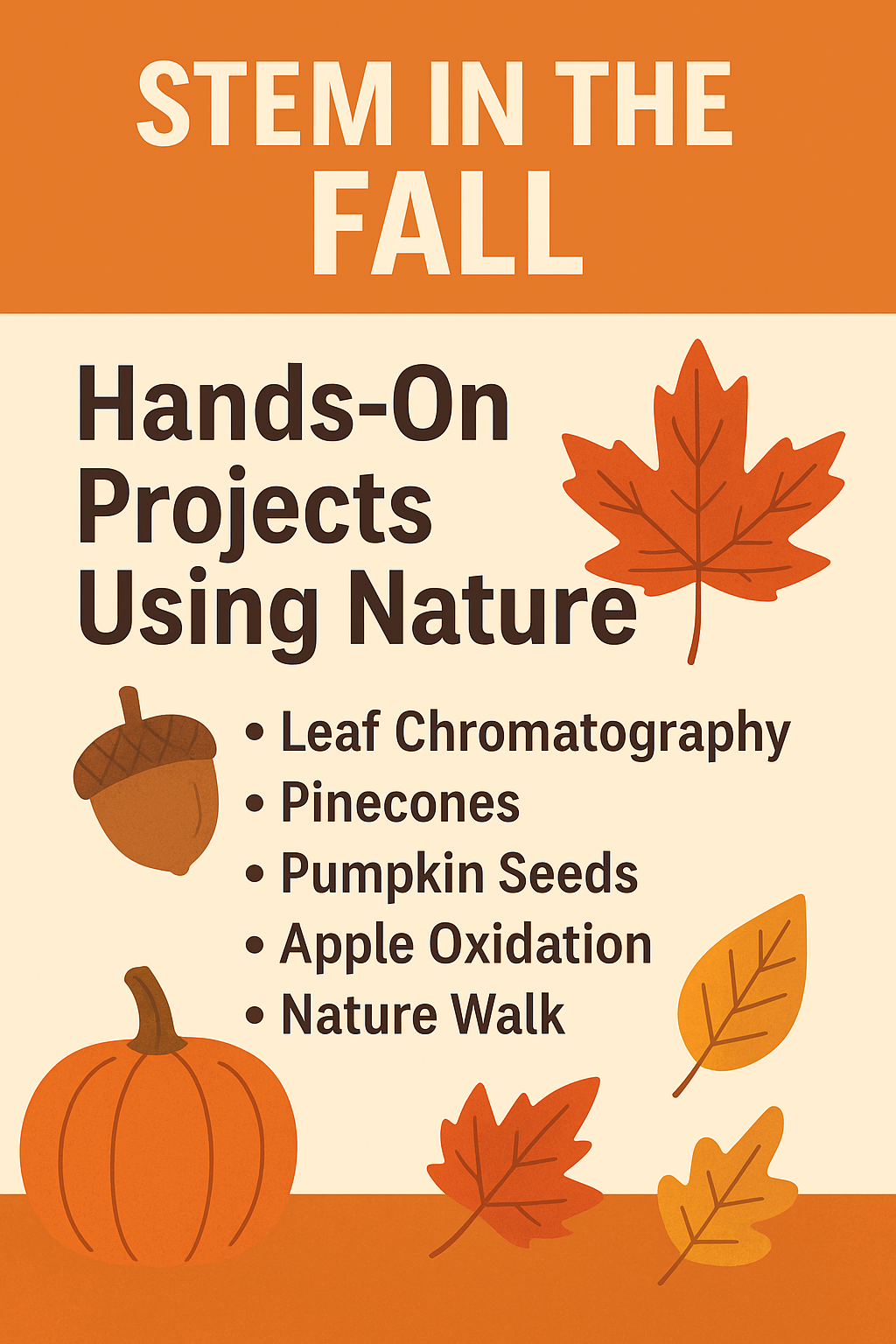
🍂 Fall STEM Project Ideas Using Nature
Below are simple, hands-on projects perfect for classrooms, after-school programs, or home learning.
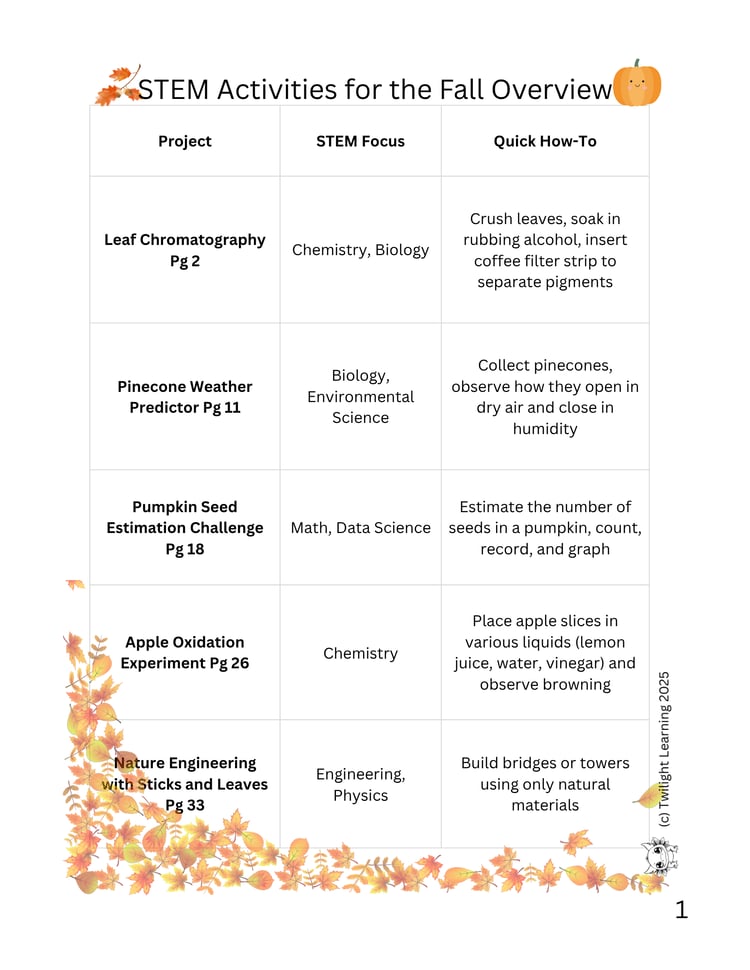 Click Here to see my STEM Activities for Fall!
Each project nurtures observation, inquiry, and design skills—while immersing students in real-world, sensory learning.
🌎 Making STEM Local and Relevant
A 2025 study in Research in Science Education found that “place-based learning that connects science to local environments increases engagement and relevance for students.” When students test leaves from their schoolyard or compare the temperature on sunny vs. shady sides of the playground, learning becomes personally meaningful.
Teachers can enhance learning by:
- Incorporating data collection over time (weather logs, color change tracking)
- Using mapping and graphing to analyze patterns
- Sharing results with peers or in school-wide “STEM Fair in the Fall” events
👩🏫 STEM for All: Inclusion and Impact
Outdoor STEM benefits learners across ages and abilities. A Frontiers in Education (2018) study found that environmental education improved attention, behavior, and learning outcomes among students with diverse learning needs.
Meanwhile, early educators in rural communities expressed positive attitudes toward children’s outdoor recreation and science integration, emphasizing that access to nature fosters both physical and cognitive development (Frontiers in Education, 2025).
By prioritizing inclusivity and curiosity, teachers can make fall STEM accessible—and exciting—for every learner.
🍃 Wrap-Up: Turning Autumn into a Living STEM Lab
Fall’s natural transformations create the perfect setting for authentic STEM learning. By taking lessons outdoors and incorporating natural materials, educators help students connect theory with observation—sparking curiosity that lasts well beyond the season.
As one meta-analysis concluded, informal, hands-on STEM education significantly improves student attitudes and interest in STEM fields (International Journal of Science and Mathematics Education, 2024). So grab your magnifying glasses, step outside, and let autumn guide your next great discovery!
🧾 References (APA 7th Edition)
Burns, R. C., Janowicz, L., Smaldone, D., Pierskalla, C., & Moreira, J. C. (2023). Impact of an adventure geology STEM camp on outdoor self-efficacy. Interdisciplinary Journal of Environmental and Science Education, 19(4), e2315. https://doi.org/10.1007/s10763-024-10504-z
Middle School Students’ Experiences with Place-Based STEM Outreach. (2025). Research in Science Education. https://doi.org/10.1007/s11165-025-10245-1
Comments ()