

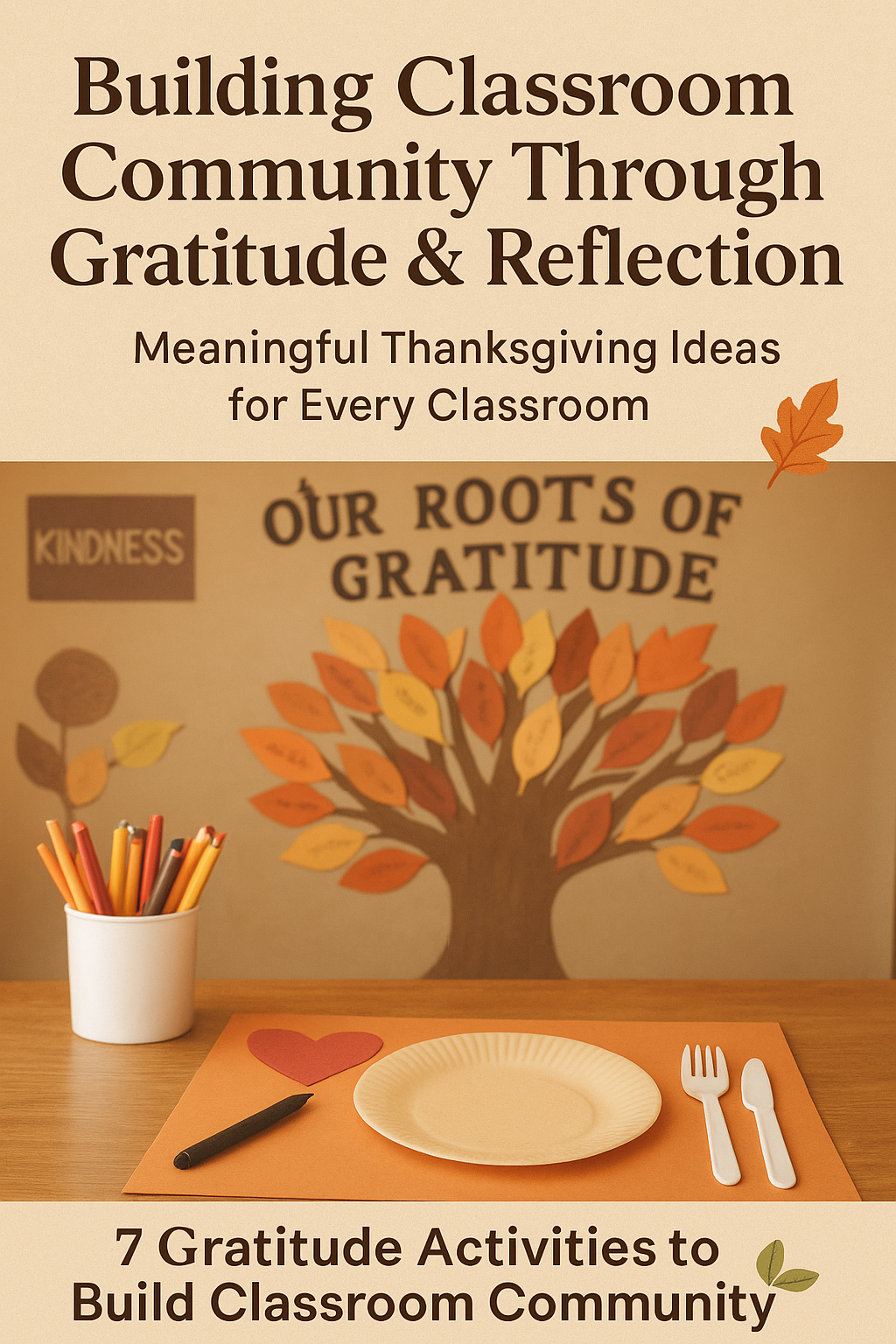
Building Classroom Community Through Gratitude and Reflection
As November rolls in, Thanksgiving becomes a central theme in many classrooms. But rather than focusing solely on turkeys, Pilgrims, or traditional crafts, this season is an opportunity to deepen community, celebrate inclusion, and nurture gratitude in meaningful ways. By designing activities that highlight empathy, cultural understanding, and reflection, educators can help students connect to the spirit of Thanksgiving in ways that feel authentic and inclusive.
“These are classroom tools and ideas that I’ve personally used and recommend. As an Amazon Associate, I earn from qualifying purchases.”
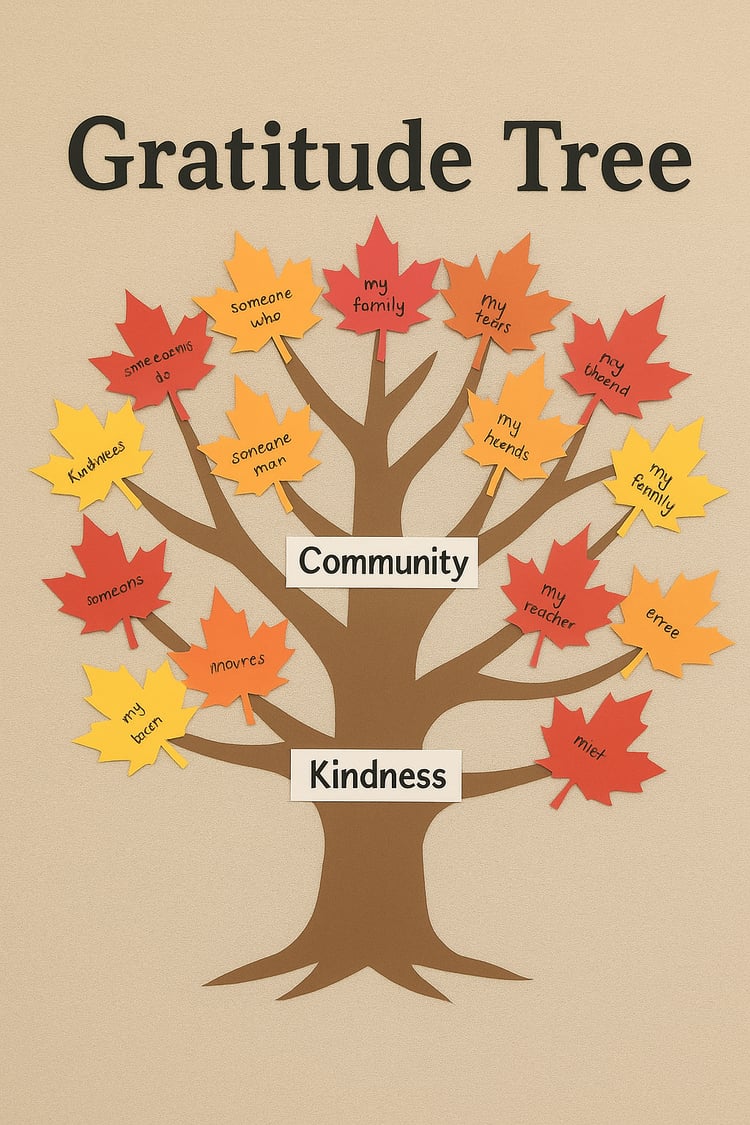
🌿 1. Gratitude Trees with a Twist
Turn the classic “Thankful Tree” into a collaborative art project that honors every student’s voice.
How to do it:
- Cut out paper leaves in autumn colors using construction paper.
- Each student writes something or someone they’re grateful for — but encourage them to think beyond material items (e.g., “someone who helps me,” “a moment I felt proud”).
- Add branches labeled with themes like Kindness, Community, and Growth to promote deeper reflection.
Why it works:
This activity encourages social-emotional learning (SEL) by promoting empathy and self-awareness. Gratitude journaling and reflection have been shown to increase student well-being and improve classroom relationships (Froh et al., 2008).
💌 2. Thank-You Letters to School Staff
Expressing gratitude extends far beyond the classroom door. Invite students to write heartfelt thank-you notes to custodians, cafeteria workers, bus drivers, or office staff who help keep the school running smoothly.
Steps:
- Discuss different roles in the school community and why they’re important.
- Have students write or decorate letters using markers, colorful paper, or printable reflection sheets.
- Deliver them as a class before Thanksgiving break.
Extension idea: Record short video messages of thanks and compile them into a school-wide gratitude montage.
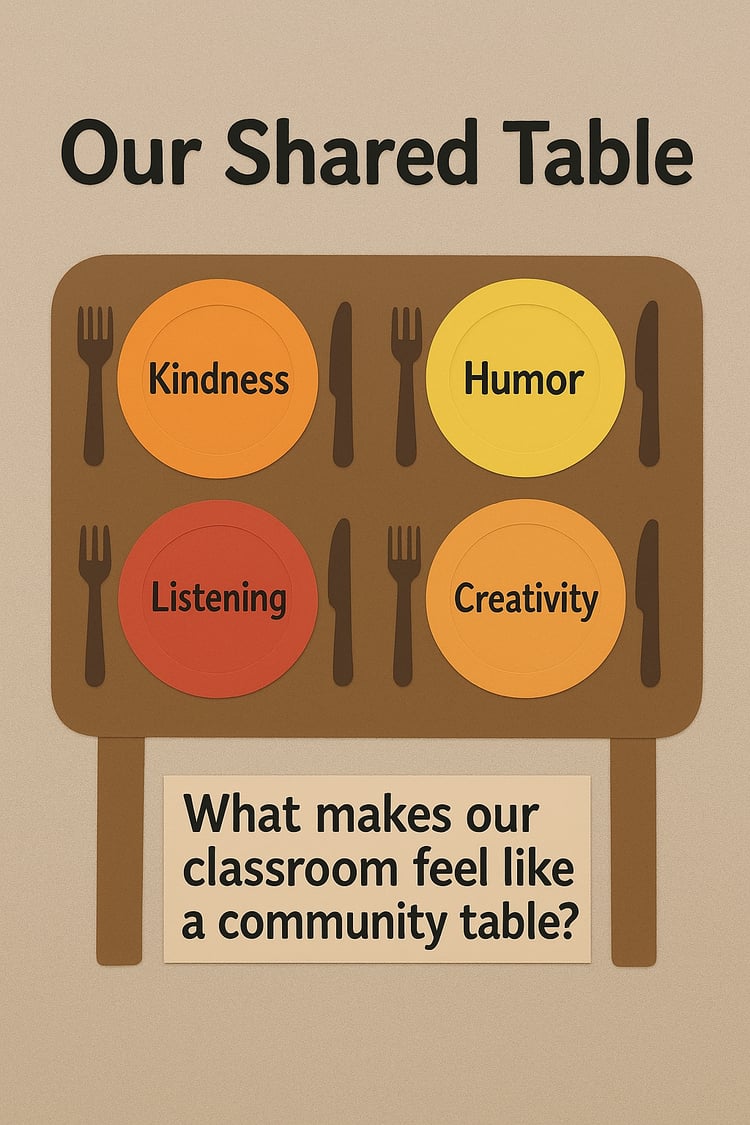
🎨 3. “Our Shared Table” Collaborative Display
Create a bulletin board or hallway display featuring a large paper table where each student adds a “place setting” representing something they bring to the classroom community — kindness, humor, listening, or creativity.
Supplies:
- Craft bundles, markers, and construction paper in warm tones.
- Paper plates or printable templates for “place settings.”
Discussion prompt:
“What makes our classroom feel like a community table?”
This visual metaphor reminds students that everyone has something valuable to contribute.
🕊️ 4. Reflective Gratitude Circles
Host a short, mindful reflection circle where students share moments of gratitude or kindness they experienced during the month. Encourage deep listening and no interruptions.
Guidelines:
- Keep it brief (10–15 minutes).
- Begin with a breathing exercise or calming song.
- Use prompts like:
- “One thing I’m thankful for that money can’t buy is…”
- “Someone who made my week better is…”
Research shows that gratitude practices in school settings improve empathy, reduce aggression, and strengthen peer relationships (Emmons & McCullough, 2003).
📚 5. Inclusive Thanksgiving Storytime
Choose books that celebrate gratitude, community, and diverse perspectives rather than focusing solely on the traditional Thanksgiving narrative.
Recommended reads:
- We Are Grateful: Otsaliheliga by Traci Sorell (Cherokee Nation)
- Thank You, Omu! by Oge Mora
- Fry Bread: A Native American Family Story by Kevin Noble Maillard
Pair each story with a quick reflective writing prompt or drawing response.
🖼️ 6. “Our Class in Reflection” Gallery
Wrap up the month by having students create visual reflections of what they’ve learned and experienced this fall.
Ideas for displays:
- Mini posters showing “My Favorite Moment of the Semester”
- A collaborative collage of photos, drawings, and gratitude notes
- A “Before and After” wall highlighting how students have grown since September
Use craft bundles and art supplies to make this a colorful, creative community project.
🪞 7. Gratitude Reflection Journals
Invite students to take time each day or week to reflect on what they’re thankful for — not just what they have, but what they’ve learned and shared.
Steps:
- Provide each student with a printable reflection sheet or notebook.
- Offer prompts such as:
- “One moment this week that made me feel proud was…”
- “Someone I appreciate in our class is…”
- “Something I want to do to show gratitude is…”
- End each journaling session with a short share-out or partner discussion.
Why it matters:
Reflection helps students develop self-awareness and gratitude, key elements of Social Emotional Learning (SEL). Studies show that journaling gratitude enhances mood and promotes long-term well-being (Froh et al., 2008).
💡 Wrap-Up: Shifting from Turkeys to Thankfulness
Thanksgiving activities don’t need to rely on outdated traditions to be meaningful. When we shift the focus from crafts to connection, students develop lifelong skills in empathy, gratitude, and reflection — and your classroom community grows stronger in the process.
🛒 Affiliate Classroom Supplies
Get your gratitude projects ready with:
- 🧡 Construction paper in fall tones
- 🖍️ Markers and colored pencils
- ✂️ Craft supply bundles for group art projects
- 📄 Thankfulness books
🧾 Sources (APA Style)
- Emmons, R. A., & McCullough, M. E. (2003). Counting blessings versus burdens: An experimental investigation of gratitude and subjective well-being in daily life. Journal of Personality and Social Psychology, 84(2), 377–389.
- Froh, J. J., Sefick, W. J., & Emmons, R. A. (2008). Counting blessings in early adolescents: An experimental study of gratitude and subjective well-being. Journal of School Psychology, 46(2), 213–233.
Comments ()