

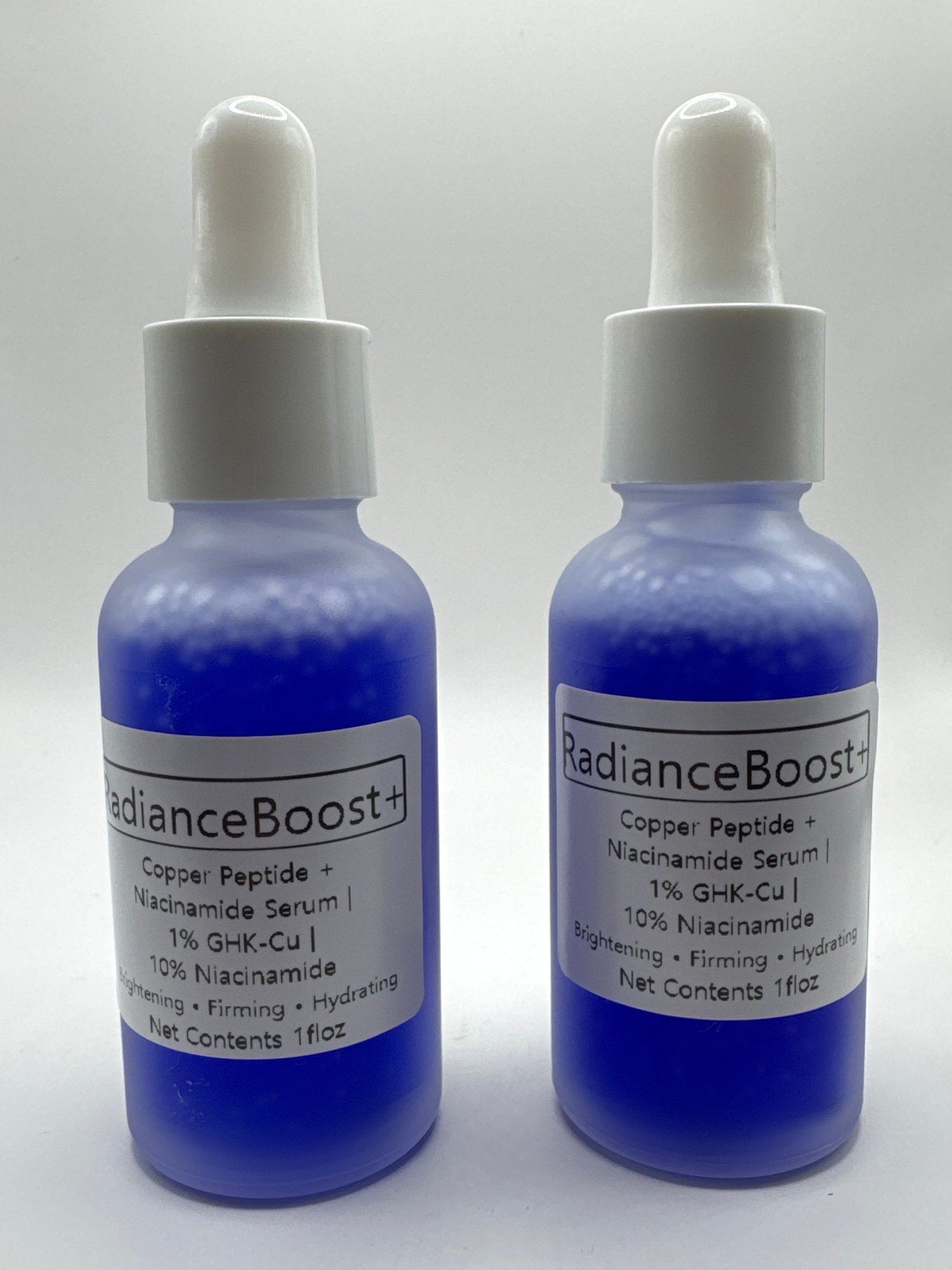
In the world of regenerative skincare, GHK-Cu (Copper Tripeptide-1) has emerged as a powerhouse ingredient backed by decades of research. Known for its remarkable healing, anti-aging, and cell-stimulating properties, GHK-Cu plays a critical role in stimulating keratinocyte and fibroblast activity—two key cellular components essential for healthy, youthful skin.
What Are Keratinocytes and Fibroblasts?
Before diving into the science behind GHK-Cu, it’s essential to understand the importance of these skin cells:
- Keratinocytes are the primary cells found in the outermost layer of the skin (epidermis). They produce keratin, a protein that protects the skin from environmental damage and pathogens.
- Fibroblasts reside in the dermis and are responsible for producing collagen, elastin, and glycosaminoglycans, all of which contribute to the skin's structural integrity and elasticity.
Together, these cells play a pivotal role in wound healing, barrier function, and skin regeneration.
GHK-Cu and Its Role in Skin Repair
Discovered in the 1970s, GHK-Cu is a naturally occurring copper peptide that declines with age. Multiple scientific studies have shown that supplementing the skin with GHK-Cu can reverse visible signs of aging and promote healing by directly stimulating fibroblasts and keratinocytes.
✅ Stimulating Keratinocyte Proliferation and Migration
Keratinocytes are essential for re-epithelialization during wound healing. Studies, including those published in Peptides and Journal of Investigative Dermatology, have shown that GHK-Cu:
- Enhances keratinocyte proliferation, helping to rapidly regenerate the skin surface.
- Increases migration of keratinocytes to the wound site, speeding up recovery and improving the skin barrier function.
- Boosts the expression of integrins and laminins, proteins critical for cell adhesion and migration during healing.
✅ Activating Fibroblasts for Collagen and Elastin Production
Fibroblasts are responsible for producing the extracellular matrix (ECM)—a network of proteins that gives the skin structure and resilience. Research shows GHK-Cu:
- Increases fibroblast proliferation and cellular activity.
- Stimulates production of types I and III collagen, elastin, and glycosaminoglycans—all essential for firm, plump skin.
- Reduces expression of MMPs (matrix metalloproteinases), enzymes that break down collagen, thereby preserving the ECM.
One notable study published in Connective Tissue Research demonstrated that topical GHK-Cu significantly increased the synthesis of collagen and glycosaminoglycans in human skin fibroblasts, showcasing its regenerative potential.
Clinical Benefits of GHK-Cu in Skincare
The activation of keratinocytes and fibroblasts by GHK-Cu leads to a range of visible and structural skin improvements, including:
- Faster wound healing and scar reduction
- Improved skin firmness and elasticity
- Reduction of fine lines and wrinkles
- Enhanced skin barrier repair
- Brighter, smoother complexion
These benefits make GHK-Cu a favorite in anti-aging serums, wound healing creams, and post-procedure skincare.
By enhancing the activity of keratinocytes and fibroblasts, GHK-Cu offers a multi-faceted approach to skin regeneration, repair, and rejuvenation. Whether you're dealing with aging skin, damage, or simply looking to boost your skin’s natural repair mechanisms, incorporating this copper peptide into your skincare routine may be one of the most science-backed decisions you can make
References:
- Pickart, L., Freedman, J. H., Loker, W. J., Peisach, J., & Perkins, C. M. (1980). Growth-modulating plasma tripeptide may function by facilitating copper uptake into cells. Nature, 288(5792), 715–717.
- Maquart, F. X., Bellon, G., Chaqour, B., Wegrowski, Y., Birembaut, P., & Borel, J. P. (1993). Stimulation of collagen synthesis in fibroblast cultures by the tripeptide–copper complex glycyl-L-histidyl-L-lysine-Cu2+. FEBS Letters, 238(2), 343–346.
- Siméon, A., Emonard, H., Hornebeck, W., & Maquart, F. X. (2000). The tripeptide-copper complex GHK-Cu stimulates human fibroblast growth and modulates matrix metalloproteinase expression. Experimental Dermatology, 9(6), 313–320.
Comments ()