

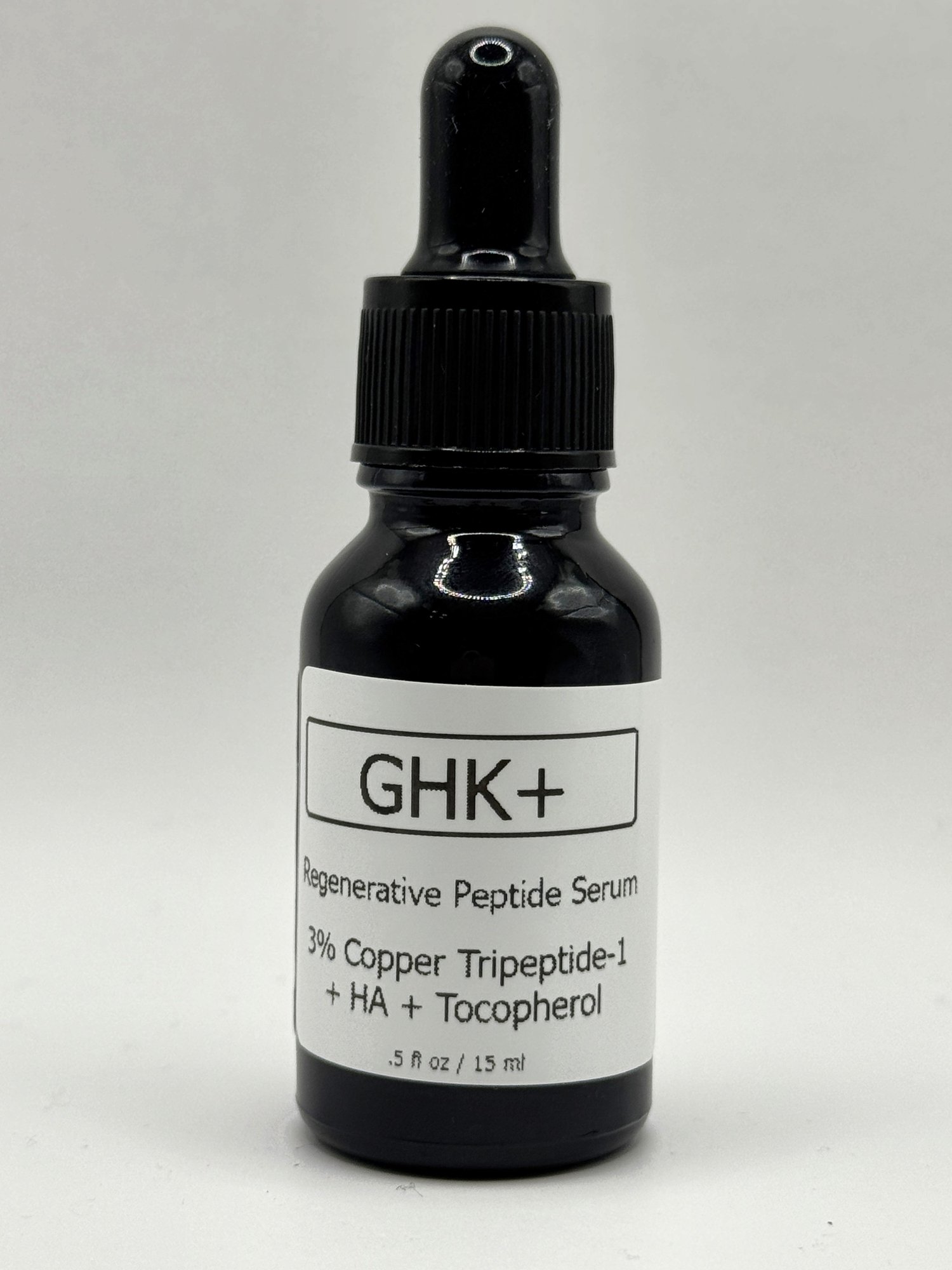
Hair loss and thinning hair affect millions of people worldwide, prompting a search for effective, science-backed treatments. One promising compound gaining attention is GHK-Cu, a naturally occurring copper peptide. First identified in human plasma in the 1970s, GHK-Cu has shown impressive results in skin regeneration, wound healing, and increasingly, hair follicle stimulation.
What is GHK-Cu?
GHK-Cu is a small peptide composed of glycine, histidine, and lysine, bound to a copper ion. It exists naturally in the human body but declines with age—levels in the plasma drop from about 200 ng/mL at age 20 to 80 ng/mL by age 60. This decline has been associated with slower healing, skin aging, and potentially, hair loss.
Mechanisms of Action in Hair Growth
Research has shown that GHK-Cu works through several biological pathways to promote hair growth and thickness:
1. Stimulates Hair Follicle Growth
- GHK-Cu has been shown to activate dermal papilla cells, which are essential for regulating the hair growth cycle.
- It prolongs the anagen phase (active hair growth phase), promoting stronger, thicker hair.
2. Promotes Angiogenesis
- The peptide increases levels of vascular endothelial growth factor (VEGF), which enhances blood flow to the scalp and hair follicles, delivering more oxygen and nutrients to support growth.
3. Reduces Inflammation and Oxidative Stress
- Chronic inflammation and oxidative stress can lead to hair thinning and follicle miniaturization. GHK-Cu exhibits powerful anti-inflammatory and antioxidant properties that help protect and revitalize hair follicles.
4. Improves Collagen and Extracellular Matrix
- GHK-Cu helps rebuild the extracellular matrix in the scalp and boosts the production of collagen and glycosaminoglycans, all of which provide structural support to hair follicles.
Scientific Studies on GHK-Cu and Hair Growth
✅ Study 1: Animal Model Evidence
In a study published in the Journal of Investigative Dermatology, researchers found that topical GHK-Cu significantly increased hair follicle size and density in mice. After 28 days of treatment, GHK-Cu showed a comparable or better effect than minoxidil, the FDA-approved treatment for hair loss.
✅ Study 2: GHK-Cu and Human Dermal Papilla Cells
A 2018 in vitro study showed that GHK-Cu increased the proliferation of human dermal papilla cells, crucial regulators of hair growth. The peptide also stimulated the expression of genes associated with hair shaft elongation.
✅ Study 3: Clinical Trial with GHK and 5-ALA
A human clinical trial tested a combination of GHK and 5-aminolevulinic acid (5-ALA) in men with androgenetic alopecia. The treatment group saw a significant increase in hair count (average of 71 new hairs) compared to the placebo group (9 new hairs) over 12 weeks.
✅ Study 4: Gene Expression Rejuvenation
In a paper by Dr. Loren Pickart, the discoverer of GHK-Cu, the peptide was shown to modulate over 4,000 human genes, many of which are involved in tissue repair, stem cell function, and anti-aging. This gene modulation likely contributes to improved hair regeneration.
Anecdotal & Community Reports
In addition to studies, many users report noticeable improvement in hair thickness, reduced shedding, and new growth after consistent use of GHK-Cu serums or microneedling applications. While anecdotal evidence is not clinical proof, it aligns with observed biological mechanisms.
Safety and Usage
GHK-Cu is generally considered safe and well-tolerated when applied topically. Side effects are rare but may include mild irritation or tingling. It's often found in concentrations of 0.5% to 1% in serums or hair tonics and can be combined with ingredients like caffeine, hyaluronic acid, or minoxidil for enhanced results.
The science behind GHK-Cu is both compelling and promising. Backed by lab research, animal studies, and early human trials, this naturally occurring peptide offers a multi-targeted approach to hair growth—stimulating follicles, reducing inflammation, increasing blood supply, and enhancing scalp structure.
While more large-scale human studies are needed, current evidence suggests GHK-Cu may be one of the most effective and natural options for promoting hair growth and increasing hair thickness, especially when used consistently and in combination with other hair-supportive therapies.
Comments ()